
This article on cathedrals, particularly John the Divine in New York is the best thing I’ve read all year (so far): https://theprepared.org/features/2019/4/28/building-a-cathedral
Author: Matthew Eilar
Just a dude with a stereo, a computer, and a brain.
2020
I have a very simple resolution for the new year. Not even a resolution, actually, as much as a simple tool for cutting through indecision and analysis paralysis:
If it’s worth doing, practice doing it better. If it’s not worth doing, practice cutting it out.
I didn’t put up a side-by-side picture of 2010 vs. 2019 or list off my accomplishments of the last decade, but if I were to sum up this period it would be like this: I spent the first few years of adulthood falling on my face, tripped up by emotional issues I had no understanding of, and during this decade I experienced firsthand the complete failure of several ideas about how to live that made me miserable:
- People don’t like helping messy people, so if (god forbid) you experience any failure, my first priority is hiding that I’m struggling.
- My real self is too fragile and breakable to share, so let’s create this whole other person for people to get to know.
- Other people have time for learning experiences, I don’t have that time to waste so instead of learning or practicing, let’s spend all of that time trying to figure out shortcuts!
- If I’m enjoying it, I should be working harder.
- The more miserable I am right now, the happier I’ll be later.
I’m very susceptible to the constant pressure to optimize/lifehack/always-be-producing. It’s like New Year’s resolution culture all year round. Unfortunately, it’s the idea that I am worthless dressed up in optimistic clothes.
I just can’t do it any more. I’ve given up. There’s no way to have a good life if it’s made up of bad days, so I need to start having better days. There’s no way to make good art from bad (or nonexistent!) play, so I need to start having more fun. I will always need to eat food that’s good for me, spend less than I make, take care of my body and my teeth and stay connected to my friends and family. Every time I do any of those things is an opportunity to try and do it better. I will never be fulfilled by getting mad at the news, reading stories about celebrities, listening to boring podcasts, or reading arguments between idiots on social media. Every day is an opportunity to do that less.
If that’s all 2020 is, it will be just fine, because this year (ok, it’s been true every other year, too) there’s no other way but through.
cyber/noir

I love the serendipity when two ideas come at the same time, and a storm of connections are made just because I came across them at around the same time.
The first item is The Schedule and the Stream, a Medium article by Matt Locke which frames the algorithmic stream (Facebook’s News Feed and others, mostly from social media) as a broadcast technology, not just as important as radio and television but representing an even more fundamental shift. One thing that I appreciated so much about the article was that it presented something I’ve never come across, the idea that radio and television could be considered a killer app for the 24-hour schedule:
Unlike a theater audience, the telephone audience was not bound by the limitations of being in the same place. But they were bound by time: When they picked up their receivers, they were all listening to the same content as it was broadcast live. …
…Nobody had ever had the problem of organizing over 12 hours of human attention before, and the solution Puskás came up with had an impact way beyond the short-lived Telefon Hírmondó. As radio, and then television, grew to dominate mass media, the schedule became one of the most important ideas of the 20th century.
Matt Locke, “The Schedule and the Stream” https://howwegettonext.com/the-schedule-and-the-stream-eb1e9a7a344a

Thus, the 24-hour schedule becomes a way to structure live content, which trains the audience to be conscious of time in a new way, which creates a bigger audience for scheduled content, which causes the audience to schedule other activities—eating, sleeping, working—into the new framework.
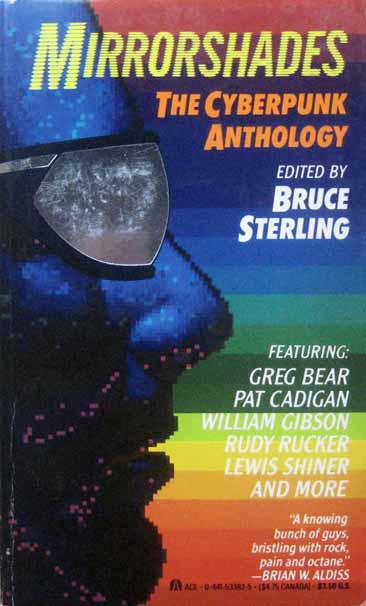
The second item is the great profile of William Gibson in the latest The New Yorker. If you have any love for science fiction, please read it, it’s great.
Drawing connections between these two ideas, it made me look at the cyberpunk noir writers that I love so much—Gibson, Neal Stephenson, Vernor Vinge, Bruce Sterling—and consider why they work so well for me. I think it has to do with the way that it draws a parallel between the new feeling of disconnection and dislocation that characterized urban city life in the 30’s and 40’s and the de-contextualization that has emerged in a globalized, internet connected world now. In detective fiction, usually our detective hero is detached from the city around him, a morally good figure that struggles to complete his quest against all of the vices violence, and capitalist exploitation around him. Often, crime victims are part of categories of people that emerge with a certain amount of density: sex workers, women and men that move to the city for work, people who get involved with petty crime. Just as often, the villains are the demigods of these shadowy worlds: corrupt cops, crime bosses, property developers, politicians. Almost like the island effect, cities have a way of making some people powerless and small and less than human, and others powerful, rich, and superhuman.
What the cyberpunk writers did was realize that that uneasy feeling of dislocation, anonymity, and constant fear of ever-changing predators would translate to a connected and globalized world. It is everywhere, in our economic anxiety, mental health, fear of foreign competition, fears for children.
Tangerine

A delightful discovery I made while starting to write this re-review was a blog post I wrote 10 years ago about the books that made a deep impression on me. Tangerine was one of those books. I’m tempted to rattle off things that my home town had in common with Tangerine/Lake Windsor Downs—a citrus growing industry, strange segregation between white and Hispanic neighborhoods and people, groves with fans and heaters for cold nights (I think I remember the orange glow of smudge pots on winter nights, but perhaps that is a memory incepted by this very book, as they were banned in California decades before I was born). The truth is that there were as many things completely outside of my experience in Paul Fisher’s life as there were in it. My parents were not image-conscious people. We were not a sports family, and I did not have any physical characteristics that made me different other than being fat. I did not have a tormenting older brother; to my eternal shame, I was that older brother.
What Paul Fisher and I had in common, however, was the fear.
After Paul joins the War Eagles and the team comes together, they start winning:
“The War Eagles have set out on a bloody rampage through the county. We have destroyed every enemy. We have laid waste to their fields and their fans. There is fear in their eyes when we come charging off our bus, whooping our war cry. They are beaten by their own fear before the game even begins. This is a feeling that I have never known before. Anyway, I have never known it from this side of the fear. Maybe I am just a [substitute], maybe I am just along for the ride, but this is the greatest thing that has ever happened to me.”
Paul feels the catharsis of stepping out of the fear that he experiences all of the time through soccer, a healthy channel for that need. As a teenager, I tried to escape that fear in ways that were unhealthy just as often as they were healthy. I spent a lot of time alone with music, creating a zone of safety around me, but I also was mean to people and made fun of others because while I was directing the target of mockery, it could never be me. Maybe it’s because his fear is so focused on an actual threat, but Paul can see the fear and shame in those around him:
“Mom took me into the kitchen and got me a glass of water. She ran her finger under the strap of my goggles and slipped them off. Then she said, “Honey you know how it is with your eyesight. You know you can’t see very well.’ And that was that. But I can see. I can see everything. I can see things that Mom and Dad can’t. Or won’t.”
Paul can see the fear that his parents and the adults in the subdivision have that their home investments will become worthless, that their projected image will crumble. He sees the chips on his classmates’ shoulders and the callous way that his brother takes advantage of the adults around him, who are so overly concerned about threats from the outside that they don’t pay attention to monsters closer to home.
You spend some time with Paul and you see it too. This is not an overtly political book, but reading it made me also think of the wildly weird Bush years. You can view this book through the lens of the culture of that time, or maybe the other way around, but so many flashpoints: hypocrisy of prosperity gospel religious bullshitters, rampant gentrification, everyday racism, toxic relationship to the earth, creepy messaging about keeping the home/homeland safe, even lax oversight by government officials to promote development, they’re all here in Tangerine.
I forgot how abruptly it ends, and I’m afraid that the next few years were probably tough for Paul. His brother was a monster, but he also needed a lot of intervention to have a hope of making it through his teen years. We don’t get any real reason to believe that his parents will grow into better ones. But today Paul would be around 35. I hope he’s had some time to grow and heal, and some time to be really angry at his parents, and maybe some therapy. Revisiting Tangerine, I often just appreciated how good-hearted Paul is. I hope he’s found his way to step out of the fear without needing to be on the other side of it.
big wheels keep on turning
I think this is a great video for Bernie Sanders, and I hope he recovers quickly.
I was pretty turned off by some acquaintances crowing about how “Bernie Bros” need to get in line behind Elizabeth Warren after being hospitalized. I thought it was in very poor taste. Elizabeth Warren has been my dream candidate since before the 2016 primary, but I don’t believe that either of the people posting in favor of Warren would be supporting her if Bernie wasn’t soaking up the criticism of defining the left edge of politics.
I will have an extremely hard time deciding between Sanders and Warren if the primary is still contested when Oregon votes. They are far and away my first and second choice candidates. But part of the lesson I took from 2016 was that some people voted by trying to scry the winds and choosing the best candidate that would get a huge majority, and other people voted to change the weather. This time around, I wanted to help create the weather.
The plane of possibility is shifting so very quickly. I don’t think Beto O’Rourke has a chance in hell of moving forward as a presidential candidate and I think it was a remarkable act of hubris for him to run in the first place, but I’ve been so delighted by his choice to stop triangulating and confidently and plainly state his gun control realism: “…I want to be really clear that [gun buybacks are] exactly what we’re going to do. Americans who own AR-15s and AK-47s will have to sell them to the government.” Júlian Castro and immigration, Jay Inslee and climate change, and Marianne Williamson (!) and reparations serve the same purpose (I loathe Williamson, but she got to a truth when she referred to the “dark psychic force of the collectivized hatred that this president is bringing up in this country,” that Hillary Clinton, hobbled into ineloquence by her politician filter, tried to get at with the “deplorables” comment ).
Against the backdrop of these legitimately courageous positions, Joe Biden seems like a man from another time, like an old social studies textbook or an old government building with trash bags covering the water fountain next to a laminated sign warning about lead testing. One of the most important functions Bernie Sanders serves in this primary is to deflate Biden’s self-satisfied narrative of his legislative record in the Senate. Sanders has kept to a very consistent moral compass in his life in public service on domestic issues as well as foreign policy issues. Biden has done the best he could to help the most number of people–once the interests of the powerful have been satisfied. Most politicians do that calculus, all that changes is who is considered powerful. Sanders seems not to, and that is the heart of his appeal to those who have put their hope in him.
I’m rambling now, but all of this is to say that when I read that post prematurely dancing on Bernie Sanders grave, it felt to me like that person was choosing to pretend that the issues that are most important to me because they will define my adult life–student loan debt, housing, the climate, single payer healthcare, LGBT employer nondiscrimination–are all less important than perpetuating animus against a politician who has completely transformed the way that Democrats are talking about these issues. If there’s a candidate like Hillary Clinton running in this race, it’s Joe Biden, and it wasn’t good enough for me in 2016 and it isn’t good enough for me now. Please, by all means, vote for Elizabeth Warren and get excited about her policy ideas, just don’t be shitty about the person who cleared the way for her ideas to be viable.
 hammer & jack