Bach and Beyond – Gabriela Montero

bach600x600

One of the more interesting moments of the Obama inauguration on January 20th was, for me, the John Williams penned “Air and Simple Gifts.” Many classical music bloggers were happy to have a piece of classical music featured as part of such a high visibility ceremony. Of course, it pales in comparison to other historical offerings; for example, Abraham Lincoln staged Flowtow’s opera Martha for his second inauguration. But even though the piece was light (Yo-Yo Ma referred to it as the “Quartet for the Next Four Minutes”), it was nice and tonal.

One thing that I did not know however, was who Gabriela Montero, the pianist of the quartet, was. Unfortunately, it seemed as if at any one time, either Montero or the clarinetist, Anthony Gill, was cut out of the frame. I went googling to track her down. Thats where I saw this video:

Needless to say, after this, I was in love.

I next hunted down her 2006 CD, Bach and Beyond. I don’t know how much I could hold it up as one of the essential albums of all time, but it’s certainly way fun. The songs are basically extended improvisations on Bach warhorse piano repertoire like Jesu Joy of Man’s Desiring, Sheep May Safely Graze, and pieces from the Well Tempered Clavier. All are pieces that people who don’t listen to classical music would recognize. For those of us who do, many of these pieces we have heard too many times to count, and it’s a lot of fun to hear when she breaks off from the written music and explore the chords and melodic possiblilities.

Another part of why this is so fun is the sheer amount of sources she draws from in her improvisations. In addition to the ragtime that you hear in the video above, she also throws in swing, neo-impressionist piano, jazz, Rachmaninoff-esque big Romantic gestures, as well as the Latin rhythems of her native Venezuela.

I highly recommend giving it a listen, even if it’s only as background music. Then you can do a double take when she seamlessly turns the  Toccata in D Minor into a funky Latin jam.

LOST Recap: The Little Prince

29lost

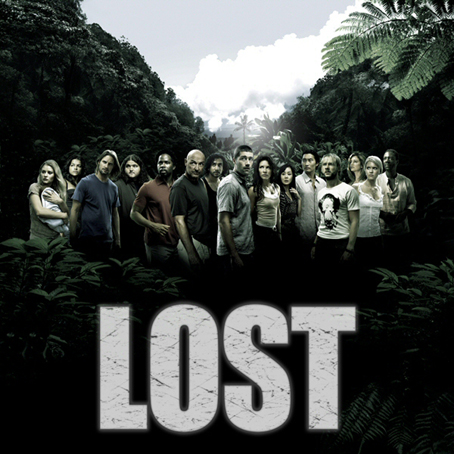
The Little Prince is one of the most maddening type of LOST episodes; it has some amazing revalations and new information, and clearly is setting up plotlines for future episodes, but has zero rewatch value and leaves you with vague feeling like you’ve been strung along for nothing. That said, there are some great surprises:

Continue reading “LOST Recap: The Little Prince”

You Are The Blood – Sufjan Stevens

I literally cannot shut up about this song. I know that I have annoyed two of my friends to within an inch of their life by playing this song over and over. So, I think the best way to do this is to give the top 5 reasons why this is my favorite song right now;

1. It’s the last thing that I would have expected from Sufjan. He has made his fame by doing songs that are too fully orchestrated to be called folk, and yet sound like almost nothing else from the indie rock genre. Before this, I guess I had heard some electric bass and guitar on some tracks, and digital distortion on some of his throwaway songs from leftover compilations (like Seven Swans), but here he embraces everything from Radioheadesque noise to drum machines.

2. One of the features that I have always liked most from his music is the rich brass orchestration found in many of his songs. He does that and puts it on steroids. His brass sounds dark and rich, and with jazzy chords and precise rhythms that bring to mind 60’s film scores with jazz orchestras (think James Bond scores). Now that I write this, I would be extremely curious to hear a Sufjan Stevens film score.

3. Another one of my favorite things in all music is the postmodern concept of the mixture of high and low art. Often, the product of these marriages is irredeemably kitschy, like Tiësto’s Adagio for Strings. But when done right, and here I think it is, it can be unbelievably cool to go from a neo-Romantic piano cadenza to a drum machine and brass finale.

4. Another thing that I like a lot is that this song is unafraid to have a full dynamic range. This song has sections that are really quiet, while the loud parts could shake buildings. There has been a documented trend in popular music to make music uniformly louder, often by sacrificing dynamic range. It’s actually a little insulting. What you are basically saying to the musicians is to keep your music at a uniform level so that when we turn it down, it stays quiet so that we don’t have to listen to it (or, conversely, when people are bumping to your music, don’t blow out their speakers). I could do a whole other rant about how nobody actively listens to music anymore, but I don’t really want to.

5. Finally, I like what it says about Sufjan as an artist. I listened to the original version (a pretty good song by the Castanets), and it’s pretty cool to listen to that source, then hear the little nuances that must have given him ideas about how to interpret the song.

Here it is.

The Myth of the California Dream

This weekend brought me two works that may not seem to be related, but cover with the same themes.

BOOK CRITICS AWARDS

The first is Where I Was From, by Joan Didion. This book is basically an extended essay dealing with the author’s struggles to understand her heritage as a member of an old California family and the way that the land still affects her, even though she has spent her entire professional life in the East. While examining such things as how the Donner party affected racism in early California, how the implosion of the aerospace industry in Southern California gace rise to the infamous “Spur Posse” of Lakewood California, and the enormous influence of the California Prison Guards Union,  Didion circles back to a fundamental truth; many of the self-perceptions and myths that Californians believe are completely incompatible with the actual history of the land. Paraphrasing Didion, “The entire state has been shaped by people mortgaging their future for immediate monetary gain.”

chinatownposter1

The second work is Robert Towne’s 1974 film, Chinatown. Chinatown follows Jake Gittes, a Los Angeles private detective working in the 1930’s. An innocent job following a man suspected of adultery leads to a dizzying maze of murder, power and secrets that leads right to the most powerful men in the city.

Both works are peopled with independent, hungry men looking for the magic way to get wealthy. They fancy themselves pioneers, in Didion’s case literally scratching a living from a newly opened land. In Chinatown everybody is trying to pretend that their desert is a tropical paradise.

When he first come out here, he figured if you dumped water into the desert sand and let it percolate down to the bedrock, it would stay there instead of evaporate the way it does in most reservoirs. You only lose 20% instead of 70 or 80. He made this city.

Noah Cross and his Department of Water may believe that they have transformed the desert with the blood of the Owens Valley, but as Hollis Mulwray himself says, “You dig beneath the buildings, beneath the streets and you get hot dry desert sand.”

But Hollis and Noah are not thinking about the desert. They have out-engineered it. They have mastered the land. They have sold precious water to fuel an unsustainable desert Xanadu. And this short term thinking, trading planning for temporary riches has been a facet of California life for as long as there have been settlers.

In the beginning of California’s history, the state used to be attractive to only a certain type of person: one who was willing to uproot his family, travel with only what they could carry, and ultimately one who was willing to change his trade at the drop of a hat. This sets up a curious xenophobia; all Old California families are suspicious of “new” people who came in the postwar boom. And of course, Chinese, Mexican, or Indians could never be “old,” regardless of how long they have lived here. In reality, all of these immigrant groups (except, of course, the Native Americans) were in the state for the same reason as the old settlers.

Even more interesting is the story of those who actually ended up wealthy. From the beginning, California’s economic growth has been fueled by handouts from the Federal government. In the last century, that came in the form of land grants, railroad expansion, and vast public works projects in the state, in this century it came in the form of the defense industry that employed much of Southern California from the airplane manufacturers in Burbank to the shipyards of Long Beach to the unbelievably large California penal system. And yet all of those workers would claim a California heritage of hard-working individualism.

That’s the big irony: a state that prides itself on its independence has always been completely dependent on the federal government to finance an overly large artificial middle class. The history of the state is a repeating cycle of decisions made for quick gain leading to problems fixed by the federal government setting up other problems. It’s why it appears backwards to many visitors. It’s why we have a budget crisis today. The future…

Cross: You see, Mr. Gits; Either you bring the water to LA or you bring LA to the water.
Gittes: How you gonna do that?
Cross: By incorporating the valley into the city. Simple as that.
Gittes: How much are you worth?
Cross: I’ve no idea. How much do you want?
Gittes: I just want to know what you’re worth. Over ten million?
Cross: Oh my, yes!
Gittes: Why are you doing it? How much better can you eat? What can you buy that you can’t already afford?
Cross: The future, Mr. Gits – the future!

Oh, and…

1. Bruce Springsteen at the Super Bowl was not very good. As my friend NevilleJohn put it, “The Boss = A Loss.” What surprises me more than that was that the people on my Twitter feed really liked it. Perhaps it’s a generational thing.

2. The co-winners of my contest were NevilleJohn and Sturgeo. They will recieve a blue ribbon in their inboxes tonight.