Zombieland

  • Zombieland (2009). Dir. Ruben Fleischer. With: Woody Harrelson, Jesse Eisenberg, Abigail Breslin, Emma Stone.
  • This movie is for: Viewers that like comedic gore. Fans of horror/comedy mashups like Dead Rising or Shaun of the Dead. Those amused by Woody Harrelson going berserk.
  • This movie is not for: anyone that has no stomach for gore. At 75 minutes running time, those who value quantity over quality.

This movie features one of the most disgusting titles sequences I have ever seen. As the credits fly by, we are treated to gory slow-motion shots of zombie’s heads exploding, or falling zombies splatting on the ground, or zombies feeding on human flesh. Those gory shots come at the end of cartoony gags that would be at home in a Warner Brothers cartoon. That dichotomy pervades the movie: gore and straight-ahead action sequences paired with witty comedy.

Quick plot summary: After a global outbreak of (basically) mad-cow disease for humans, most of the population of the United States are zombies, and the human population is dispersed and disorganized across the wasteland, sardonically referred to as “Zombieland.” Jesse Eisenberg is a socially awkward anti-Casanova that manages to stay alive by adhering to his set of rules, which are referred to constantly throughout the movie. He meets up with Woody Harrelson, then gets conned by the sister con-artist duo of Emma Stone and Abigail Breslin, who are headed to Pacific Paradise (Six Flags Magic Mountain stand-in). They join up, and hijinks ensue.

For all the gore and gags, the movie makes it’s biggest impression in how charming it is. Eisenberg’s character is the type of stereotype that we’ve been coached to despise (compulsive World of Warcraft player, hasn’t been outside for two weeks, drinks Mountain Dew: Code Red by the liter), and yet he’s a vulnerable and sympathetic lead. I’m still figuring out what I think of Emma Stone, but here she does a serviceable job with the tough-as-nails outside, heart of gold inside character that serves as a love interest and foil to Eisenberg. Abigail Breslin does a good job with her material (although she did not stand out), and there’s an extremely funny cameo from Bill Murray.

Even with all these fine performances, the movie is Harrelson’s. He takes every “Woody Harrelson” character, then dials it up to 11. His function in the movie is similar to Johnny Depp’s in the Pirates of the Carribean franchise–equal parts competence and madness. He’s insanely funny, and worth the price of admission alone.

Black Snake Moan

  • Black Snake Moan (2006). Dir. Craig Brewer, with Christina Ricci and Samuel L. Jackson.
  • This movie is for: people interested in a vibrantly colored, delightfully weird take on the Southern Gothic.
  • This movie is not for: anybody, and I mean anybody, that is uncomfortable with sleaze. Or is uncomfortable with a plot that centers around the reformation of a disease-ridden nymphomaniac. Or anybody that doesn’t like movies that sensationalize domestic violence, racism, and child abuse for entertainment.

Quick plot summary: Samuel L. Jackson is an old blues man who hasn’t played in public for many years. His wife is in the process of separating from him, and things are kind of at a low point. Christina Ricci is a nymphomaniac that’s fucked just about everybody in the shitty small town where she lives. Justin Timberlake is a soldier that’s been in love with Ricci forever, but has anxiety issues. Ricci turns down Timberlake’s best friend, who’s a big douche, and he beats the shit out of her and dumps her on the road near Jackson’s house. Jackson nurses her to health, and chains her to the radiator while he tries to get her “demon” out. Then some Hollywood bullshit about them healing each other happens.

There are many reasons not to like this movie. Even now, I’m conflicted by how good it is and how bad it is at the same time. It’s a movie that exists in its own universe, and behaves by its own laws. You have to look at it like a Tarantino movie: you have to accept that it’s valid to think that a movie is good, while rejecting the juvenile mindset of its director and some of its sequences. Tarantino movies are so interesting, even threatening, because they’re good. If they were shitty, we’d either watch them because they’re so-bad-it’s-good, or we’d dismiss them entirely. Instead, we’re forced to be a little more nuanced.

Because it’s more fun, let’s start with the bad. First off, almost all of the elements are presented in a sleazy, exploitative manner. Revelations about child sexual abuse are tossed around as plot elements, the version of the South presented is a grab-bag of backward Southerner cliches, the director/production designer revels in presenting an unvarnished and grotesque look for their characters. Christina Ricci’s character is pushed around by everyone: her “solution” to her nymphomania is a symbolic gold chain that she uses to restrain herself and remind her of the time spent chained to Sam Jackson’s radiator. Enlightened sexual politics, it ain’t. It’s a movie that takes an unashamedly backwards look at some of the things (race, gender, disability) that we’ve tried to become more enlightened about–a movie that tries to push political-correctness buttons. Depending on how much of a stake you have in those issues, this movie goes from great fun to unbearable.

There’s an equal amount of good. These days, Samuel L. Jackson specializes in performances that range from known quantity to self-parody, and yet he’s really good in this movie–self-referential “motherfuckers” notwithstanding. As regressive as Christina Ricci’s character is, she puts everything in the role, and manages to put a little class into a decidedly un-classy role and movie. The soundtrack, and the way that the music is incorporated into the music, is first-rate, using blues music as old-time music was in O Brother, Where Art Thou?. The movie is slick and stylish in all the right ways. Jackson’s and Ricci’s relationship is beyond fucked up, but their dynamic at the end of the movie is touching, and weirdly sincere. The whole thing kind of works.

I was talking about the movie to one of my oldest movie watching partners, and he said that he’s always been curious about the movie, but has always felt too embarrassed to check it out from a video store or Redbox. That’s kind of the space that the movie operates in. There  are some people that are never going to enjoy this movie, but if you give it a shot, it just might surprise you.

John Waters – This Filthy World

  • This Filthy World (2007) With: John Waters. Directed by Jeff Garlin.
  • This movie is for: Lovers of filth, people who enjoy a good yarn, fans of Waters’ films. Those who love bad films, and those who hate film clubs that show Star Wars.
  • This movie is not for: People who are squeamish, people who don’t like profanity or frank discussions of piss, shit, and come, those who know Waters only from Hairspray.

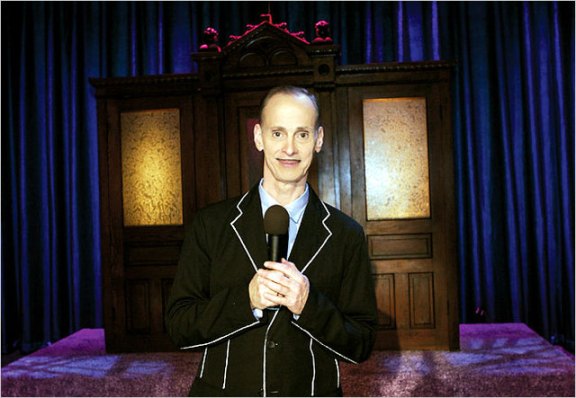
A couple nights ago, I revisited one of my favorite movies, This Filthy World. It’s not a movie in the conventional sense; it’s basically a stand-up concert film from a tour of colleges and theaters that Waters did 5ish years ago. It’s ostensibly a lecture about Waters’ films–and he does talk about them–but has an element of theater (it has a set) and meanders like stand-up comedy.

I would imagine that this film is only entertaining if one of these things are true: you love John Waters’ movies and are interested in hearing about his influences, his early films, and what it was like working with Divine; or you revel in filth, love hearing people talk about filthy things, and laugh out loud at the idea of “a watery load from Michael Jackson’s flaccid, polka-dotted dick.” Or both.

LOST: The End

There will never be another episode of LOST. Throughout Season 6, an annoying ABC promo blared “The time for questions is over.” Well, now the time for answers is over too. Like the audience as a whole, I am deeply divided.

Part of the problem is that “The End” was answering many different questions: Was this a good episode of LOST? Does this change my perspective on Season 6? Was there a coherent series-long arc? Was it worth it? I’ll try and tackle these questions one at a time.

Was this a good episode of LOST?

This is the question that I feel most comfortable answering with an unequivocal “Yes.” There was as good a mixture of character moments, action, and mythology as you’re going to get in a LOST episode (actually, it now occurs to me that many of the all-time great episodes, “The Constant,” “The Economist” “Walkabout,” most of the season finales, also contain that balance). While the writers have talked at length about how they see Season 6 as a mirror to Season 1, I think that the series finale contains tonal elements from every season of LOST: the fight over the heart of the island hearkens back to the first discoveries of island properties in Season 1; as noted by Smokey in the episode, the Jack/Locke conflict and descent into the heart parallels some of the hatch conflict in Season 2; the walking back and forth on the island from Season 3 (just kidding, but kind of not really); the on-island/off-island dynamic, and the snazzy clothes from Season 4; the sci-fi elements from Season 5; and the sentimentality from Season 6.

There were some great lines and exchanges; my favorite is probably Locke’s quip about how Jack was the obvious choice for Jacob’s successor. There was some great acting. If you had told me at the beginning of the season that I would be on board for a Jack-centric finale, I would have rolled my eyes. Jack has been the standout character from this season, however, and I thought he completely earned his dramatic moments in the episode. Also great work from Terry O’Quinn (the cold-hearted badassery in the Rose/Bernard/Desmond/Locke scene was chilling). I was grateful that we got a real resolution for Richard Alpert and Frank Lapidus, as well as some nice moments from Jin and Sun (who were criminally underused by the show both this season and for the second half of the series).

As an episode of LOST, it was perfectly fine, and indeed one of the better episodes of the series.

Does this change my perspective on Season 6?

This answer is a little more complicated, because it breaks down into two questions: Was there a direction that the events of Season 6 were moving towards? and Am I (the viewer) satisfied with the way that they got there? The answer to that is yes, and not even close.

Unlike some people out there, I don’t have a logical problem with the ending scene. The way that I interpret the ending is that when Jughead was detonated, the combination of the losties’ proximity to the blast and the extreme emotion of their desperation, hope, and love created an alternate universe in which they and those they love are fulfilled (this is because the island is a place of both physical (aka electromagnetic pockets) and spiritual energy). I didn’t take Christian’s “everybody here is dead” [pf.] to mean that the church, or alternate timeline, was purgatory, but rather a reassurance to Jack that in a sense he is dead, but he [Jack] also made himself another life in which he could be fulfilled. It’s a little mushy, but it makes sense with what we know of the heart of the island and the sidewaysverse material from this season.

Whether I am satisfied with they way that they arrived here is a completely different story. With the final puzzle pieces in place, the time spent at the Temple at the beginning of the season seem like even more of a waste. In interviews, Darlton have been saying over and over that this is a character-driven show, and that Season 6 would come around to the same tone as the character-driven Season 1. I’m OK with that. I’ve generally enjoyed the small, non-action, non-mythology character moments in this season. What I’m not OK with is wild goose chases like Sayid’s “disease” or the tragicomic way that Jin and Sun never crossed paths, or Sun’s inability to speak English. Those aren’t character moments, those are character gimmicks. Plus, it’s hard to take the writers seriously when, in the final season no less, LOST has churned through unexplored, interesting characters like Dogen, Illana, and the Temple crew. A lot of the Season 1 character conflicts are closed: no more daddy issues plotlines from Sawyer, Jack or Kate, no more Sun/Jin marital conflict, no more “Don’t tell me what I can’t do.” And yet the writers chose to revisit old territory (without adding much to the story or the characters) rather than advance a new plot. I’m not OK with that*.

In fact, I’ve never felt more betrayed by the show than when Kate kissed Jack. I thought that the writers had learned their lesson from Season 3, that a) Jack and Kate don’t have much natural chemistry, and b) the audience is incredibly tired of the Jack-Kate-Sawyer love triangle. I supposed I could have guessed that the show might dip into that well one more time after this NYT interview:

While the mythology was important, first and foremost the show was about the characters. I think that a lot of people care much more about what’s going to happen to Kate. Is she going to end up with Jack, is she going to end up with Sawyer?

I think this shows a fundamental misunderstanding of the show’s audience. Of course it is the characters that keep the show engaging. The writers are right when they say that the weakness of LOST-clones like FlashForward is that they spend too much time on the mythology early, before their audience becomes invested in the characters. At the same time, I (and nobody I know) didn’t much care whether Kate was romantically linked to anybody anymore.

Season 6 also has a huge problem that I would like to hear the writers explain: if the alternaverse was created when Jughead exploded, did the events of season 6 matter at all? We’ve seen crossovers between the timelines in wounds, Desmond, and (perhaps) Jack looking up at the sky and seeing a plane (do we know if it’s the plane?). This would suggest that events on the island can affect the other timeline. At the same time, Christian says that everybody dies sometime, suggesting that no matter what happens in the original timeline the characters will be there*.

*Also, how annoying is it that in interviews and in podcasts, the writers tried to discourage the use of the word “alternate” as in alternate timeline?  That’s basically the big reveal.

In short, I do think that the season completed a coherent story arc. It remains, however, one of LOST’s weakest seasons, albeit with some standout moments. Given that the show had an end date scheduled three years ago, and that this was the final season, I find it incomprehensible that they wasted so much time.

Was there a coherent series-long arc?

This is the tough question. It really pains me to do so, but I’m going to have to answer no.

This has been the preemptive defense of the series from the writers: a) LOST is a character driven show, and b) it would ruin the drama to explain every mystery, every mechanic (e.g. midichlorians). As I wrote above, I agree with the former. I don’t agree with the way that they use the latter as a defense.

My feelings can be summed up by commenter retro on the AV Club (in response to, “The show was always about the characters.”):

False. The show was about a fucking magic island that the people had to deal with. It’s easy to write characters losing and gaining relationships; it’s difficult to wrap up a mystery in a satisfying way. At some point, darlton said fuck the mystery, let’s make it seem like that was never the point. It’s a shitty copout.

This comes close to how I feel. I think that there’s a pretty big gap between “We don’t want to explain the mechanic of how the pool in the Temple brings someone back to life” and the way that they ended the show. In fact, we know this based on the way that the show handled the Dharma Initiative in seasons 4 and 5. The show didn’t get bogged down in the minutiae of how the project was financed, or the connection between Widmore and Paik, or the specific nature of the projects that were being researched at the stations. But we did get a satisfying sense of closure, a sense that the time we spent speculating about that plotline wasn’t time wasted.

That security wasn’t present in the final storyline. It was never established why the island mattered in the first place. It’s a cork. For what? We don’t know. We don’t know that the smoke monster is bad, except that it upsets us when he kills people. We don’t know how the island relates to the real world. As far as we know, the worst that would have happened if Smokey had succeeded is that the island would have ceased to exist. We don’t know why that’s bad.

And this is why I have a problem with the self-righteous attitudes from the writers about character. It’s hard for me to be invested in a character when I don’t understand why they are making the choices and sacrifices that they are. It’s not enough for Jack to make a sacrifice. There’s no chance that I will be invested in that action unless I understand what Jack is thinking about, what options he’s presented with, what’s weighing on his mind.

Ultimately, the writers did not have what it takes to close on the series. After the doldrums of Season 3, it looked like after they had planned their ending, the series would tighten and form a greater coherence. That paid off in Seasons 4 and 5. Unfortunately, it didn’t continue through Season 6.

Was it worth it?

Absolutely.

Thoughts before the LOST finale.

The LOST series finale will air tonight, Sunday, May 23, from 9pm-11:30pm PST.

I wasn’t a fan of LOST in the beginning. Not because I didn’t like it, but because I had never seen an episode, or known anything about it. Before I started watching, I thought it was a fictionalized “Survivor” -style show. I grew up in a household without television, and because streaming on the internet was in its infancy, there was never any TV show that I could engage with on a regular basis.

That changed one day during my sophomore year of high school. I was hanging out with one of my friends, and he put on an episode of LOST: season two’s “The 23rd Psalm.” I had no idea what the island storyline was about, but Yemi and Eko’s story was so compelling that I was spellbound. It is still one of my favorite episodes, and I’m glad that it was the first that I watched.

Over the summer between my sophomore and junior years, I caught up on the first two seasons. LOST hit all my buttons: world building, old and complicated mythology, elements of spirituality and the supernatural, non-linear storytelling, as well as good acting and dialogue. I was able to engage with the show in a way that I never had before. Before LOST, I had never considered the possibility that watching television could be an intellectual exercise as well as entertainment. I had never before had the experience of staying up late with other people, talking about what just happened, piecing together hidden clues, speculating about the next episode, and trying to get the answer before it’s given to you.

LOST also represents a viewing experience that will probably be unique in my life. By the time I got interested in television, streaming sites such as Hulu, and the network on-demand sites were available. LOST is the only show that I watch on a physical television when it airs. Everything can wait (at the least) until it’s available online. Although it seems like a thing of the past, I think that experience is critical to my appreciation of LOST. Every gobbet of information seems packed with significance, and the euphoria of a good episode cannot be matched by anything else.

I’m going to have fun watching tonight’s episode, whatever happens. There’s nothing they could do that would kill the series for me.