I have a very simple resolution for the new year. Not even a resolution, actually, as much as a simple tool for cutting through indecision and analysis paralysis:
If it’s worth doing, practice doing it better. If it’s not worth doing, practice cutting it out.
I didn’t put up a side-by-side picture of 2010 vs. 2019 or list off my accomplishments of the last decade, but if I were to sum up this period it would be like this: I spent the first few years of adulthood falling on my face, tripped up by emotional issues I had no understanding of, and during this decade I experienced firsthand the complete failure of several ideas about how to live that made me miserable:
People don’t like helping messy people, so if (god forbid) you experience any failure, my first priority is hiding that I’m struggling.
My real self is too fragile and breakable to share, so let’s create this whole other person for people to get to know.
Other people have time for learning experiences, I don’t have that time to waste so instead of learning or practicing, let’s spend all of that time trying to figure out shortcuts!
If I’m enjoying it, I should be working harder.
The more miserable I am right now, the happier I’ll be later.
I’m very susceptible to the constant pressure to optimize/lifehack/always-be-producing. It’s like New Year’s resolution culture all year round. Unfortunately, it’s the idea that I am worthless dressed up in optimistic clothes.
I just can’t do it any more. I’ve given up. There’s no way to have a good life if it’s made up of bad days, so I need to start having better days. There’s no way to make good art from bad (or nonexistent!) play, so I need to start having more fun. I will always need to eat food that’s good for me, spend less than I make, take care of my body and my teeth and stay connected to my friends and family. Every time I do any of those things is an opportunity to try and do it better. I will never be fulfilled by getting mad at the news, reading stories about celebrities, listening to boring podcasts, or reading arguments between idiots on social media. Every day is an opportunity to do that less.
If that’s all 2020 is, it will be just fine, because this year (ok, it’s been true every other year, too) there’s no other way but through.
I love the serendipity when two ideas come at the same time, and a storm of connections are made just because I came across them at around the same time.
The first item is The Schedule and the Stream, a Medium article by Matt Locke which frames the algorithmic stream (Facebook’s News Feed and others, mostly from social media) as a broadcast technology, not just as important as radio and television but representing an even more fundamental shift. One thing that I appreciated so much about the article was that it presented something I’ve never come across, the idea that radio and television could be considered a killer app for the 24-hour schedule:
Unlike a theater audience, the telephone audience was not bound by the limitations of being in the same place. But they were bound by time: When they picked up their receivers, they were all listening to the same content as it was broadcast live. …
…Nobody had ever had the problem of organizing over 12 hours of human attention before, and the solution Puskás came up with had an impact way beyond the short-lived Telefon Hírmondó. As radio, and then television, grew to dominate mass media, the schedule became one of the most important ideas of the 20th century.
Thus, the 24-hour schedule becomes a way to structure live content, which trains the audience to be conscious of time in a new way, which creates a bigger audience for scheduled content, which causes the audience to schedule other activities—eating, sleeping, working—into the new framework.
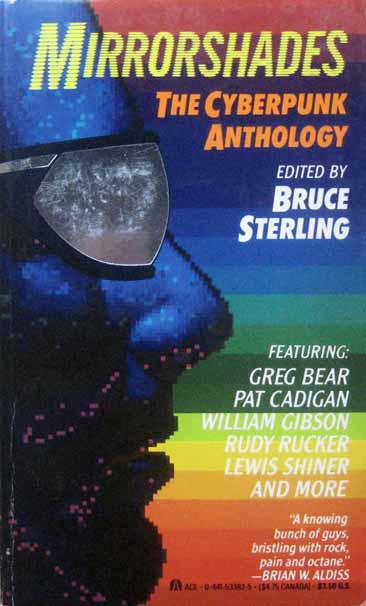
Drawing connections between these two ideas, it made me look at the cyberpunk noir writers that I love so much—Gibson, Neal Stephenson, Vernor Vinge, Bruce Sterling—and consider why they work so well for me. I think it has to do with the way that it draws a parallel between the new feeling of disconnection and dislocation that characterized urban city life in the 30’s and 40’s and the de-contextualization that has emerged in a globalized, internet connected world now. In detective fiction, usually our detective hero is detached from the city around him, a morally good figure that struggles to complete his quest against all of the vices violence, and capitalist exploitation around him. Often, crime victims are part of categories of people that emerge with a certain amount of density: sex workers, women and men that move to the city for work, people who get involved with petty crime. Just as often, the villains are the demigods of these shadowy worlds: corrupt cops, crime bosses, property developers, politicians. Almost like the island effect, cities have a way of making some people powerless and small and less than human, and others powerful, rich, and superhuman.
What the cyberpunk writers did was realize that that uneasy feeling of dislocation, anonymity, and constant fear of ever-changing predators would translate to a connected and globalized world. It is everywhere, in our economic anxiety, mental health, fear of foreign competition, fears for children.
I think this is a great video for Bernie Sanders, and I hope he recovers quickly.
I was pretty turned off by some acquaintances crowing about how “Bernie Bros” need to get in line behind Elizabeth Warren after being hospitalized. I thought it was in very poor taste. Elizabeth Warren has been my dream candidate since before the 2016 primary, but I don’t believe that either of the people posting in favor of Warren would be supporting her if Bernie wasn’t soaking up the criticism of defining the left edge of politics.
I will have an extremely hard time deciding between Sanders and Warren if the primary is still contested when Oregon votes. They are far and away my first and second choice candidates. But part of the lesson I took from 2016 was that some people voted by trying to scry the winds and choosing the best candidate that would get a huge majority, and other people voted to change the weather. This time around, I wanted to help create the weather.
The plane of possibility is shifting so very quickly. I don’t think Beto O’Rourke has a chance in hell of moving forward as a presidential candidate and I think it was a remarkable act of hubris for him to run in the first place, but I’ve been so delighted by his choice to stop triangulating and confidently and plainly state his gun control realism: “…I want to be really clear that [gun buybacks are] exactly what we’re going to do. Americans who own AR-15s and AK-47s will have to sell them to the government.” Júlian Castro and immigration, Jay Inslee and climate change, and Marianne Williamson (!) and reparations serve the same purpose (I loathe Williamson, but she got to a truth when she referred to the “dark psychic force of the collectivized hatred that this president is bringing up in this country,” that Hillary Clinton, hobbled into ineloquence by her politician filter, tried to get at with the “deplorables” comment ).
Against the backdrop of these legitimately courageous positions, Joe Biden seems like a man from another time, like an old social studies textbook or an old government building with trash bags covering the water fountain next to a laminated sign warning about lead testing. One of the most important functions Bernie Sanders serves in this primary is to deflate Biden’s self-satisfied narrative of his legislative record in the Senate. Sanders has kept to a very consistent moral compass in his life in public service on domestic issues as well as foreign policy issues. Biden has done the best he could to help the most number of people–once the interests of the powerful have been satisfied. Most politicians do that calculus, all that changes is who is considered powerful. Sanders seems not to, and that is the heart of his appeal to those who have put their hope in him.
I’m rambling now, but all of this is to say that when I read that post prematurely dancing on Bernie Sanders grave, it felt to me like that person was choosing to pretend that the issues that are most important to me because they will define my adult life–student loan debt, housing, the climate, single payer healthcare, LGBT employer nondiscrimination–are all less important than perpetuating animus against a politician who has completely transformed the way that Democrats are talking about these issues. If there’s a candidate like Hillary Clinton running in this race, it’s Joe Biden, and it wasn’t good enough for me in 2016 and it isn’t good enough for me now. Please, by all means, vote for Elizabeth Warren and get excited about her policy ideas, just don’t be shitty about the person who cleared the way for her ideas to be viable.
I had a great day today. I spent Monday in a weird funk, just caught up in confused, unhappy thoughts and feeling restless and slightly dissociated. In the evening, I went out for a walk, and about halfway into the walk I started to come back into myself. More precisely I finally started putting words to the way that I was feeling. I realized that I have been feeling the kind of restless feeling of transition. It’s the feeling when you need to wait for a friend in a building lobby. You sit down and try to get comfortable, but your eyes shoot up when a new person walks in the door and it’s not enough time to do much of anything.
[It truly didn’t occur to me until just this second that not everybody experiences waiting for a friend in the lobby as a stressful experience.]
So now I have to wait things out for a little bit, and play one of my least favourite games: You’re Getting Way Too Into Your Head vs. You Are Finally Tuning Into Important Feelings. If it’s one, I should go out and do things that get me out of my head and engage me in the world around me. If it’s the other, I should absolutely not do that and instead tune into the self and accept whatever uncomfortable feelings I have without judgment.
There’s not really a viable “no choice” option—I have a certain number of hours in a day. A portion of them go to my work, a portion of them I spend asleep, and the rest I have available to do whatever I want with them. I’m running a little bit short on want. I am engaging thoughtfully with the questions: what brings a little bit of joy? what do you think is fun? what would be pleasurable to do? and all I’m getting back is dead air.
Wednesday
Today was more or less the same. It started out feeling better but the enthusiasm and energy I brought to the day lasted until about 11am.
I did get to talk all this out with a friend at dinner.
As I was drifting into a nap, I realized what I’ve been looking for: danger, a sense of adventure. What I should be navigating towards is what makes me afraid.
A few weeks ago I was having dinner with a newish person I’ve been enjoying getting to know better, who is about 10 years younger than I am. I was talking about playing music in high school, and he asked “Did you ever dream of becoming a big pop star?”
That question caught me off guard. I tried not to get it on my face but inside I was wincing. Even worse, I then got totally in my head, getting stuck in a thought loop about whether that was a valid reaction and oh god what does it mean that I’m even picking apart my reaction, and on and on. The part of me that was melting down heard the question as Obviously you are not a pop star, and nothing about what I know suggests that you want to be famous, but you play music and people who play music generally want attention, so did you ever dream of becoming a big star? and if I’m going deeper, and not flinching from the sensitive part of that interaction, I think I also heard it as You are a nobody, and you don’t seem like you’re trying to be a somebody, so did you ever dream of being somebody?
Obviously, that is a pretty dark way to interpret a totally normal question. It just hit really close to the thoughts I use to beat myself up, the broadcast that Anne Lamotte calls “radio K-FUCKED” that becomes depression when it’s turned up too loud. I walk around every day with at least a small part of me telling myself that I’m a nobody who spends all his life force maintaining a life that I don’t want. Sometimes countering that voice gives me a higher self-esteem, other times I feel a flood of shame for thinking that I could be better.
It is true that I wanted to be a pop star when I was a teenager. But here’s another truth: I know so much more about what being a pop star is. I am grateful that I wasn’t my family’s breadwinner since I was 16, like Beyoncé, or sexualized from a young age through beauty pageants and needing to immigrate alone to a different country as a teenager like Rihanna, or navigating having my image made over by coaches and dealing with body image issues in the public eye like D’Angelo. I know now that whether I have talent is as important a question as whether I had rich parents. I know that the whole conversation about what is luck and what is talent is not real. It’s always both, and if they lived 1,000 times, in 999 of them we wouldn’t recognize their name.
Classical music is cruel not because there are winners and losers, first chairs and second chairs, but because it lies about the fact that these winners and losers are chosen long before the first moment a young child picks up an instrument. It doesn’t matter if you study composition, devote years to an instrument, or simply have the desire to teach—either at the university level or in the public school system. If you come from a less-than-wealthy family, or from a place other than the wealthiest cities, the odds are stacked against you no matter how much you sacrifice, how hard you work, or, yes, how talented you are.
Wagner describes how classical music requires a long, expensive training process as a price of entry to even compete for a small number of high paying spots at the top of the pyramid. And, as always, social connections and family wealth allow you to jump the line:
The prestige of classical music obscures a range of unseemly realizations: arts managers are union-busting bosses like any other; private conservatories cost hundreds of thousands of dollars to attend partially because schools figured out they can charge that much and people will still go—either out of desperation to make it or because certain students are wealthy enough to afford it. And, at the same time, scholarships are cut under austerity deanships, tenure is eliminated, and adjuncts are paid poverty wages with no benefits, while the administrators get bigger and bigger paychecks. The rest of us sacrifice to prove our dedication, go to school full-time, work under the table, and teach for free in order to get a degree. And if you bow out of this gladiatorial arena, where only the affluent and well-connected are armed, like I did, like many of my friends did, you are understood to be a failure who didn’t try hard enough. In the meantime, the gilded band plays on, scoring the lives of the well-heeled and propertied.
There are some truths that it’s taken me a long time to learn. There are some that my head knows and it’s taken a lot longer for my heart to learn them, and there are some that my head knows and my heart still doesn’t believe. One such truth is that what I love about classical music—the thing I find in it that mirrors something that is in me— is not the same thing as the institutions, the traditions, and even the people that produce it. It is always in the interest of the institution to claim that they are the sole caretakers of the art form, and to conflate any change to the way that the art and their position in the hierarchy with a threat to the art form. I couldn’t see that college, and I paid a price for it. I always saw myself in the music. But month by month, semester by semester, the more that I learned about this cultural world that I wanted to take my place in, the less I saw myself in the people in it. The dissonance of trying to maintain a self-mythology in which I was a genius in training with a bright and shiny future ahead of me in the face of this discouragement was stressful, and I couldn’t keep it going for very long. That experience left me with this profound feeling of failure which has taken me years to dig out of.
Another truth that’s taken me even longer to come to is that this fantasy self that I carry around, the version of myself who was even luckier, who got the breaks that I didn’t or took advantage of the opportunities that I blew or had the mentors I didn’t meet—that person is not real. If I’m really looking deeply inside, even though my head knows better, on an emotional level, I think I do believe that if you add up the sum total of all the advantages and opportunities I’ve had, and compare them against the next person’s, it all kind of evens out. Therefore, there’s some kind of “perfect playthrough” where making all the right decisions and getting all of the breaks means that I get success, however I envision it. Because my other self is not real, he never makes mistakes. Because his perfect future is known and mine is very not, he can have a confidence that all of his compromises were worth it that I will never feel as I make my way through living with mine.
When I get hung up on ideas about myself, particularly when there are Principles and Beliefs attached, my therapist asks me, “Does this belief serve you now?” For the longest time it seemed like that doppelganger was my motivator, the source of my ambition. Now it’s only around to compare myself negatively to, and it probably was never as good a motivator as others. When I fixate on imperfect choices, I end up looking at my life with contempt, and that doesn’t serve anyone. On the other hand, letting go of the idea of the perfect playthrough still scares me, and still feels like a betrayal of so many past iterations of myself. I think I’m there in my head, my heart still has a ways to go.
I don’t know what’s on the other side of that belief, I can’t even imagine what it might feel like to move through the world without that drag. A quality I admire, though, is the courage to look at what is, to remove the filters and fears that adjust reality to suit us. I am not afraid to look at myself, and that’s the truth. Going back to the question, I wish I had just said, “Yes.”


 hammer & jack