Friday, June 7

2013-05-17 11.40.05

I graduated from college last month. A few months ago, I was in a group with a couple of other seniors, and we talked about what what making us anxious when we thought about the upcoming graduation. I told everybody that the thing that I was most anxious about was  the questions: “So, what’s next?” “What do your plans look like from here?” I was also dreading stepping back into the role of overachieving, “good son (/nephew/grandson/other relationship)” I thought that all I wanted to do was disappear for a little bit, to take some time to just live like I wanted and to not have ambition for a while.

The best thing about this post-graduation time has been that all those questions that I worried about have not really come to pass. My family and friends have been very supportive and proud of my accomplishment without probing into my near-term future. And it’s been so liberating to discover the profound extent to which nobody really caresPeople care, of course. That phrase sounds terrible. It’s not that there are no people that care about my well being, or want me to realize my talents. But it is true that right now, all of my life choices are my own and there are very few people in the world that would question those choices.

E.L. Konigsburg (1930-2013)

I’m a couple of weeks late with this one, but I wanted to mark the passing of E. L. Konigsburg, the author of a couple of children’s books that made a great impression on me. I wanted to expand upon some thoughts I included in a post about the children’s books that were important to me I wrote a few years ago:

Really, any book by Konigsburg could be on the list. The Mixed-Up Files of Mrs. Basil E. Frankweiler is one of the few, but important books that my mother and I both read as children and both use as a common point of reference.

Now that I’m a little older—though far away from having kids myself—I understand a little better the simple pleasure that my mother must have taken in being able to share books that had been important to her as a child with me. As I’ve grown, the things that we’ve read  has drifted far apart, but for this short period, she understood something about what was going into my head and a frame of reference for my response to it. There are not many books that are both cornerstones of our persons, but The Mixed-Up Files is one of them.

As important as that book is to my relationship with my mother, one of Konigsburg’s later books made an even deeper impression:

The View from Saturday holds a special place in my heart. It is one story told from the perspectives of four 6th graders and their teacher. At various times, I have felt like all of them. It is a commentary on education and schools. It is a stubborn hold out against the fast paced lives that we all live. It bridges experience with knowledge.

…which is mostly platitude. TVFS is all of those things, but I think the reason that I come back to it over and over again is that it’s also a tribute to a certain kind of friendship, borne from a certain way of relating to other people. The four sixth-graders are Ethan, Noah, Nadia, and Julian, and this passage is when their teacher, Mrs. Olinski, is first introduced to their weekly Saturday afternoon tea-taking:

They were talking among themselves and drinking tea. They did not interrupt one another, Mrs. Olinski thought, how unusual. There were nods and smiles and obvious pleasure in one another’s company. Mrs. Olinski though, how unusual to find four sixth graders who listen to one another sympathetically, unselfishly, How curious. How courteous. Mrs. Olinski thought, when people come to tea, they are courteous. She thought, I believe in courtesy. It is the way we avoid hurting people’s feelings.

“Obvious pleasure in one another’s company” became so fundamental to the way that I thought about friendship, and what I wanted from friends. And that this was a mixed-gender group was important to me too, though I did not understand quite why at the time. I think I understood at some level that while I liked and had male friends, a part of me also wanted to be friends with girls in the way that girls were friends with one another. I thank Konigsburg for expressing so well the power of being present and listening, and I have been lucky to have friendships like those she modeled for me.

Raised Eyebrow

This item from Reuters caught my eye:

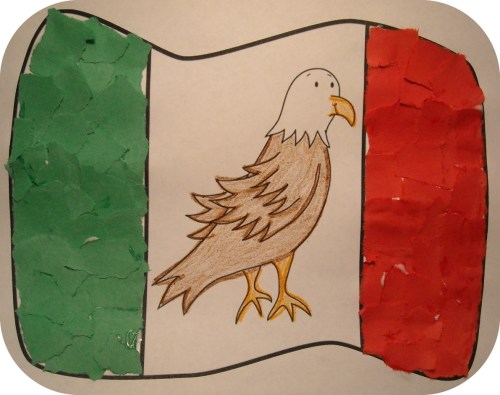
The Irish flag is flying again at an Irish pub in northeast Florida, where city officials suspended a ban on flying non-U.S. flags just in time for St. Patrick’s Day celebrations on March 17.

[…]

The sisters said they had flown the green, white and orange Irish flag alongside the American flag in front of their pub for eight years, and were shocked when code enforcement officers gave them a citation on February 20. It said they had 24 hours to “cease display of flags other than American flag.”

The obscure ordinance was passed in the 1990s as part of a previous administration’s attempt to clean up an unsightly commercial area, according to Marks. 


Emphasis mine. How much do you want to bet that “unsightly commercial area” translates to the Mexican/Cuban side of town?

Burn, Comic-Con, Burn! An Alan Smithee Post

The latest edition of NPR’s Pop Culture Happy Hour podcast, jumping off from an A.V. Club post called “The changing face of nerds and autism in popular culture,” briefly discusses the issue, or the figure, of the “fake nerd.” One response from Linda Holmes (I’m paraphrasing) was that the scorn heaped on the fake nerd, especially if that target is a woman, stems from a narcissistic and persecution complex-fueled idea that someone would want to fake credibility in order to gain access to this group. In other words, the fake nerd serves to reinforce nerd culture’s self-image as an elite group and also an outsiders constantly attacked by the mainstream. She contends that this is an irrational belief, and that the fake nerd is a bogeyman that enforces ingroup/outgroup barriers.

I don’t agree.

I don’t completely disagree, either. One strain of nerd culture–the strain that gives rise to the public relations problems that Reddit is currently engaged with–gives voice to a kind of ambiguously ironic white male pride (“white and nerdy”); it’s hard for me to not read that as a reaction to the greater visibility and power of women and racial and sexual minorities that is only a few steps away from the Tea Party in the political arena. Even though it may not be meant to be exclusionary, casting nerd interests as some inevitable consequence of  one’s whiteness or maleness cannot but draw suspicion to those who identify as nerds that are not white or male. Returning to Holmes’ point, it may be true that it is irrational to believe that people pose as nerds to gain social cachet. They don’t pose to gain social capital, they pose to gain dollars.

Nerd culture is not just a product of people liking certain things, it a product of people buying things. The Wikipedia entry for Nerd is a mess–as one might expect of an article that is a) about a cultural phenomenon b) about a cultural phenomenon in flux and c) about a cultural phenomenon in flux in a space that is itself a product of that cultural phenomenon in flux–but it does contain this gem: “Nerds can either be described by their hobbies and interests, or by abstract qualities such as personality, status, social skills, and physical appearance.” If you listened to the PCHH episode and read the Noel Murray article, you might notice that they seem to be talking past each other. Murray writes about the way that pop culture has shifted away from point-and-laugh stereotypes to more nuanced portrayals of characters on the autism spectrum, including Abed from Community, Sheldon from The Big Bang Theory, and Max from ParenthoodPCHH discusses nerd culture as just another community–united by common interests–in which a whole ecosystem of personality types and social facility exists. Where these two conversations meet is in discussing nerd culture as a contested space in which the difference between whether you’re a nerd because of what you like versus what you are like is increasingly in tension.

About nerd as personality type, Murray writes:

[W]hat bothers me is the hoariness of jokes about bespectacled weirdoes who know the details of every Doctor Who episode but will never know the touch of a woman. First of all, they’re about as cutting-edge as jokes about airline food. Second of all: Did you know that many autists find it uncomfortable to look other people in the eye, or to be hugged? So what’s the joke here exactly? That two recognized traits of people with autistic spectrum disorders—obsessive interests and difficulties with social interactions—are a thing that exists?


I’ve been wondering lately what’s behind the ongoing mockery of certain gawky types, and the unwillingness to extend them any empathy. Maybe it’s an overreaction to the way that “nerd culture” has been thriving over the past decade, as geek-friendly movies, TV shows, and videogames have become dominant, and as people with a facility for computer programming and statistics have become major players in arenas like sports and politics. Perhaps one explanation for the persistent contempt for the “nerdy” is that they’re becoming less of a marginalized subculture and more mainstream.

On nerd as an obsessive about non-mainstream culture, in a 2010 Wired article that received a lot of attention, Patton Oswalt writes,

Fast-forward to now: Boba Fett’s helmet emblazoned on sleeveless T-shirts worn by gym douches hefting dumbbells. The Glee kids performing the songs from The Rocky Horror Picture Show. And Toad the Wet Sprocket, a band that took its name from a Monty Python riff, joining the permanent soundtrack of a night out at Bennigan’s. Our below-the-topsoil passions have been rudely dug up and displayed in the noonday sun. The Lord of the Rings used to be ours and only ours simply because of the sheer goddamn thickness of the books. Twenty years later, the entire cast and crew would be trooping onstage at the Oscars to collect their statuettes, and replicas of the One Ring would be sold as bling.


This is why nerd culture will continue to get attention, continue to get mainstream acceptance. There’s no way to monetize obsession. But its incredibly easy to monetize the loose collection of interests that comprise nerd culture, as easy as a Family Guy gag or a comic from The Oatmeal. And the people monetizing don’t really care whether their market has nerd cred or not, just that it will continue to buy what they’re selling.

September/October

St. Jerome In His Study, Jan Van Eyck (1395-1441)

I’ve been completely away from this blog while I’ve gotten back into school. This year I’ve been, for the most part, insanely focused and productive to a degree that I’ve never been before. But it has brought its own rhythm to my days, and there’s not a whole lot of time for updating here. I’m sticking to my commitment to not apologize and to only update when the spirit moves me, but I still like to check in from time to time to remind that I’m not yet an absentee landlord.

I’m not prolific in updating in other online spaces right now either, but a reminder that I’m available on Twitter @matteilar.