clickwheel dreams

There’s Las Vegas and there’s Las Vegas. Technically the Las Vegas Strip isn’t even in Las Vegas. It’s in the Clark County townships of Winchester and Paradise. The name Winchester was chosen by the public in a naming contest. “It was said to have more of a Western flavor” than the other nominations. The name Paradise was chosen by five casino owners in celebration of its shelter from the Mojave Desert and municipal tax collectors. And somewhere off the Strip, far from Paradise, was a resort that my aunt owned a timeshare in.

I’ve heard that timeshares suck. I don’t understand how they work. I do know that my family ended up in Las Vegas often. I don’t know it if the timeshare ended up less expensive than regular hotels, but we used it.

One day in 2002, I was waiting outside the resort for the Deuce to take me and my family to the Strip. There was a guy, a townie, waiting for another bus. I saw two things that would become omnipresent over the next 10 years. I saw a pair of Apple earbuds, and I saw him reach into his pocket, pull out his iPod, change a song, and put it back into his pocket.

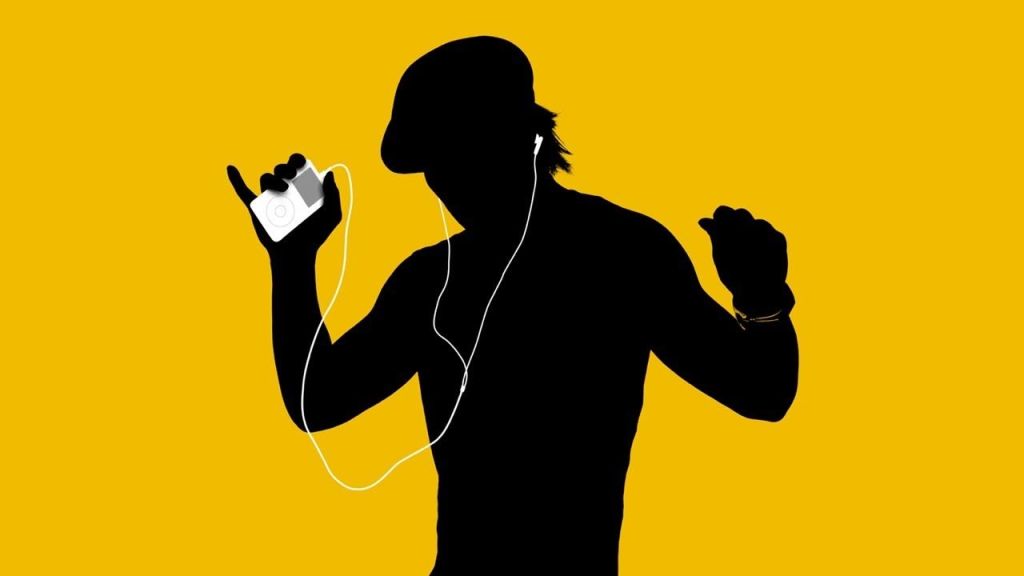
I may have seen The iPod ads with the dancing silhouettes. If so, they hadn’t made an impression. In an instant I saw that the iPod was freedom. No more flipping tapes. No more pretending that the Walkman’s anti-skip buffer was enough to make CD playing portable. I had to have it.

I never quite owned an iPod classic. Their time came and went. For years they were too expensive. I had a knockoff, then lost the knockoff. The iPhone came out and I begged my dad for one. In the Apple Store, my dad mugged a heart attack to the guy ringing us up after hearing the total. He thought he was hilarious. The Apple guy awkwardly stood waiting for him to stop laughing at his own joke. I wanted to die.

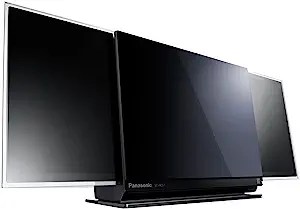
Panasonic SC-H57

This weekend I bought a secondhand Panasonic CD player with integrated iPod dock. I love designer CD players from the early to mid 2000s. They will never design them like that again. It’s all Bluetooth speakers from here on out.

It’s hipster consumerism, but I can’t apologize for being sentimental. It’s a beautiful thing to construct romance and meaning from consumer technology that was everywhere basically yesterday. I’ll find the poetry in the Bluetooth speaker too. Give it time.

eyePhone

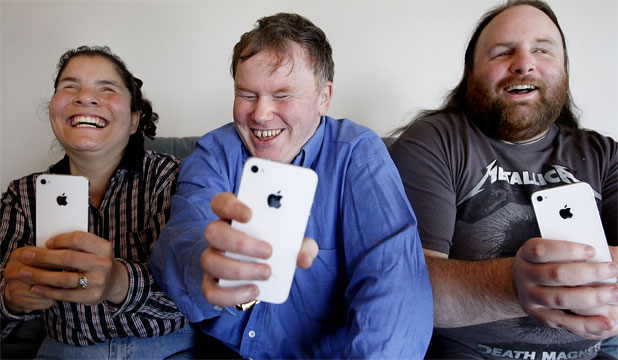
Blind iPhone users, via stuff.co.nz.

I was fascinated by this story from The Atlantic, describing how accessibility features of the iPhone are rapidly changing blind users’ daily lives. A description of some of the features:

Tatum is what Edmead calls “a techie.” She had a previous, failed experience with the Android, which almost made her give up the touch technology. Luckily, she kept her mind open enough to see how those around her are adapting to the iPhone. “I started ‘Info share’ five years ago, where a group for visually impaired people can share information.

A young lady, Eliza, got an iPhone, and she was entranced.” The sales representatives at the Verizon store, she says, were very nice and helped her set up her email account and sync her contacts. They didn’t know much besides that, and she had to teach them how accessibility is turned on (through Settings.) “They all went ‘Whoa!’,” she says.

Tatum and Rios happily volunteer to show off all their iPhone can do. “See, I tap it,” says Tatum, her iPhone stretched in front of her, “and it started reading out what is on the screen.”

Blind people use their iPhones slightly different than the sighted because, well, they can’t see what they’re tapping on. So instead of pressing down and opening up an app, they can press anywhere on the screen and hear where their finger is. If it’s where they want to be, they can double-tap to enter. If it isn’t, they’ll flick their finger to the right, to the left, towards the top or the bottom, to navigate themselves. The same for the simple “slide to unlock” command.

The article goes on to describe the way that apps developed specially for the blind, including navigational apps, color identifiers, and paper money identifiers, have started to replace single-use machines and even open up new sensory experiences. Austin Seraphin describes on his blog some of his first impressions in his first week of using an iPhone. Here, he describes being able to explore and share the world of color with the aid of an app:

The other night, however, a very amazing thing happened. I downloaded an app called Color Identifier. It uses the iPhone’s camera, and speaks names of colors. It must use a table, because each color has an identifier made up of 6 hexadecimal digits. This puts the total at 16777216 colors, and I believe it. Some of them have very surreal names, such as Atomic Orange, Cosmic, Hippie Green, Opium, and Black-White. These names in combination with what feels like a rise in serotonin levels makes for a very psychedelic experience.

I have never experienced this before in my life. I can see some light and color, but just in blurs, and objects don’t really have a color, just light sources. When I first tried it at three o’clock in the morning, I couldn’t figure out why it just reported black. After realizing that the screen curtain also disables the camera, I turned it off, but it still have very dark colors. Then I remembered that you actually need light to see, and it probably couldn’t see much at night. I thought about light sources, and my interview I did for Get Lamp. First, I saw one of my beautiful salt lamps in its various shades of orange, another with its pink and rose colors, and the third kind in glowing pink and red.. I felt stunned.

The next day, I went outside. I looked at the sky. I heard colors such as “Horizon,” “Outer Space,” and many shades of blue and gray. I used color cues to find my pumpkin plants, by looking for the green among the brown and stone. I spent ten minutes looking at my pumpkin plants, with their leaves of green and lemon-ginger. I then roamed my yard, and saw a blue flower. I then found the brown shed, and returned to the gray house. My mind felt blown. I watched the sun set, listening to the colors change as the sky darkened. The next night, I had a conversation with Mom about how the sky looked bluer tonight. Since I can see some light and color, I think hearing the color names can help nudge my perception, and enhance my visual experience. Amazing!

Some other interesting links: AppAdvice has a list of apps targeted toward blind users, or with thoughtful support for accessibility functions, as well as a list of games that blind users may enjoy.  MacWorld has a rundown of where these settings are located, and what each means. One feature not on the list, but mentioned by Seraphin in the post linked above, is that blind users have the option of disabling the screen and camera, which strikes me as pretty badass in the same way that when I was a kid I thought it was awesome that people who could read Braille could read in the dark. Finally, in a different realm of accessibility, David Pogue of the New York Times describes Apple’s implementation of custom gestures and options for users that don’t have the physical mobility to use multitouch gestures. Comments on the post from users are very interesting. Here’s one sample:

My 11 year old nephew has cerebral palsy. The iPad has opened up a whole world for him. Before the iPad, Nick needed help to surf the web, type, etc., with a regular computer. He lacks the strength and accuracy to press down on a physical keyboard. In addition to motor control problems, Nick’s speech can be difficult to understand. He has used and benefitted from two different AAC devices (assistive and augmentative communication) but they never became something he used in his daily life, only at/for school.

But Nick can use the iPad 100% independently, even without Assistive Touch, because he can tap, swipe and type on the large on screen keyboard, which is much larger than any smartphone. He can do everything on it and with it that any other kid can. He WANTS to use it because it’s cool and because it’s NOT for the disabled. He’s not different when he uses his iPad, he’s just like any other kid. Only luckier, cuz most of his friends don’t have one!

I am a speech-language therapist and I use Android text to speech apps with my adult patients with aphasia, but only has a demonstration of what’s possible because the keyboards are too small for them to use. I was already thinking of switching to an iPhone, and this is another reason to do so. I know that there is a risk of simply giving people with disabilities, especially kids, iPads and expecting them to develop communication skills. It doesn’t work that way, and over using iPads for therapy and education does more harm than good. But in the hands of capable teachers, iPads, iPhones and iOS can change lives.

All of this is super cool and super interesting, but the thing that I was really tickled by in the Atlantic story was this comment from one of the blind advocates:

Yet for all that technology has helped achieve, many in the blind community fear it might result in illiteracy in the generations to come.  “I think the technology that’s coming out right now is wonderful,” says Chalkias,”but I also think it’s dumbing us down because it’s making everything so easy. I have a lot of teens who have speech technology and they don’t know how to spell, and it’s horrifying to see that.”

Rios has encountered the same problem. She is an administrative assistant at the music school of Lighthouse International “an organization dedicated to overcoming vision impairment,” based in Manhattan, and a tutor at CCVIP who helps Maria with teenagers. “Even now I come in contact with kids who can’t spell,” she says. “Young adults don’t read Braille because they have screen readers who read for them.”

“I definitely think there’s benefits to this technology” Chalkias says. ”But if it keeps getting easier we’re just going to be a society of idiots that can’t do anything except tell our computers what to do for us.”

Among all populations, the more things change, the more things stay the same.

false prophets

I thought I would break my silence to cop to being one of the many duped by Mike Daisey’s monologue, The Agony and the Ecstasy of Steve Jobs, excerpted in This American Life. In January, when the episode aired, I made a little bit of hay with it, which I now regret.

You can find the transcript of TAL‘s “Retraction” episode here. The audio is also up here.

From Ira Glass’ blog post about the retraction:

I have difficult news. We’ve learned that Mike Daisey’s story about Apple in China – which we broadcast in January – contained significant fabrications. We’re retracting the story because we can’t vouch for its truth. This is not a story we commissioned. It was an excerpt of Mike Daisey’s acclaimed one-man show “The Agony and the Ecstasy of Steve Jobs,” in which he talks about visiting a factory in China that makes iPhones and other Apple products.

The China correspondent for the public radio show Marketplace tracked down the interpreter that Daisey hired when he visited Shenzhen China. The interpreter disputed much of what Daisey has been saying on stage and on our show. On this week’s episode ofThis American Life, we will devote the entire hour to detailing the errors in “Mr. Daisey Goes to the Apple Factory.”

Daisey lied to me and to This American Life producer Brian Reed during the fact checking we did on the story, before it was broadcast. That doesn’t excuse the fact that we never should’ve put this on the air. In the end, this was our mistake.

James Fallowes, editor and China correspondant for The Atlantic, writes about his and other China reporters’ responses to the original story and the revelation of its fabrication:

When I heard Daisey’s Shenzhen riff on C-Span late last year, I wrote to a longtime friend who is also a friend and supporter of Daisey’s and had been trying to get us together. I said: This doesn’t sound right. I also said that I was bleakly amused by Daisey’s presenting the far-off exotic territory of “Shenzhen, China” as some super-secretive realm that he alone had thought to unveil. I pointed out that I had done a gigantic cover story and on-line slide show about this unknown land back in 2007, plus later in a book and a video series; that the Wall Street Journal had done hundreds of stories with Shenzhen datelines before and since; that there had been countless books, picture shows, news features, etc, about the Shenzhen phenomenon; that “Foxconn” was hardly an unknown enterprise; etc.

What I didn’t do was push the point any further. Evan Osnos very well explains one reason why many reporters (other than Schmitz) failed to do so: the suspicion that in a place as big, chaotic, contradictory, and surprising as today’s China, Daisey could indeed have come across circumstances others had not discovered, or had stopped noticing. I also made a perhaps-craven “life is too short” calculation: I would spend my time trying to explain the China story the way I could, rather than devoting the time to picking apart an account I thought was wrong.

I thought I would also add a few words about why I think this whole incident is so unfortunate:

Chinese manufacturing is a sector of the global economy that is closed off to the average American consumer, is located at the intersection of incredibly powerful interests, and is covered by media outlets that make claims that are difficult to evaluate.

There are so many barriers to finding firsthand or reliable information about factory conditions. There’s a vast amount of difference between Chinese manufacturing plants and American factory farms, which also have an interest in keeping their operating procedures hidden from public view. One is the fact that it’s a hidden part of the supply chain for products that we use every day. Members of Apple’s design team at all levels are more accessible and have a larger public profile than the CEOs of the contractors and subcontractors that execute those designs. Then there’s the sheer distance between the consumer and the factories where the products are made, not to mention the language and cultural barriers that separate consumers and workers. Even if we had some grasp of the geographic and cultural dynamics of manufacturing in China, these are still closed factories, bound by secrecy policies.

And this information is extremely important. Large corporations in America, large corporations in China, and the Chinese government itself all have a great interest in keeping this part of global manufacturing hidden and keeping attention off of working conditions in these factories (not to mention the opposing interests of other electronics makers, domestic labor unions, and trade protectionists). None of these groups has a reputation for transparency, or ethics in any sense that a human being would understand. Yet these groups also have a tremendous amount of power to spread misinformation and competing narratives, as well as having open access to all of the information in order to strategically leak information and half-truths. Which makes it even more important that we have reputable reporters on the ground that have the expertise to sift through these competing claims for us.

And these media reports are not conclusive. Even the New York Times report on conditions in the factories of Apple’s supply chain, perhaps the most detailed reportage on the issue, makes it clear that it’s very hard to get a clear picture of the whole manufacturing ecosystem. And, as other journalists have noticed, the report did not even touch on the manufacturers for other tech companies or the conditions in the mines that supply raw materials for the electronics. I had heard about many of the things that Mike Daisey mentioned in his monologue. But I had no way to evaluate those claims, no one who was willing to stand up and vouch for the story.

The most appealing aspect of Daisey’s monologue was the idea that an average consumer–just like you!–might go to one of these factories and witness the conditions we’ve been hearing so much conflicting information about. There’s a tremendous power in saying “I saw these things. I witnessed these events.” And so it is tragic, and ironic, that the lasting effect of all the attention that Mike Daisey was able to bring to Apple might end up as another competing narrative spun from another web of truth and lies.


update: apple

Quick update to the Mike Daisey/Foxconn/Apple story I wrote about last week: The New York Times has written a long article about conditions in the factory and about Apple’s efforts to reduce labor violations in their supply chain. Two things that I thought were particularly noteworthy:

First, I thought it was very interesting that the article chose as its central human figure one of the relatively high-paid, skilled workers in the plant. The fact that this worker had high wages and extra perks relative to most of the other workers in the plant highlights the failure to protect workers from hazardous conditions as well as the callous way that large manufacturers treat the lives of their workers.

Also deeply fascinating was this selection of reader comments on the article from Caixin, a Chinese business magazine that the Grey Lady partnered with to publish the article in China. Granted, these comments come from people that both have internet access and are on a business magazine side, but they show the same range of opinions on the labor abuses that you would find in the US, from

Even though Apple should be ethically condemned, the key point is: whether the working conditions inside the factories are supervised by law. This (supervision) is the duty of judicial officers and labor unions. Now everything is driven only by G.D.P., so which government official would dare supervise those companies? They (the governments) have long reduced themselves to the servant of the giant enterprises.

to 

 By the way, construction workers and farmers are also living a harsh life in China, shall we also boycott housing and grains?

The This American Life episode struggled with this ambivalence; it’s true that China’s mass manufacturing industry has raised more people out of poverty than any other endeavor/period in history, but its also true that this has come at a staggering human cost. The queasy discomfort that we feel at buying these products is also felt by the countries that sell them.

profit

EDIT: This American Life has retracted the episode after Mike Daisey was found to have fabricated some of the information he presented in the episode. Links to clarifying information and my take here.

If anybody didn’t catch last week’s episode of This American Life, “Mr. Daisey and the Factory,” you should listen to it right away. The episode is an hourlong excerpt of Mike Daisey’s one man show, The Agony and the Ecstacy of Steve Jobs, a timely monologue about Steve Jobs and the working conditions in the factories in China that make most of the world’s electronics, from iPhones to Xboxes.

One thing that I was thinking about while I was listening to the episode was what it means, in this day and age, to be a prophet. Because Mike Daisey sounds like a prophet. I think we have a confused concept of what a prophet is, because the word is so close to prophecy. Clearly, the word comes from what a prophet does, but I think there is a big difference between prophecy and the message that the prophet delivers. I was reminded of the passage from the 2nd book of Ezekiel, where God comissions Ezekiel to deliver a message to the Israelites:

And the spirit entered into me when he spake unto me, and set me upon my feet, that I heard him that spake unto me. And he said unto me, Son of man, I send thee to the children of Israel, to a rebellious nation that hath rebelled against me: they and their fathers have transgressed against me, [even] unto this very day. For [they are] impudent children and stiffhearted. I do send thee unto them; and thou shalt say unto them, Thus saith the Lord GOD. And they, whether they will hear, or whether they will forbear, (for they [are] a rebellious house,) yet shall they know that there hath been a prophet among them.

Our concept of prophecy has everything to do with visions of the future, reducing the prophet to a divine fortuneteller, but I think it’s clear that the role of this prophet has very little to do with warning about the future, and everything to do with recontextualizing today. Prophets are there as a destabilizing force; they demand that you consider the possibility that what you consider everyday life is actually the perpetration of a great evil. And because these prophets make us really look at the way that we live our lives–and because they see with long sight–it is in their nature to be hated by the power structure that feeds on the status quo, despised by the masses that have become used to the inertia that prevents change, and beloved by the generations that come after them.

I cannot say where Mike Daisey’s story leads, or what the end of the struggle that he is a part of is. Just as there have always been prophets, there have been false prophets, but I don’t think he’s a false prophet. I do know that I never would have sought out his monologue, or the information he uncovered if it hadn’t appeared on TAL. When his monologue first began attracting attention, I saw the title of the show, rolled my eyes, and closed the tab. I believed in the economic (now) conventional wisdom that as much as modern offshore manufacturing may pair 16th century beliefs about individual worth with 21st century labor management technology, the only thing worse than sweatshops for poor countries is no sweatshops. And I may still believe in that empirical argument. But Mike Daisey does force you to confront the fact that every cheap computer that you buy, every Xbox, every Apple device, is subsidized–made cheaper–by wear and tear on real people’s bodies. There’s a staggering quotation from his Chinese interpreter that Daisey uses to great effect, a quotation so perfect that I winced when I heard it, “You hear stories, but you never think it will be so much.”

Indeed. Listen to it.