
welcome back

Little Matt in 2008/09 ish.

I started this blog in the fall of 2008. It was a welcome project in my first year of college, in a new city and a new climate that made me want to stay indoors all the time. It was a distraction, a way to channel opinionated energy. During the zenith of the blogosphere, it felt like spending all of this time writing into littler browser windows was worthwhile because we all had firsthand experience of stumbling upon (r.i.p. StumbleUpon) a blog and falling down a rabbit hole of individual obsession and personal expression.

You had to be there, just like you had to be there when Tumblr was good and still had porn, or when Twitter was good and wasn’t full of Nazi grandmothers.

You do anything long enough and it accumulates its own gravity. Even though 95% of everything I’ve posted reflects a self that’s no longer around, I’m glad that it exists. I’ve been doing this long enough that I have learned to skip the apology post about not posting. No money is changing hands, this is something I do for my own satisfaction. Here’s what’s changed this time, though:

For the first time, I have moved to my own domain and I am managing my own hosting. In the summer of 2019, I took a programming class with Epicodus, a programming boot camp based here in Portland, and had a great experience. I learned how to use command line tools and got a very shallow introduction to the web development stack. I’ve been eager to get my own little piece of the web set up, and because this has been the most side of side projects, it took me a couple months to migrate the blog.

As frustrating as it has been, it has been very fun to learn more about how the internet works one level deeper than I understood before: how to configure DNS records, how to implement security certificates to serve the site over HTTPS rather than HTTP. Connecting remotely over SSH and FTP. I have invested a little money and a whole lot of time to get the blog to almost exactly what it was on the WordPress-hosted site. All of the positives are intangible, but they mean something to me.

I am hoping to keep writing. I thought I wrote about this already, but if I did I can’t find it: I do think that 2009 was the height of social media and the internet for me. Social media had not been monetized yet, let alone changed to serve us dark feedback loops of anxiety and desire. There were great people writing about film and tv and movies in a way that was so much fresher and obsessive than magazines and newspapers permitted. Gawker was incredible, music was easy to find. Doxxing was rare and the general tone was optimistic.

I am trying to find my way to the best of that. Engaging in slower, better writing than faster, worse writing. (Quickness is a valuable quality in wit, scorn, and parody, and not so valuable in other registers of writing.) Taking my recommendations from real people, not algorithms. Going away and coming back from the internet, like a hunter leaves the cave, rather than having everything brought to me predigested.

Part of that 2009 ethic is coming back to “long form” (1.e. more than 280 character) writing. I have the time to think right now. 2020 is a high-water year for distraction because everything is a distraction while nothing quite distracts. I hope you’ll read along with me.
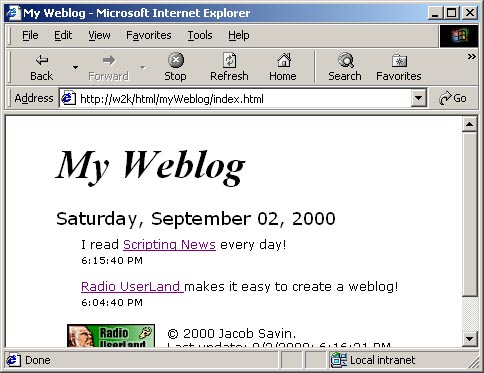
The Agony and the Ecstacy of Web Logs

I was poking around kottke.org and saw a post referencing the 10th anniversary of another blog, waxy.org. It’s a very high quality blog, and I had a great time poking through the archives. What’s been sticking with me, though, are some of the thoughts in the birthday post arguing for a personal vision and less content as the key to a great blog in the new internet landscape:

Ten years ago, I started this site with three simple rules: no journaling, no tired memes, and be original. 18 months later, I added a little linkblog.

In those ten years, I’ve posted 415 entries, including this one, and over 13,000 links.

….
 

Personal homepages and weblogs have long since faded from the popular trends. They’re no longer hip and nobody’s launching the hot new startup to reinvent them or make them better.

Most of the interest in writing online’s shifted to microblogging, but not everything belongs in 140 characters and it’s all so impermanent. Twitter’s great, but it’s not a replacement for a permanent home that belongs to you.

And since there are fewer and fewer individuals doing long-form writing these days, relative to the growing potential audience, it’s getting easier to get attention than ever if you actually have something original to say.

The particular information economics of the internet mean that the world of personal blogs and homepages have gone through as much change, though on a smaller scale, as the newspaper industry, though in an even more compressed timeline–and this is coming from someone who wasn’t even writing online in those early days. There’s way more competition for space; almost nobody gets attention anymore by being simply an X [stripper, line cook, police officer] that blogs. Even project blogs, á la Julie and Julia have become passé. And the early standbys of blogs: link aggregation, tv show recaps and the like have been almost entirely consumed by professional bloggers, whether they work for traditional news outlets, non-profit organizations, or commercial blogs. The point that Andy Biao (of waxy) makes is that personal blogs are not going to be able to compete on frequency of updates or density of coverage. The only way that they can compete is with personal vision and quality of content.

This is something I’ve been thinking about a lot as I go through another period of social media self-loathing. I’ve learned not to delete Twitter or Tumblr accounts because I inevitably will want to update or access the network, but just as predictable is the dissatisfaction at spending my time filling my thoughts with what is essentially disposable information.

In a culture where sharing of information has never been as easy. We are pressured to share our opinions and preferences both on a personal level, through peers on social networks, and in the aggregate, through the advertising that supports them. It has become the case that the rules of knowing when to speak, and knowing when to be silent, have broken. Though his famous quotation “Whereof one cannot speak, thereof one must be silent.” easily fits in a 160 character limit, one suspects that Wittgenstein would not have been a prolific Twitterer.

So I’ve come around to the idea that in a world where we’re constantly incentivized to give our own opinions, in a world where we’re constantly reminded how many of our opinions are shared with so many people, the most radical act of self expression is to discern which are those unique thoughts, to discern which thoughts must be expressed. And if that means that I only update a couple times a month, perhaps that is the exact amount I should be updating.