january book roundup

All We Can Do is Wait Richard Lawson

What a sweet little book! I picked it up because I follow Richard Lawson on Twitter, but I guess I wasn’t following him when it was released. Although the novel starts with a dramatic bridge collapse, most of what unfolds are the quotidian dramas of being alive: insights into the self that you try and shove down into the unconscious, trying to be brave enough to make a leap into what you know you have to do, the loneliness and despair of trying to stay connected to someone who is trying like hell to run away.
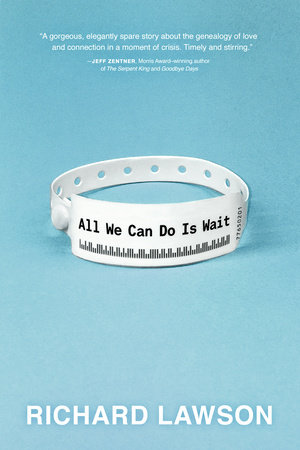
All We Can Do Is Wait by Richard Lawson book cover.

Now, maybe you watch a lot of Netflix crime shows and the only thing that seems dramatic now is a race to decode cryptic clues before a baby rapist detonates explosives underneath the final match of the world cup. Compared to that, this book may very well seem plotless and boring to you. I cannot help you there.

I give it a few extra points for incorporating some teen characters that are neither the bland upper-middle class that usually peoples YA nor are they only in the book to edify the white characters. A few points knocked off for still centering bland upper-middle class teens.

The only reservation to my recommendation is that it never answers why we were looking at these characters. They were all compelling, but they never quite cohered together or interact with each other dramatically because the present-day narrative is packed into a single day. Second, although it has a beautiful message about dealing with uncertainty and taking each day as it comes, it doesn’t quite allows the reader to take it away for their own life, unless your loved one has been trapped in a bridge collapse.

Overall I thought it was a strong debut novel and I’d love for Lawson to get the chance to write another one.

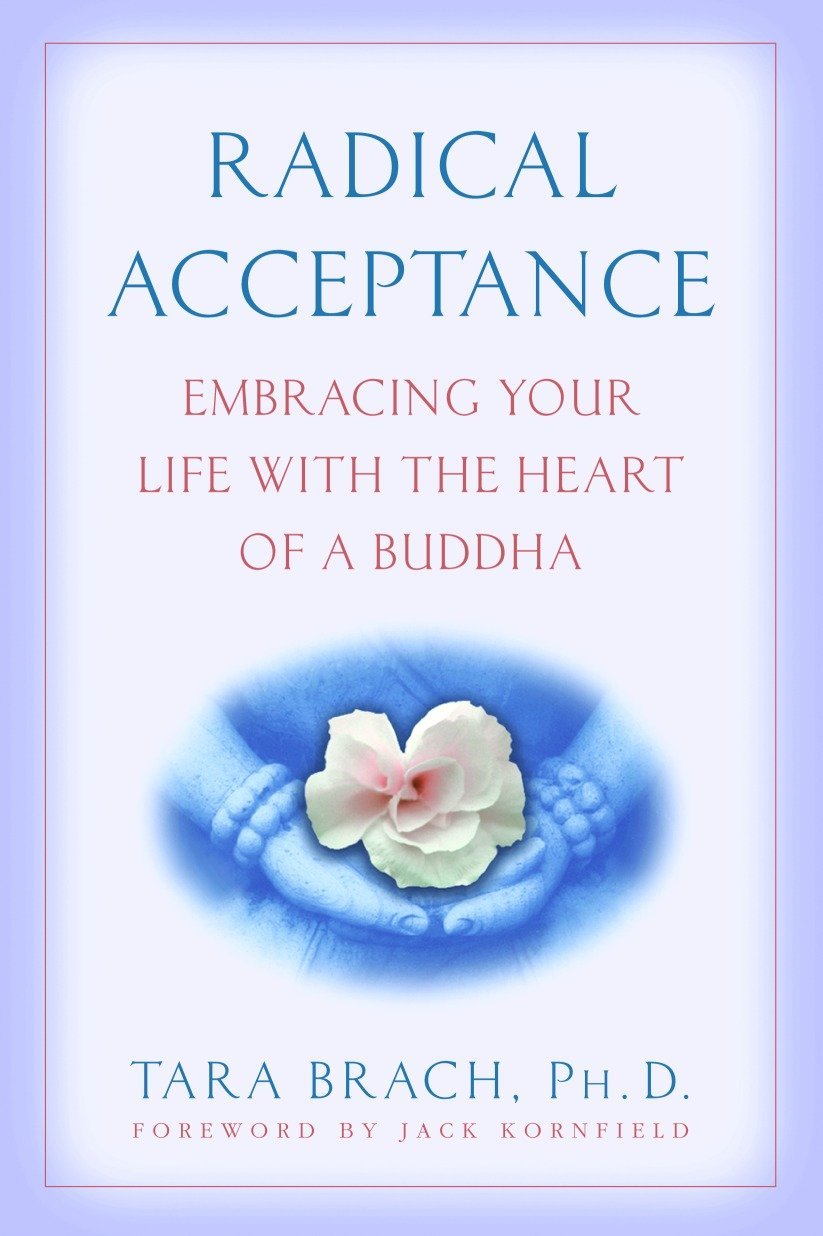
Radical Acceptance ⪼ Tara Brach

This is, like, a very important and beautiful book to me. Tara Brach takes clear aim at the voices in our heads that tell us that we don’t deserve happiness, that keep us stuck in our wounds, and try and keep us disconnected from our true feelings because we worry that if we open ourselves up to them they might drown us, like one more passenger on a lifeboat that’s barely above water.
Writing about self-help is vulnerable to me because it’s like shouting Hi! I have all these problems. And they are also easy to make fun of, and not even in a mean-spirited way. There is something a little goofy about looking to Buddhism for answers (as an American, given the cultural history of “looking to the East” for enlightenment) or taking in meditations with exercises like saying hello to your pain. There’s a real and sad truth to texts like these: I turn to them when I need to hear them. I allow them in when trying to muddle through endless grey days without compassion for myself is worse than trying to do something about it.

Self-help/growth books are one of those things where some work for some folks and others work for other folks, so I wouldn’t just blanket recommend it to everyone. The most I can say is that if it seems like it might contain something you’re trying to find, you owe it to yourself to open it up and see if it is.

My Sister, the Serial Killer ⪼ Oyinkan Braithwaite
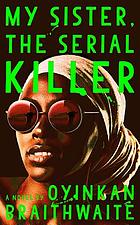
I did not love this book. I appreciated its unabashed pulpiness, but the premise is stated in the title and it doesn’t develop much beyond that.

What really worked for me is that the story is set in Lagos, and Braithwaite doesn’t waste much time explaining details in the setting for a reader like me that is not that familiar with Nigerian culture. Food, clothing, common phrases are incorporated and the onus on the reader is to learn or keep up. I really appreciate that because if Ezra Pound can drop in untranslated Italian, German, French and Sanskrit into poems that high school students are supposed to give a shit about, I think US reading audiences can grow up when it comes to non-European settings. I also loved the grotesquerie of the main character, there’s a slow inversion in the plot where we realize that a binary that we’ve been presented with is maybe not all as it seems, and I thought that was great.

What did not work for me is that the sharpness of the satire of beauty culture and social media culture kind of trails off, and I did not find it as clever as folks who loved it. I also think there wasn’t quite enough conflict, either external conflict in plot or in the internal conflict of the main character.

Don’t let me turn you off from the book, though. It’s a strong first book, and my rating is way more “this was not for me” rather than “this was bad.”
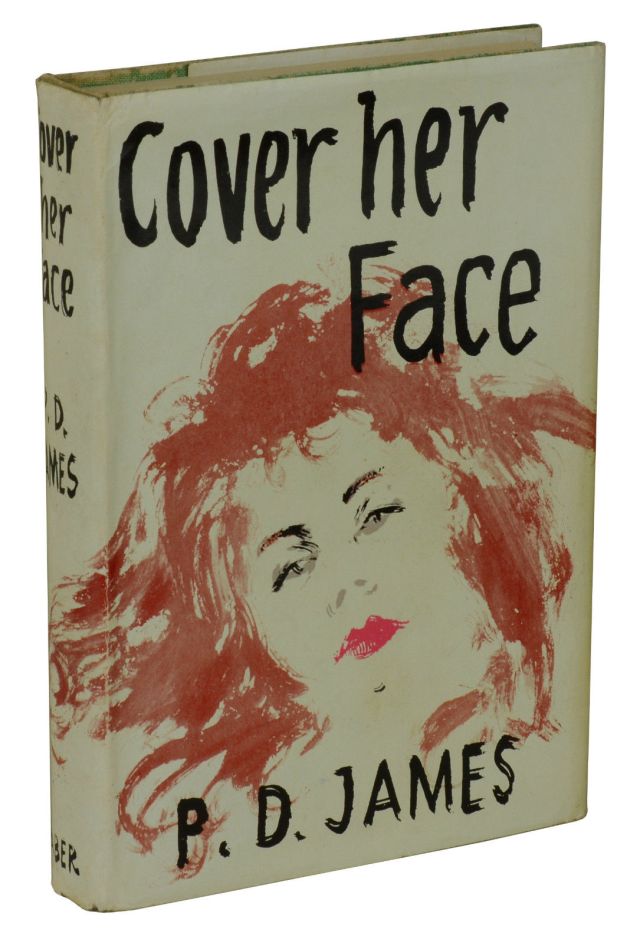
Cover Her Face ⪼ P.D. James

Read a whole post about it.

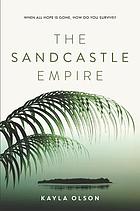
The Sandcastle Empire ⪼ Kayla Olson

This was, and I am not exaggerating, a terrible book.

What If This Were Enough ⪼ Heather Havrilesky
I am a huuuge fan of the Ask Polly advice column in The Cut. I come back again and again because I feel some kinship with her. She’s got sharper edges than a Dear Sugar, but like Sugar is deeply compassionate. Polly is funny, but not flippant or sarcastic like Choire Sicha’s NYT Styles section advice column.

I guess what I love the most is that she has become the person that people like me—millennial weirdos who feel stuck because all we seem capable of doing is looking around in shock and disappointment asking “oh my god, is this really it?”—send their deepest questions. And we have changed her in turn.

Like any book of essays, there are some that speak right to me, some that don’t speak to me at all, and some that I hope to god speak to some future, more courageous and secure form of myself.
IRL ⪼ Tommy Pico

Tommy Pico is incredible, and if you haven’t read him you should run not walk to one of his poetry collections. He writes directly to my sensibility–insecure, introspective, and horny–and the beautiful experience of reading something written for you is like drinking deeply of spring water or breathing in the air after a rain.
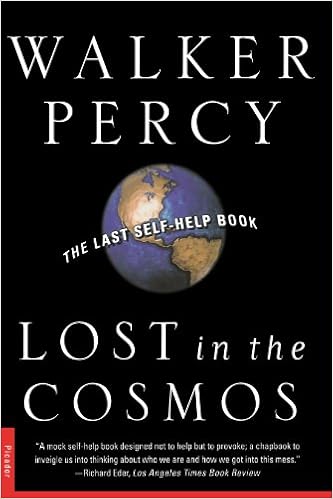
lost in the cosmos pt.2

Yesterday I finished with Lost in the Cosmos, by Walker Percy. Finished with, not finished.

It was so easy to nod along with his argument. I get this way with particularly nerdy hard sci-fi—particularly Neal Stephenson books—, I am not so good at knowing when the science ends and the fiction begins and it can be so disappointing to learn that, no, it couldn’t actually happen like that.

Walker Percy starts in such a lost and lonely place:

With the passing of the cosmological myths and the fading of [religion]… the self becomes dislocated… imprisoned by its own freedom… so that the very attempts to free itself, e.g., by ever more refined techniques for the pursuit of happiness, only tighten the bondage and distance the self ever farther from the very world it wishes to inhabit as its homeland… Every advance in an objective understanding of the Cosmos and in its technological control further distances the self from the Cosmos precisely in the degree of the advance—so that in the end the self becomes a space-bound ghost which roams the very Cosmos it [scientifically] understands perfectly.

Who could not be sucked into that? A space-bound ghost is how I feel a lot of the time. It was thrilling to read such a witty deconstruction of the modern condition (this was published in 1983 but Percy so perfectly anticipates the nihilistic and cheery tone of internet humor like McSweeny’s or The Toast it really wouldn’t be very hard to do an update by making the language less sexist and reformatting it into a Buzzfeed quiz). I felt seen (ghosts feel invisible).

Next followed a very funny section of mock self-help exercises deconstructing this modern alienation. For example, the situation of walking into a party a dreading starting a conversation with a stranger. Percy presents several plausible and blackly funny reasons one might be feeling that. This is followed by a section which teaches basic semiotics and sets up his big idea for the second half of the book:

The self is literally unspeakable to itself. One cannot speak or hear a word which signifies oneself, as one can speak or hear a word signifying anything else… no signifier applies. All signifiers apply equally.

[…]

For me, certain signifiers fit you, and not others. For me, all signifiers fit me, one as well as the other. I am rascal, hero, craven, brave, treacherous, loyal, at once the secret hero and asshole of the cosmos.

which feels like many many conversations I’ve had in therapy. It’s why I cannot hear my own accent. It’s why I have trouble unpacking my own privileges—when others encounter me, which of the advantaged or disadvantaged identities do they think is most important?

At this point I’m eating out of Walker Percy’s hand. I follow him through a meandering and mostly coherent rundown of some strategies for placing the self in one’s own world of meaning, and I end up following him right off the rails. Because it goes then to some bizarre places. My red flags go up when he describes Southern (American) writers as the most strange and disconnected of all people—Percy was a Southern writer. It goes in some reactionary places about sexuality and violence being worse in modernity (not that he was all reactionary, but open-mindedness to the early 80’s still looks like something different today). He starts describing alcohol as a coping mechanism for reconciling the escape of the self from itself through art (although Percy links this alienation and coping mechanism to 20th-century phenomenon like media, mass production and mechanized warfare, he is basically writing like a sadder E.T.A. Hoffman) and I gradually realizing that he’s just writing about his self.

And then I couldn’t read any more. Because it made me too sad.

There are still like 5 or 6 things in this book that fascinated me, that I may want to pick apart, but the first most honest thing that I should say is that I quit reading it because I was a coward. I want to believe that self-awareness means that you don’t make the same mistakes again, and Percy’s bleak outlook is that true self-awareness is categorically out of our grasp. I realized he was trapped in the same problem he was showing me, and all of the sudden my relationship to the text turned and it was like being at a party after it has peaked and you’re too drunk to get home and there’s nothing to do but sit with the host, drinking water, starting a conversation, realizing that neither of you have the energy to have it, and letting it drop.

cover her face

If you dream like I dream you know that dreams are heavy, and they make you sensitive to other people’s dreams. It’s like walking around with a bellyful of strong magnets, and getting close to other’s success and failures pulls at you like an electromagnetic field. I want to be a person that has the confidence to stay in my own body and my own dream, but I am not that person yet. The more I see a likeness of myself in another, the more I sense that kinship, the more jealous I get of their success. It’s small-minded.

That’s why it’s nice from time to time to be reminded that even—or especially!—good creators had their own growth process.

First edition of P.D. James’ Cover Her Face

I just finished listening to Cover Her Face, the first Adam Dalgleish novel by mystery writer P.D. James (1920-2014). I was a mystery-novel addict for a couple years at the end of middle school and end of high school. In that way where small stretches of time leave deep impressions when they come during periods of identity formation and reformation, it was only a couple years and maybe 200 books read, but I was a Mystery Reader™️ and I considered myself a connoisseur. I loved P.D. James’ novels because her police inspector hero Dalgleish was a former Anglican seminarian and sometimes poet who often got lost in introspective musings about good and evil as he investigated crimes. As I reflect with a little more knowing eye, I think there was probably something attractive to me about Dalgleish’s non-threatening attractive sexlessness (the characters that he encounters often note his blond English handsomeness, decency of character, and perfect manners).

Cover Her Face, however, is a bit of a mess. It seems to belong to a different generation of mystery novels, it’s set in an English country estate with lots of judgmental villagers. Not too much different than Agatha Christie’s Mrs. Marple novels, just without the…uh… charming ethnic stereotypes?* Dalgleish is a bit of a non-entity, there’s none of the depth that comes in into her later novels featuring the character. There’s a lot of judgey slut and victim shaming and maybe that’s an accurate depiction of village morés, but it’s still not that fun to read. And, frankly, the puzzle box plot was not that interesting and I found it extremely tedious to finish.

*It’s a joke, they’re not charming, although they were very confusing to a 12-year old Mexican-American boy in California who had no idea that you were supposed to find Turkish, Greek or Italian characters inherently suspicious.

But here comes the little bit of positivity!: what a remarkable accomplishment to keep growing and changing throughout such a long career! There’s little in this book that couldn’t have been written in the 1940’s, and yet one of my very favorite of her books, Children of Men, is fully contemporary*. Even though it was written in 1992, it anticipated today’s anxieties about the environment, demographic changes, and made some very good predictions about how modern media culture would handle an atmosphere of slow catastrophic decline.

*One of my very favorite phenomena is when a book is very good and it’s movie adaptation is  different but very good too. The book is more interested in the ideas of how a culture responds when it knows it has an ending date. What do you do with the artwork? What’s the point of keeping scholarly work going—or politics? How do you make meaning when none of your choices will outlive you. The movie is more interested in how scarcity creates a zero-sum mentality, and the way that in a civilization under threat, pluralism becomes threatened too. Both very good, and in very different ways. 

That seems to be all I’ve got.

Cover Her Face: I recommend skipping and reading one of her later Dalgleish novels. For completists only.

Bookshelf: My Brother's Husband, Vol. 1

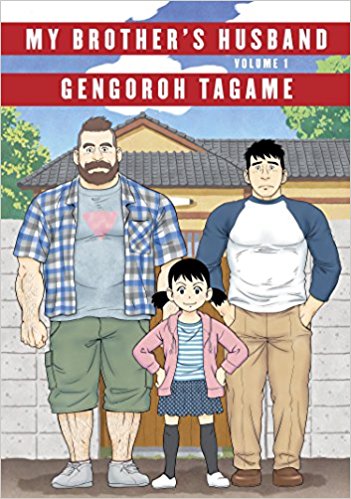
516p0M0uyeL._SX349_BO1,204,203,200_The loveliest reading experience that exists is the experience of coming across the right book at the right time, and feeling so completely understood by it, and feeling like you completely understand it. I picked up My Brother’s Husband, by Gengoroh Tagame, because I read that it was going to be adapted into a live action TV series, and that made me think about how few Japanese LGBT narratives and stories I knew. There are many manga and anime series that play around with homoerotic subtexts and images (including my current favorite, Yuri on Ice!!!), however—and, please understand that I have a very superficial understanding of Japanese culture—my perception is that many of those tropes are a slightly performative and desexualized playgrounds of desire for (mostly) straight preteen girls. The other examples of queer tropes in the culture are probably worse, which are the eroticized bisexual/lesbian chic like Ghost in the Shell, a melange of  badass and charismatic characters that queer readers love but that were created for the pleasure of straight boys.
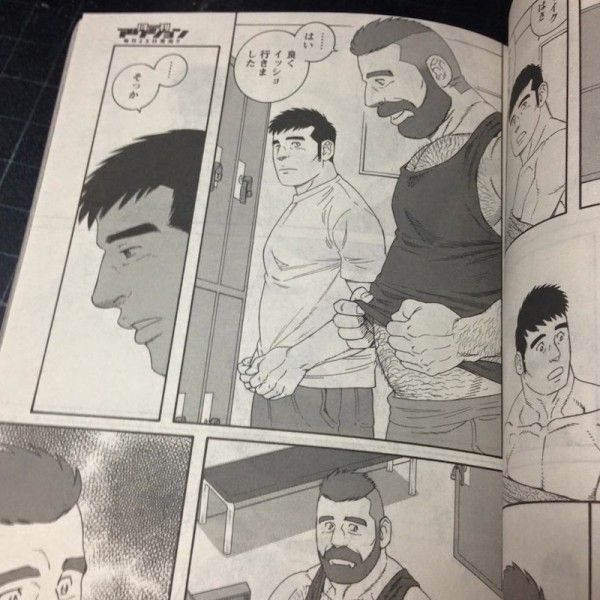
My Brother’s Husband is the story of Yaichi, who is forced to confront his feelings about his late twin brother, Ryōshi’s death and sexuality when Ryōshi’s widowed Canadian husband, Mike Flanagan, arrives at his doorstep to visit the town where the boys grew up. Mike is enthusiastically welcomed by Yaichi’s grade-school aged daughter, Kana, and this first of two volumes follows Yaichi through this brief visit as he struggles to balance his conflicted feelings about gay sexuality and his estrangement from his brother with his responsibility to his family and his love for his daughter. larger.jpg
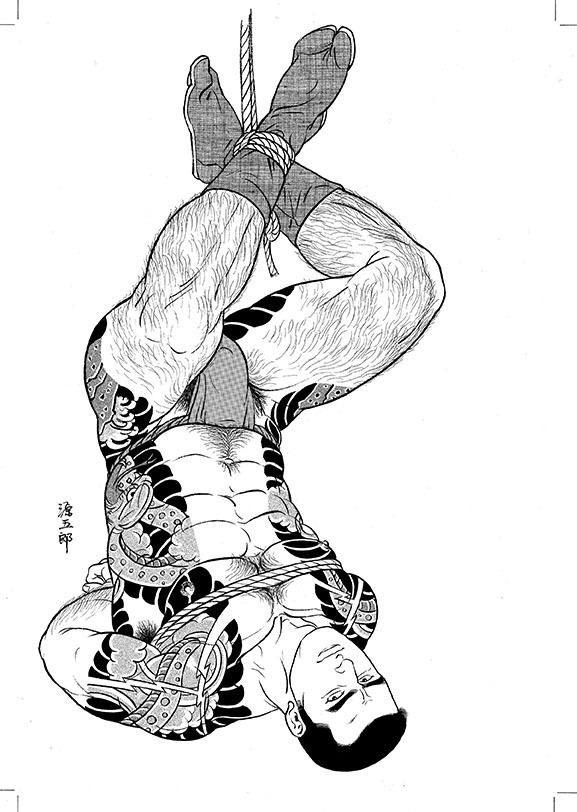
The sensuality of bodies is present on every page, in every panel. Tagame describes himself in his twitter bio as a “gay erotic artist,” and most of his work (which has not been officially published in English translation) is sexually explicit stories featuring BDSM themes and big, muscly, hyper-masculine men presented as both figures of fear and figures of desire. My Brother’s Husband, at least through the first volume, is completely G rated, however the art style is shot through with his aesthetic. When Yaichi meets Mike, he is overwhelmed by the reality of Mike and his brother’s relationship, but he is also overwhelmed by Mike’s physical self, his size, his strength, his beard, the hair on his body.
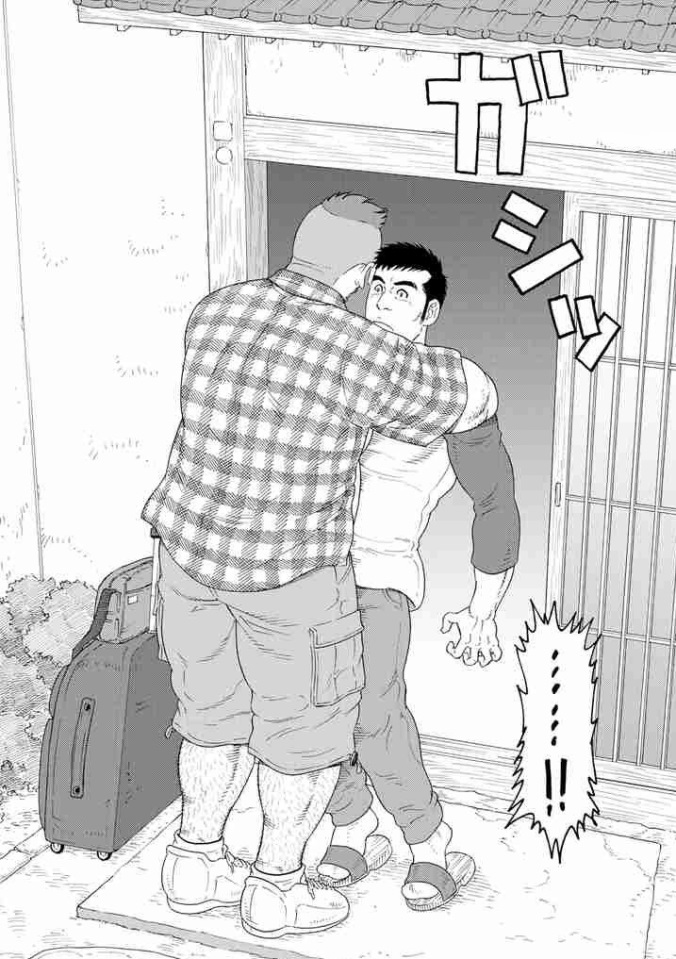
There’s not a whole lot of action on the surface; this is a very quiet domestic drama with lots of talking, Yaichi’s internal dialogues as he explores his own discomfort with Mike, and getting lost in his memories and regrets. But underneath all that is a whole story expressed through touch and care for the body. When Mike first arrives, he wraps Yaichi in a bear hug and calls him brother.
My-Brothers-Husband-1.jpg
This freaks Yaichi out, and he breaks out of the embrace and asks Mike not to call him that. As Yaichi explains to his daughter, Kana, “Japanese people don’t hug,” but he also admits to himself later that there is an undercurrent of homophobia and xenophobia to his response as well. Kana is completely unfazed by Mike, and is so excited to have a Canadian uncle that Yaichi’s standoffish attitude becomes rude by contrast. Yaichi’s comfort with Mike is shown without words through a growing physical intimacy, not through sex but through food, coffee and tea, the offer of a hot bath, a walk through a playground, and a shared visit to the gym.
I couldn’t help think about the deeper connection to Tagame’s erotic BDSM work. I only have an outsider’s understanding of that community, and on the kink spectrum, I think of myself as fresh vanilla bean ice cream (basic, but pretentious with an overinflated sense of self). That being said, I’ve always been fascinated to hear people share their experiences, and a big part of BDSM for a lot of people is that it provides a context for exploring pleasure and disgust, gender roles, toxic emotions, power dynamics, internalized homophobia, self-esteem, fight or flight responses, anxiety, sexual trauma, and a whole host of other really complex human experiences. Furthermore, it’s a way to cultivate an embodied understanding, completely different than understanding it intellectually. In other words, there’s a level of self-understanding that Tagame’s hypermasculine men can only access when they are having these heightened and risky sexual encounters. And in that same way, there is a level of acceptance of his dead brother that Yaichi can only get to, no matter what he thinks he thinks about him, that can only happen when he hugs his brother’s husband and feels love and connection and not discomfort.
53d0efd13ee39488a084f6514107ef5d.jpg
This is what really blew me away, and why I remain completely emotionally lit up about this manga: in some ways this is a very quiet, very small-scale, and almost a didactic domestic drama. These are the type of queer stories that are told to straight society, and every time there is a movement for queer liberation, there is a need to teach the same lessons: we’re just like everyone else, love is love, who I am is bigger than who I fuck, etc. And they’re beautiful stories, and they’re important stories. But they are the queer stories that are always told before the queer queer stories get told. But Tagame has told this very tame queer story in a very queer way, and in that sense he has queered the queer acceptance narrative*. That’s so cool, and it’s incredible that at this time, when LGBT visibility is still in early formation in Japan, that this artist has created this work with such a clear sense of social purpose without ceding any of his individuality and sensibility.

*Postscript: Queering the Text

I wanted to briefly explain what I mean by “queering the queer acceptance narrative,” which is an extension of the concept of queering the text. Wikipedia has a truly dreadful definition:

Queering is an interpretive method used in historical or literary study. It is based on the re-appropriated term “queer“, used for LGBT issues, but used as a verb. “Queering” means to reevaluate or reinterpret a work with an eye to sexual orientation and/or to gender, by applying interpretive techniques from queer theory. An example of “queering” would be to reexamine the primary sources from the life of King Richard I of England, to search for evidence that he exhibited homosexual behavior or attitudes.

This definition gets a little bit right, but a lot of bits wrong. Queering is definitely an interpretive theory, but it is way more of a reinterpretation (or reinvention) than it is a reevaluation. The way that queering works is to take something, and to upend it by changing some of its underlying assumptions. It’s similar to Juvenalian satire (treating something elevated with the contempt and disdain of the low, and treating the low with the seriousness and gravitas of the elevated), and has roots in one of the early forerunners of queer identity, the invert (the man who acts like a woman and the woman who acts like a man). Queering as a praxis is one of the true essentials of queer culture and you can spot it everywhere. Its in the mock seriousness (but also actual seriousness) with which queer culture treats reality television and campy melodramas. It’s there in the cultivated banal tone in which we talk about high culture.
So when I say that My Brother’s Husband queers the queer acceptance narrative, what I mean is that Tagame has taken something that is familiar, targeted towards a homophobic straight reader, and almost commodified, and told the story in a way that has roots in something edgy, sexual, and boundary-pushing, he changes it into something new.

Bookshelf: My Brother’s Husband, Vol. 1

516p0M0uyeL._SX349_BO1,204,203,200_The loveliest reading experience that exists is the experience of coming across the right book at the right time, and feeling so completely understood by it, and feeling like you completely understand it. I picked up My Brother’s Husband, by Gengoroh Tagame, because I read that it was going to be adapted into a live action TV series, and that made me think about how few Japanese LGBT narratives and stories I knew. There are many manga and anime series that play around with homoerotic subtexts and images (including my current favorite, Yuri on Ice!!!), however—and, please understand that I have a very superficial understanding of Japanese culture—my perception is that many of those tropes are a slightly performative and desexualized playgrounds of desire for (mostly) straight preteen girls. The other examples of queer tropes in the culture are probably worse, which are the eroticized bisexual/lesbian chic like Ghost in the Shell, a melange of  badass and charismatic characters that queer readers love but that were created for the pleasure of straight boys.

My Brother’s Husband is the story of Yaichi, who is forced to confront his feelings about his late twin brother, Ryōshi’s death and sexuality when Ryōshi’s widowed Canadian husband, Mike Flanagan, arrives at his doorstep to visit the town where the boys grew up. Mike is enthusiastically welcomed by Yaichi’s grade-school aged daughter, Kana, and this first of two volumes follows Yaichi through this brief visit as he struggles to balance his conflicted feelings about gay sexuality and his estrangement from his brother with his responsibility to his family and his love for his daughter. larger.jpg

The sensuality of bodies is present on every page, in every panel. Tagame describes himself in his twitter bio as a “gay erotic artist,” and most of his work (which has not been officially published in English translation) is sexually explicit stories featuring BDSM themes and big, muscly, hyper-masculine men presented as both figures of fear and figures of desire. My Brother’s Husband, at least through the first volume, is completely G rated, however the art style is shot through with his aesthetic. When Yaichi meets Mike, he is overwhelmed by the reality of Mike and his brother’s relationship, but he is also overwhelmed by Mike’s physical self, his size, his strength, his beard, the hair on his body.

There’s not a whole lot of action on the surface; this is a very quiet domestic drama with lots of talking, Yaichi’s internal dialogues as he explores his own discomfort with Mike, and getting lost in his memories and regrets. But underneath all that is a whole story expressed through touch and care for the body. When Mike first arrives, he wraps Yaichi in a bear hug and calls him brother.

My-Brothers-Husband-1.jpg

This freaks Yaichi out, and he breaks out of the embrace and asks Mike not to call him that. As Yaichi explains to his daughter, Kana, “Japanese people don’t hug,” but he also admits to himself later that there is an undercurrent of homophobia and xenophobia to his response as well. Kana is completely unfazed by Mike, and is so excited to have a Canadian uncle that Yaichi’s standoffish attitude becomes rude by contrast. Yaichi’s comfort with Mike is shown without words through a growing physical intimacy, not through sex but through food, coffee and tea, the offer of a hot bath, a walk through a playground, and a shared visit to the gym.

I couldn’t help think about the deeper connection to Tagame’s erotic BDSM work. I only have an outsider’s understanding of that community, and on the kink spectrum, I think of myself as fresh vanilla bean ice cream (basic, but pretentious with an overinflated sense of self). That being said, I’ve always been fascinated to hear people share their experiences, and a big part of BDSM for a lot of people is that it provides a context for exploring pleasure and disgust, gender roles, toxic emotions, power dynamics, internalized homophobia, self-esteem, fight or flight responses, anxiety, sexual trauma, and a whole host of other really complex human experiences. Furthermore, it’s a way to cultivate an embodied understanding, completely different than understanding it intellectually. In other words, there’s a level of self-understanding that Tagame’s hypermasculine men can only access when they are having these heightened and risky sexual encounters. And in that same way, there is a level of acceptance of his dead brother that Yaichi can only get to, no matter what he thinks he thinks about him, that can only happen when he hugs his brother’s husband and feels love and connection and not discomfort.
53d0efd13ee39488a084f6514107ef5d.jpg

This is what really blew me away, and why I remain completely emotionally lit up about this manga: in some ways this is a very quiet, very small-scale, and almost a didactic domestic drama. These are the type of queer stories that are told to straight society, and every time there is a movement for queer liberation, there is a need to teach the same lessons: we’re just like everyone else, love is love, who I am is bigger than who I fuck, etc. And they’re beautiful stories, and they’re important stories. But they are the queer stories that are always told before the queer queer stories get told. But Tagame has told this very tame queer story in a very queer way, and in that sense he has queered the queer acceptance narrative*. That’s so cool, and it’s incredible that at this time, when LGBT visibility is still in early formation in Japan, that this artist has created this work with such a clear sense of social purpose without ceding any of his individuality and sensibility.

*Postscript: Queering the Text

I wanted to briefly explain what I mean by “queering the queer acceptance narrative,” which is an extension of the concept of queering the text. Wikipedia has a truly dreadful definition:

Queering is an interpretive method used in historical or literary study. It is based on the re-appropriated term “queer“, used for LGBT issues, but used as a verb. “Queering” means to reevaluate or reinterpret a work with an eye to sexual orientation and/or to gender, by applying interpretive techniques from queer theory. An example of “queering” would be to reexamine the primary sources from the life of King Richard I of England, to search for evidence that he exhibited homosexual behavior or attitudes.

This definition gets a little bit right, but a lot of bits wrong. Queering is definitely an interpretive theory, but it is way more of a reinterpretation (or reinvention) than it is a reevaluation. The way that queering works is to take something, and to upend it by changing some of its underlying assumptions. It’s similar to Juvenalian satire (treating something elevated with the contempt and disdain of the low, and treating the low with the seriousness and gravitas of the elevated), and has roots in one of the early forerunners of queer identity, the invert (the man who acts like a woman and the woman who acts like a man). Queering as a praxis is one of the true essentials of queer culture and you can spot it everywhere. Its in the mock seriousness (but also actual seriousness) with which queer culture treats reality television and campy melodramas. It’s there in the cultivated banal tone in which we talk about high culture.

So when I say that My Brother’s Husband queers the queer acceptance narrative, what I mean is that Tagame has taken something that is familiar, targeted towards a homophobic straight reader, and almost commodified, and told the story in a way that has roots in something edgy, sexual, and boundary-pushing, he changes it into something new.