doing nothing

Today was a good day, and one of the good things in it is that I came across this wonderful piece of writing called How To Do Nothing, by Jenny Odell. It’s a Medium post based on a speech she gave that she has expanded out into a book, which I immediately put a library hold on. It weaves together so many of the things I’ve been thinking about this year: how do we decide what is worth paying attention to, why do we all feel unbalanced by the internet and what has changed, how to communicate through the internet without being on the internet. The single, electrifying thought that Odell expands upon is this:

The function of nothing here, of saying nothing, is that it’s a precursor to something, to having something to say. “Nothing” is neither a luxury nor a waste of time, but rather a necessary part of meaningful thought and speech.

https://medium.com/@the_jennitaur/how-to-do-nothing-57e100f59bbb

Oh, I am so resistant to this idea.

There are some plants that only start to continue growing when old, dead matter is cut away. I am in a growth phase right now, and for every new idea tried, for every moment of understanding, there is also deep regret and loss for old ideas that I was just wrong about. One identity that I’m trying to let go of is as an “information junkie,” this persona who is curious and creative and constantly hungry for new information and stimulus. As a kid, I was always bored. I felt cut off from the information and cultural pathways that other people had access to because it was pre-broadband (if you were born after Google, pre-internet) and our household didn’t have a television set. Not even for VHS tapes. I went away to school in 9th grade, and one of the most precious freedoms I gained was internet access, and nothing was ever the same again, really. Since then, as each social network has been founded and attention has been fragmented and collated and monetized and optimized, there has only ever been the direction of more and more stimulation, more and more information. And over time, I think it’s drowned out my own thoughts.

Here’s the part that hurts, and here’s where the regret comes in: I thought that my ability to process and assimilate information was a rare gift. I thought that my peers who didn’t have the patience or stamina to sit down and power through a book, or the adults who didn’t seem to be in touch with news of the world or politics, or busy adults who didn’t have much time to read—all of these people deserved compassion, but they did not have the gift I had. In humble honesty, I thought that this made me better than other people. What I have to confront now is that other people may have just chosen to strike a different balance between what they give attention to in the wider world/culture, and what they give attention to in their own life.

This may seem like a small things, but there are implications that I’m very sensitive to. One is: if this is simply a different balance point struck, how satisfied am I with mine? Right now I am very unhappy with that balance—the stimulus I get from the internet and social media is addicting but makes me feel bad. Another is: if I have staked my identity on being a big brain, and the internet is a construct where the mind has complete dominance over body, what does it mean about me that I am washing out of being Extremely Online? Was I an animal the whole time, did I have bodily needs that a brain in a jar doesn’t have. Of course I was. A bleaker question: what did I miss out on while I was ignoring those needs?

Jenny Odell speaks to this, too:

What is missing from that surreal and terrifying torrent of information and virtuality is any regard, any place, for the human animal, situated as she is in time and in a physical environment with other human and nonhuman entities. It turns out that groundedness requires actual groundedness, in the ground.

[…]

 This is real. The living, breathing bodies in this room are real. I am not an avatar, a set of preferences, or some smooth cognitive force. I’m lumpy, I’m an animal, I hurt sometimes, and I’m different one day to the next. I hear, I see, and I smell things that hear, see, and smell me. And it can take a break to remember that, a break to do nothing, to listen, to remember what we are and where we are.

We have powerful forces that keep us from attending to the “soft animal of our body”: social platforms that don’t exist in real space and need our constant engagement with them to operate; our primate brain’s fear that if we don’t keep posting and ❤️ing, the troop will move on without us; and even our survival instinct:

In a situation where every waking moment has become pertinent to our making a living, and when we submit even our leisure for numerical evaluation via likes on Facebook and Instagram, constantly checking on its performance like one checks a stock, monitoring the ongoing development of our personal brand, time becomes an economic resource that we can no longer justify spending on “nothing.” It provides no return on investment; it is simply too expensive.

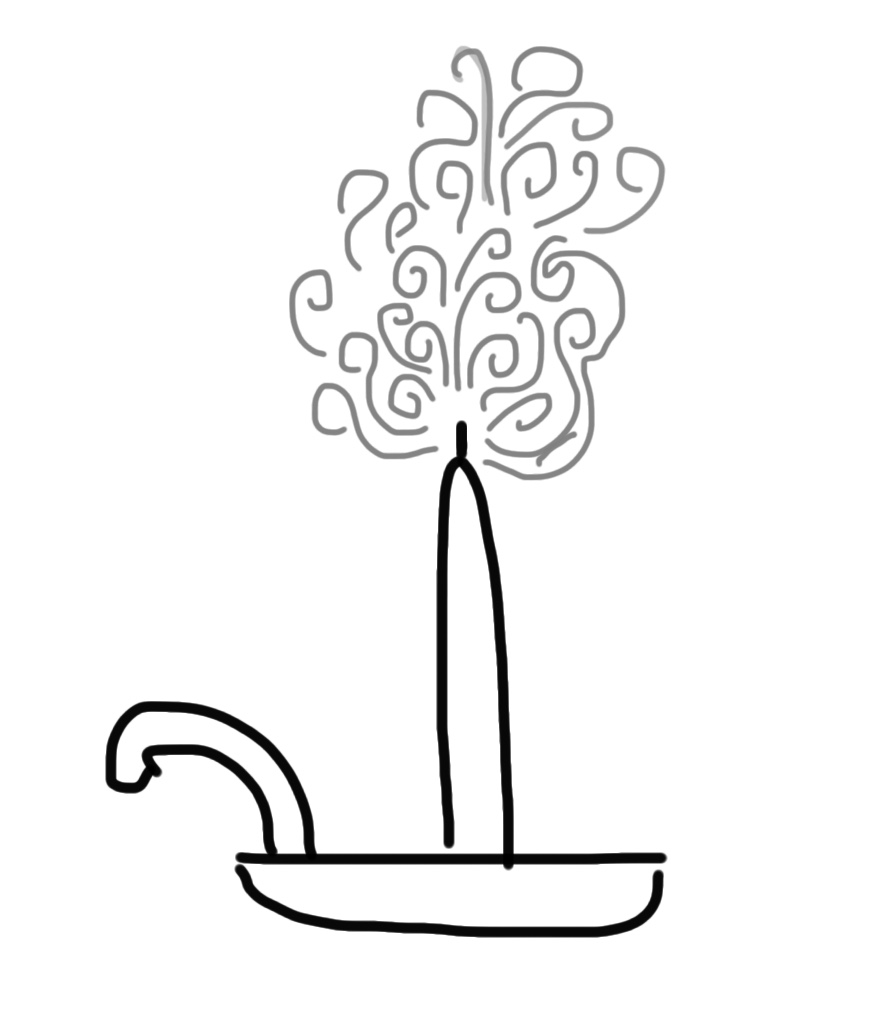
This is the biggest fear that I’m working through right now, as I’m changing my habits to incorporate more silence, more time for synthesis rather than stimulus. There’s an image I return to over and over again: the wonderful shapes in smoke after you blow out a candle. Move or talk too much, or if the room is too busy or drafty, and the smoke will just be blown around. But in stillness, in silence, the smoke makes wonderful patterns as it follows minute eddies of air. When I choose silence on a walk over browsing twitter as I walk, or listening to a podcast or music, I fear that I will become bored and it will have been a “waste of time.” An even deeper fear is that I will end up tuning into my own thoughts, and there will be nothing there.

But, of course, there always is something to be found there, if we’re brave enough to be patient. I hope. And if that turns out not to be the case, then I will set this idea down and try the next thing, which is all we ever can do anyway.
drawing of a candle with smoke


the three part test

I am not a lawyer, but there was a time when I wanted to be one, or admired them or something. It might have been the John Grisham thrillers, which are written for (as well as many other groups of people) 13 year old boys and men who think they totally could have been a lawyer. If it wasn’t them, it was probably The West Wing, which is written for 16 year old boys and men who think they totally could have been president.

If I’m really telling the truth, I have to confess that lawyers were the closest thing I could find in real life to the magic wielding characters I loved in fantasy stories. Like wizards, lawyers come in (lawful) good, evil, neutral alignments, memorize incantations in Latin, and the old ones get to wear robes. Is a trial a metaphor for combat, or is combat a metaphor for a trial?

One of the things I like most from legal culture is the idea of the legal test. From the Wikipedia:

Legal tests are often formulated from the logical analysis of a judicial decision or a court order where it appears that a finder of fact or the court made a particular decision after contemplating a well-defined set of circumstances. It is assumed that evaluating any given set of circumstances under a legal test will lead to an unambiguous and repeatable result.

Legal tests, Wikipedia

I love a well-constructed test. At their best, they are a way to cut through all of the distractions, all the stray bits of context that we think are important, in order to get to the really meaningful questions. I’ve been developing a test for myself to help me evaluate my media choices. I call it “Matt’s Three-Part Test for Deciding Whether To Hit Play Next Episode or Get The Fuck Out Now.” Here are the three questions:

  1. How does this make me feel?
  2. How active do I have to be to engage with it?
  3. How does this change my behavior?

Let’s look at a couple of test cases:

  • An episode of Fresh Air about the Muller investigation makes me feel anxious and bad, I listen to it passively, and after I finish the episode it makes me so angry that I go out and send bad and boring tweets, like Donald Trump himself is reading my Twitter feed and he just hadn’t heard from me before deciding to resign.
  • The new season of Queer Eye makes me feel human and connected, when I watch it it makes me think deeply about my own life, and after I finish watching it it gives me motivation to connect with people I love.
  • Reading a genre book from a genre that pushes my buttons—maybe a steamy gay romance or a sci-fi novel or a mystery—makes me feel entertained and relaxed. It might be empty entertainment, but afterwards I feel rested and refreshed.

The wild thing is that sometimes we do choose to read/watch/listen to the thing that makes us feel bad, that doesn’t stimulate us, and that makes us act shitty afterwards. Some social media communities are nothing but toxic circle jerks of feel-bad propaganda, and that includes groups that I feel a closeness to and groups that I feel un-included from. There are times when I feel like using the test—insulating myself from information that makes me feel bad—feels like a real first-world luxury. It seems cruel to decide I don’t want to engage with something upsetting when it’s related to an issue that could use attention. When I’m on the fence, I add this additional question:

  • Right now, does the media I am accessing make me feel empowered to attend to the problems that exist in the spheres where I have influence, or does it make me feel disempowered like my choices don’t matter any nothing can ever get better?

That usually tells me whether I should take on the one more upsetting thing, or whether I should take care of myself so that I can win the battles I am actually in.

How do you decide what to let into your brain?

|twenty↫twelve|

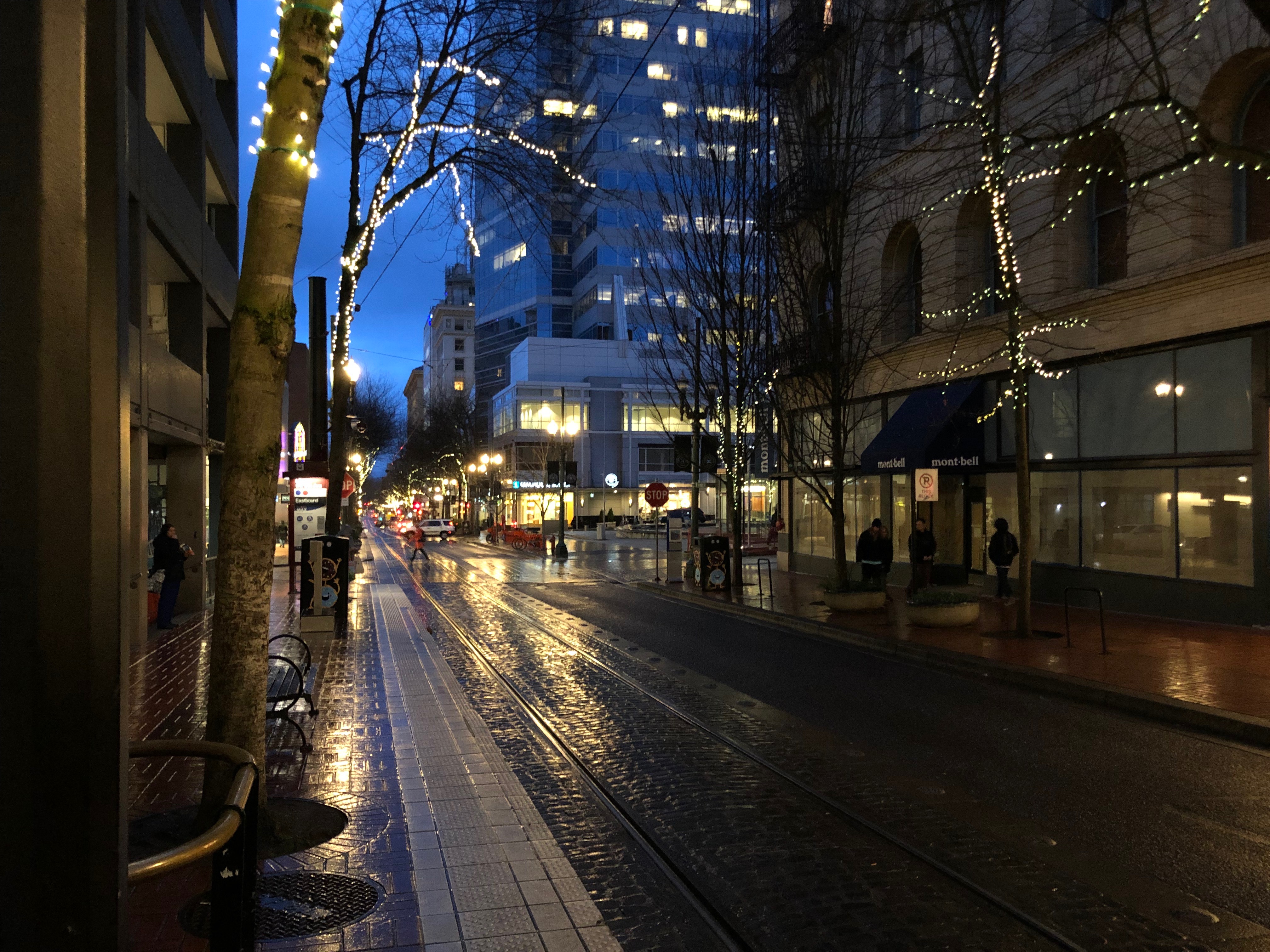
Downtown Portland in late January twilight.

I have published a new post five times this month, which is probably as much as the last three years. It’s on purpose. Sometime around 2012 or 2013, my habits of mind changed, and not for the better. A lot of things in my life have gotten better, and I would never in a million years choose to go back, but I feel less in control over the information that goes in and what I do with it than ever. That’s what I would like to go back to.

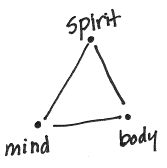
mind-spirit-body

Although I am not Christian anymore, the spirituality of my childhood is still there, even as negative space. The trinity can be a lot of things, but the god in three persons can be a metaphor for ourselves as minds/intellects, bodies/animals, spirits/life-forces. One of the beautiful things about being human is that we all relate to these parts of ourselves differently.

I am someone that is very rooted in the spirit, roots too much of my ego in having a sharp mind, and struggles a lot with being a body. This shows up in so many different ways: I rarely, no matter how old I was, had a sense of wanting to go to sleep when day was done. I always fought exhaustion until I was overpowered. I was a very well-behaved child because I was so good at sitting still and repressing the body’s natural urge to move. I made it to my early 20’s until it became clear to me that I had to try and develop a different kind of sensitivity to the soft animal of my body or I was going to dissociate myself into an early death.

This is a very woo-woo way of getting to this: I worry about the body a lot, I don’t worry about my mind as much.

From the vantage of early 2019, though, something is not right with the mind either. I do a lot of shallow reading, and less and less challenging deep reading. I have to go to a theater to watch a movie, I won’t pay attention at home. I have access to hundreds of hours of streaming video or music or games or reading material, and two times out of three when I sit down to watch something I scroll through the menu for 20 minutes before giving up and shutting it off.

I’m living life like I’m in a waiting room 10 minutes before a doctor’s appointment. (Spoiler alert, that doctor’s appointment is death!)

This sounds very despairing, and I really don’t mean it to be. But I do want to exercise some control over all this, and that means time traveling a little bit to a time when this part of my life was a little better balanced and seeing if there are some different choices I could have made. Not all of the choices are going to be different. I’ve fantasized about going back to a dumbphone, but that’s not a real option. I really loved the era where I lovingly tended to an iTunes library, but a lot of that was sustained by piracy and even though the economics of streaming is precarious, I can’t imagine restricting what I listen to to albums I pay for.

Here’s what I’m thinking:

  • Exercise choice whenever possible. Don’t let recommendation engines take over the drivers seat. Choose something to listen to or watch before opening up the streaming app.
  • Demand more of what gets my attention. Renting four movies or going to the wonderful second-run theaters in my neighborhood costs about as much as a streaming service subscription, but they get to be exactly the movies I want to watch.
  • Write, and let the writing be messy and unfinished and unpolished and bad in every way writing can be bad.
  • Go for dessert first. Get really good at listening to what thing feels shiny and is calling out.
  • Take my own responses seriously.

I was listening to a beautiful On Being interview with the poet Mary Oliver, who died last week. Mary said that she knew from a young age that she wanted to be a poet, and that meant she also knew that she wasn’t going to have a life where she had the nice things, the nice family portrait with Junior with the straight teeth. And it was a little kick in the gut for me, because it reminded me that if it’s true that I am chasing a different kind of lifestyle, the lifestyle described by Heather Havrilesky as:

…lean[ing] into reality–the dirt and grime of survival, the sullen, grim folds of the psyche, the exquisite disappointments, the sour churn of rage, the smog of lust, the petty, uneven, disquieted moments that fall in between. The artist embraces ugliness and beauty with equal passion. The artist knows that this process is always, by its nature, inefficient. It is a slow effort without any promise of a concrete, external reward.

which is such a headfucking difficult thing to put into practice because the mean little bureaucrat in my soul that manages survival says that there’s no time or resources for inefficiency, and I hunger so deeply for those external rewards. But I can feel the undertow pulling on my attention, constantly dragging it away from what is meaningful and what needs attending. So I’m following the instructions you would give to someone swimming in waters where there are rip tides:

DON’T FIGHT THE CURRENT. SWIM OUT OF THE CURRENT, THEN TO SHORE. IF YOU CAN’T ESCAPE, FLOAT. IF YOU NEED HELP, CALL FOR ASSISTANCE.

|twenty↫twelve|

Downtown Portland in late January twilight.

I have published a new post five times this month, which is probably as much as the last three years. It’s on purpose. Sometime around 2012 or 2013, my habits of mind changed, and not for the better. A lot of things in my life have gotten better, and I would never in a million years choose to go back, but I feel less in control over the information that goes in and what I do with it than ever. That’s what I would like to go back to.

mind-spirit-body

Although I am not Christian anymore, the spirituality of my childhood is still there, even as negative space. The trinity can be a lot of things, but the god in three persons can be a metaphor for ourselves as minds/intellects, bodies/animals, spirits/life-forces. One of the beautiful things about being human is that we all relate to these parts of ourselves differently.

I am someone that is very rooted in the spirit, roots too much of my ego in having a sharp mind, and struggles a lot with being a body. This shows up in so many different ways: I rarely, no matter how old I was, had a sense of wanting to go to sleep when day was done. I always fought exhaustion until I was overpowered. I was a very well-behaved child because I was so good at sitting still and repressing the body’s natural urge to move. I made it to my early 20’s until it became clear to me that I had to try and develop a different kind of sensitivity to the soft animal of my body or I was going to dissociate myself into an early death.

This is a very woo-woo way of getting to this: I worry about the body a lot, I don’t worry about my mind as much.

From the vantage of early 2019, though, something is not right with the mind either. I do a lot of shallow reading, and less and less challenging deep reading. I have to go to a theater to watch a movie, I won’t pay attention at home. I have access to hundreds of hours of streaming video or music or games or reading material, and two times out of three when I sit down to watch something I scroll through the menu for 20 minutes before giving up and shutting it off.

I’m living life like I’m in a waiting room 10 minutes before a doctor’s appointment. (Spoiler alert, that doctor’s appointment is death!)

This sounds very despairing, and I really don’t mean it to be. But I do want to exercise some control over all this, and that means time traveling a little bit to a time when this part of my life was a little better balanced and seeing if there are some different choices I could have made. Not all of the choices are going to be different. I’ve fantasized about going back to a dumbphone, but that’s not a real option. I really loved the era where I lovingly tended to an iTunes library, but a lot of that was sustained by piracy and even though the economics of streaming is precarious, I can’t imagine restricting what I listen to to albums I pay for.

Here’s what I’m thinking:

  • Exercise choice whenever possible. Don’t let recommendation engines take over the drivers seat. Choose something to listen to or watch before opening up the streaming app.
  • Demand more of what gets my attention. Renting four movies or going to the wonderful second-run theaters in my neighborhood costs about as much as a streaming service subscription, but they get to be exactly the movies I want to watch.
  • Write, and let the writing be messy and unfinished and unpolished and bad in every way writing can be bad.
  • Go for dessert first. Get really good at listening to what thing feels shiny and is calling out.
  • Take my own responses seriously.

I was listening to a beautiful On Being interview with the poet Mary Oliver, who died last week. Mary said that she knew from a young age that she wanted to be a poet, and that meant she also knew that she wasn’t going to have a life where she had the nice things, the nice family portrait with Junior with the straight teeth. And it was a little kick in the gut for me, because it reminded me that if it’s true that I am chasing a different kind of lifestyle, the lifestyle described by Heather Havrilesky as:

…lean[ing] into reality–the dirt and grime of survival, the sullen, grim folds of the psyche, the exquisite disappointments, the sour churn of rage, the smog of lust, the petty, uneven, disquieted moments that fall in between. The artist embraces ugliness and beauty with equal passion. The artist knows that this process is always, by its nature, inefficient. It is a slow effort without any promise of a concrete, external reward.

which is such a headfucking difficult thing to put into practice because the mean little bureaucrat in my soul that manages survival says that there’s no time or resources for inefficiency, and I hunger so deeply for those external rewards. But I can feel the undertow pulling on my attention, constantly dragging it away from what is meaningful and what needs attending. So I’m following the instructions you would give to someone swimming in waters where there are rip tides:

DON’T FIGHT THE CURRENT. SWIM OUT OF THE CURRENT, THEN TO SHORE. IF YOU CAN’T ESCAPE, FLOAT. IF YOU NEED HELP, CALL FOR ASSISTANCE.

Tumblr, Poetry, and the Structuring of Experience

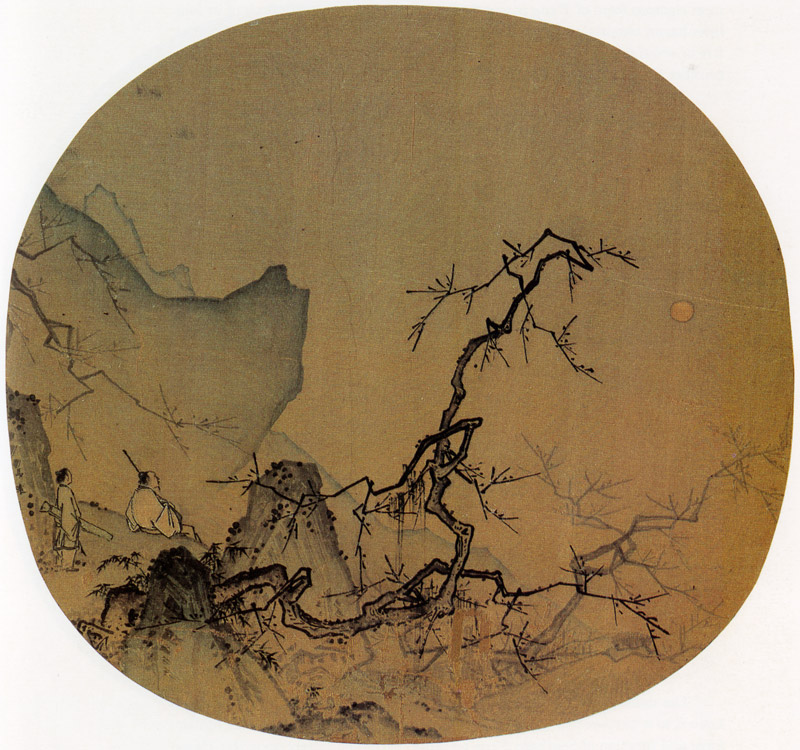
Ma Yuan (active ca. 1190–1225). Viewing Plum Blossoms by Moonlight. Fan mounted as an album leaf; ink and color on silk; 25.1 x 26.7 cm. Metropolitan Museum of Art

This last year, I had the privilege of taking a year-long course in Chinese Humanities, studying the literature, philosophy and history of the Qin/Han and Song dynasties for a semester each. One of the hallmarks of a Reed College education is the introductory humanities class (Hum 11o) that is required of all entering students and functions as an interdisciplinary writing seminar and common point of reference for Reed students. Hum 110 surveys Greek and Roman studies, with detours through Egyptian, Jewish and early Christian texts. The humanities model continues in upper level classes with medieval (Hum 210) and Early Modern/Enlightenment (Hum 220) studies.

Chinese Humanities, Hum 230, is an attempt to take that same model and apply it to Chinese studies. The first semester focuses on the Qin and Han dynasties (221 BC-220 AD) in order to look at the birth of the Chinese state and the rise of Confucianism, and the second semester focuses on the Song dynasty (960-1279 AD), which has remarkable parallels with early modern Europe (and, indeed, our own time). The course is taught by a team of lecturers and conference leaders, with a mixture of language experts, historians, art historians, and Chinese literature professors. I was speaking with one of our visiting professors, a modern China specialist, and he remarked that Reed’s program was unique in teaching this material in this way.

I came into the course with very little knowledge of China, ancient or modern, and one of the things that impressed me constantly was just how old the literary tradition of the country is. The stability of the Chinese literary canon, and the cultural emphasis and importance of the written word through such a long history is unparalleled by any culture the world has ever seen.

One fascinating manifestation of this tradition is functional poetry from the Tang dynasty (618-907 AD). The poetry from this period was so vibrant and masterful that it was held up as a model for the next thousand years. Some of the most charming of these poems were simply mementos of a visit from a friend, or written to preserve the memory of an arresting vista, or even left at the door to show that one had visited while the master of the house was out. For example, this poem, “Visiting and Old Friend at His Farmhouse” by Meng Haoran, is a simple poem that captures the bliss of friendship, conversation, and the comfort of the countryside:

An old friend prepared a meal of chicken and rice,
And invited me to join him at his farmhouse.
The village is surrounded by green trees
And the pale blue of outlying mountains.
The window opens to the garden and field,
While holding wine in our hands, we talked of mulberry and hemp.
We are looking forward to the Autumn Festival,
when I will return to visit the chrysanthemum bloom.

All of this is a very circumspect way to get at the singular pleasure that maintaining a Tumblr blog has given me in the past few months.

When I first encountered this blogging platform, I was convinced that it was not for me. It was first established as an image sharing service, and several aspects of it’s design and use are still a product of that function. It places an emphasis on sharing and reblogging over content creation, text-only posts are awkward, and the traditional blogger-commentator dialogue is unwieldy. Tumblr’s fluidity of display can also be a bewildering experience. Reading posts in Tumblr’s dashboard or arranging posts by tags is more akin to reading Facebook’s news feed than a traditional blog, and the infinite scrolling functionality can give the impression that one is wading through an infinite stream of consciousness rather than a deliberate arrangement of thought. As someone with more of a traditional bent than most of my age, the lack of constancy was frustrating.

As I’ve explored the service, however, and especially through my efforts to take a photograph each day, I’ve come to appreciate Tumblr less as a platform for artistic or personal expression and more as a tool for ordering and preserving subjective experience. The process of being aware of my surroundings, of constantly looking out for that moment or view with which I will represent my day has made me more engaged with myself. There is no question that it took more intellectual engagement and artistic technique for the Tang poets to preserve their own experience in verse, however I think they are at heart the same response to the same impulse. And in the way that a poet’s body of work became a literary avatar for the poet’s experience, so have my photos become a digital avatar for my own life, my own mind.

The internet confronts us constantly with the knowledge of just how unspecial we are, just how common our experiences and thoughts are. As a response, we look inward. Everyone is special. Everyone is unique. It just takes a little more effort to find what those special qualities and unique perspectives are. I think the internet has made us more aware, as a global culture, of the value of those with a compelling and unusual point of view.

This is why I can never take seriously the charge that my generation is a narcissistic generation of navel-gazers. We have become a culture unstuck in time, where the products of culture grow ever more available: streaming audio of every record ever made, online archives of writing, television, etc. In such a culture, the only thing that can be truly cultivated is one’s own artistic efforts and the lens that you view art through.

This blog is a lot more “serious” than my Tumblr, which can be found at iconochasm.tumblr.com. I usually try and keep the projects separate, however I’ve become lately convinced of the futility of segregating one’s online life.