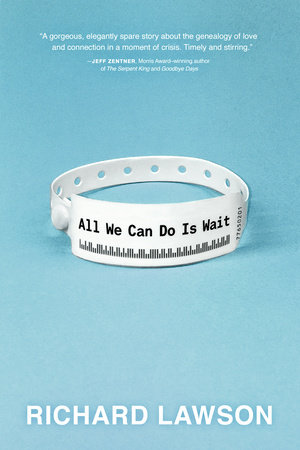
All We Can Do is Wait ⪼ Richard Lawson
What a sweet little book! I picked it up because I follow Richard Lawson on Twitter, but I guess I wasn’t following him when it was released. Although the novel starts with a dramatic bridge collapse, most of what unfolds are the quotidian dramas of being alive: insights into the self that you try and shove down into the unconscious, trying to be brave enough to make a leap into what you know you have to do, the loneliness and despair of trying to stay connected to someone who is trying like hell to run away.
Now, maybe you watch a lot of Netflix crime shows and the only thing that seems dramatic now is a race to decode cryptic clues before a baby rapist detonates explosives underneath the final match of the world cup. Compared to that, this book may very well seem plotless and boring to you. I cannot help you there.
I give it a few extra points for incorporating some teen characters that are neither the bland upper-middle class that usually peoples YA nor are they only in the book to edify the white characters. A few points knocked off for still centering bland upper-middle class teens.
The only reservation to my recommendation is that it never answers why we were looking at these characters. They were all compelling, but they never quite cohered together or interact with each other dramatically because the present-day narrative is packed into a single day. Second, although it has a beautiful message about dealing with uncertainty and taking each day as it comes, it doesn’t quite allows the reader to take it away for their own life, unless your loved one has been trapped in a bridge collapse.
Overall I thought it was a strong debut novel and I’d love for Lawson to get the chance to write another one.
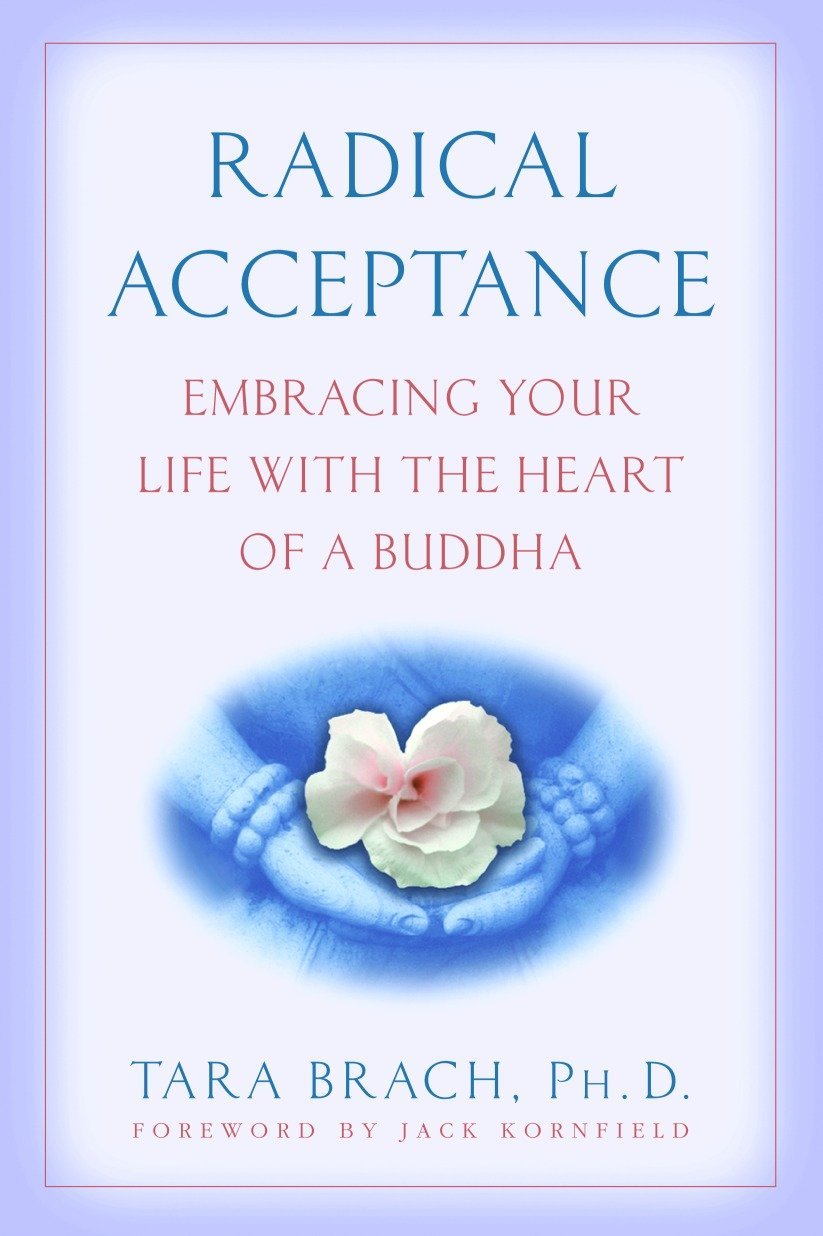
Radical Acceptance ⪼ Tara Brach
This is, like, a very important and beautiful book to me. Tara Brach takes clear aim at the voices in our heads that tell us that we don’t deserve happiness, that keep us stuck in our wounds, and try and keep us disconnected from our true feelings because we worry that if we open ourselves up to them they might drown us, like one more passenger on a lifeboat that’s barely above water.
Writing about self-help is vulnerable to me because it’s like shouting Hi! I have all these problems. And they are also easy to make fun of, and not even in a mean-spirited way. There is something a little goofy about looking to Buddhism for answers (as an American, given the cultural history of “looking to the East” for enlightenment) or taking in meditations with exercises like saying hello to your pain. There’s a real and sad truth to texts like these: I turn to them when I need to hear them. I allow them in when trying to muddle through endless grey days without compassion for myself is worse than trying to do something about it.
Self-help/growth books are one of those things where some work for some folks and others work for other folks, so I wouldn’t just blanket recommend it to everyone. The most I can say is that if it seems like it might contain something you’re trying to find, you owe it to yourself to open it up and see if it is.
My Sister, the Serial Killer ⪼ Oyinkan Braithwaite
I did not love this book. I appreciated its unabashed pulpiness, but the premise is stated in the title and it doesn’t develop much beyond that.
What really worked for me is that the story is set in Lagos, and Braithwaite doesn’t waste much time explaining details in the setting for a reader like me that is not that familiar with Nigerian culture. Food, clothing, common phrases are incorporated and the onus on the reader is to learn or keep up. I really appreciate that because if Ezra Pound can drop in untranslated Italian, German, French and Sanskrit into poems that high school students are supposed to give a shit about, I think US reading audiences can grow up when it comes to non-European settings. I also loved the grotesquerie of the main character, there’s a slow inversion in the plot where we realize that a binary that we’ve been presented with is maybe not all as it seems, and I thought that was great.
What did not work for me is that the sharpness of the satire of beauty culture and social media culture kind of trails off, and I did not find it as clever as folks who loved it. I also think there wasn’t quite enough conflict, either external conflict in plot or in the internal conflict of the main character.
Don’t let me turn you off from the book, though. It’s a strong first book, and my rating is way more “this was not for me” rather than “this was bad.”
The Sandcastle Empire ⪼ Kayla Olson
This was, and I am not exaggerating, a terrible book.
What If This Were Enough ⪼ Heather Havrilesky
I am a huuuge fan of the Ask Polly advice column in The Cut. I come back again and again because I feel some kinship with her. She’s got sharper edges than a Dear Sugar, but like Sugar is deeply compassionate. Polly is funny, but not flippant or sarcastic like Choire Sicha’s NYT Styles section advice column.
I guess what I love the most is that she has become the person that people like me—millennial weirdos who feel stuck because all we seem capable of doing is looking around in shock and disappointment asking “oh my god, is this really it?”—send their deepest questions. And we have changed her in turn.
Like any book of essays, there are some that speak right to me, some that don’t speak to me at all, and some that I hope to god speak to some future, more courageous and secure form of myself.
Tommy Pico is incredible, and if you haven’t read him you should run not walk to one of his poetry collections. He writes directly to my sensibility–insecure, introspective, and horny–and the beautiful experience of reading something written for you is like drinking deeply of spring water or breathing in the air after a rain.
 hammer & jack