
It’s dark in the tailor’s shop. As I extinguish each candle, the light dims and the bright yellow children’s dresses, green ladies’ gowns, and smart purple waistcoats settle deeper into dull nighttime grey. In a few minutes, I will close the front door and return to my rooms above the shop for a quiet supper. A bottle of cheap Alto wine and a heavy volume of A Dance in Fire will keep me company on the journey into sleep.
The door opens, and a striking woman made of cuts and muscle walks in wearing nothing but her smallclothes and a gaudy Amulet of Diabella perched on her head. She carries no knapsack, she has no pockets, but she walks slowly, groaning under the weight of a vast unseen treasure. An unhappy looking woman in full battle gear follows, too ashamed to meet my eyes.
“What do you sell here?,” the unclothed woman asked. “Ah, fuck it. Doesn’t really matter, does it? Here’s the deal: I would like to take all of your gold, and in return I will sell you these 700 decorative spider carcasses I found, for premium prices.”
What the fuck would I do with one decorative spider carcass, I wondered, but when I opened my mouth to answer, the words that came out of my mouth were “I do hope you’ll remain in Solitude. The city could do with some new blood.”
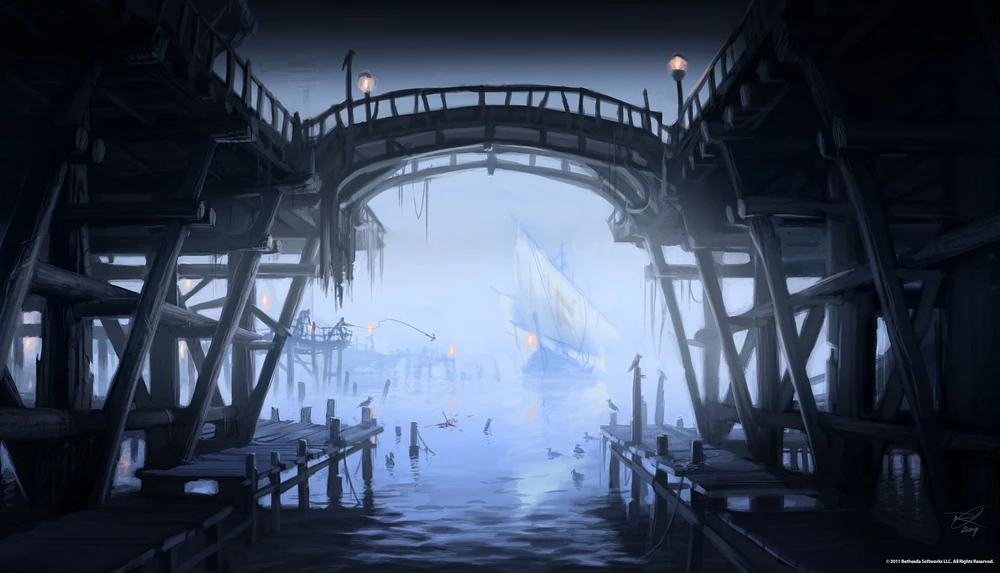
I play video games one of two ways: like an addict or not at all. It’s not easy for me to complete a game. Online multiplayer stresses me out, I don’t have the interest or patience to refine my skills enough to master platformers or racing games, and sports games mean less than nothing to me. I can get very immersed in single player narrative games, but I quit in frustration when a puzzle or battle gets hard, and over time it becomes demotivating to boot up the console and immediately be faced with a difficult and frustrating scenario to move through before I can get back to having fun. I like action RPGs because their controls tend to be pretty simple and their short missions can produce a reward relatively quickly.
In the week between Christmas and New Year’s, I spent a lot of time playing Skyrim. Skyrim is over 10 years old but I tend to play the same games over again rather than seeking out new ones. RPGs fascinate me because they are nothing like life. Even if they do not have a fantastical setting (Is The Sims a deconstructed RPG?) they incorporate the fantasy that skills advance linearly, that we get to make informed decisions at the crossroads of our lives, and that we can reliably predict the consequences of those choices. If RPGs were more like real life, skill descriptions would all have conflicting information, all of it bad. Advancing one more level in one skill might close off others without warning. Halfway through your game a new tool might make all of the skill points you allocated obsolete, and you might discover late in the game that your buddy with all of the achievements started the game with a handful of advantages that you aren’t allowed to mention in their presence.
If you look at RPGs not as games, but as spiritual training tools—and why not so look?—you might notice that even though RPGs simulate the hero’s journey of growth and empowerment with all of the uncertainty and unpredictability edited out of that process, there is one deeply human dilemma that emerges late in every RPG: the featureless boredom of a life lived too long or with too much ease or with too many resources.
In this play-through of Skyrim, I have progressed to the level where no battles are that challenging, loot and potions are plentiful, and the acquisition of trophies make no emotional impact. Take too much friction out and there is no story in the world that will keep a players interest. Most people are not inherently interested in optimizing weapons or endlessly visiting shopkeepers in a circuit to try and convert loot into gold. There are different strategies out there to try and mitigate that boredom. GTA: V brings in a property ownership layer to slowly convert the game into a simple resource management game; Destiny points you increasingly firmly toward online multiplayer content; Fallout 4 slows down your progression by introducing side quests that must be completed quickly to not lose conquered territory.
So you start to do the things that are rewarding: weird collections, dressing up avatars, making virtual dollhouses, playing the parts of the game that you still find fun and ignoring the rest. I had a friend who tried to collect every coffee mug in Fallout 3, and in another game he kept a house filled with human skulls picked up elsewhere. Which—forget the skulls—is about the range of options that any human has left, once your needs are attended to. You also have the option of trying to figure out ways to break it, there’s a huge catalog of Youtube videos of players catching the perfect bug or perfect coincidence.
This also explains some of the stranger, anti-social behavior of the hyper-wealthy, behavior that I do not understand and yet affects my life so much directly and indirectly. Anybody with any interesting qualities or a healthy self-esteem would have taken the freedom to not have to work and done something more interesting with their time well before their wealth could be measured in billions. Gamers, playing an RPG past the point where the game had any challenge, compulsively optimizing their gameplay for gold acquisition is as good a lens as any to describe their affect and behavior. Time to prestige.


 hammer & jack