
skyrim

It’s dark in the tailor’s shop. As I extinguish each candle, the light dims and the bright yellow children’s dresses, green ladies’ gowns, and smart purple waistcoats settle deeper into dull nighttime grey. In a few minutes, I will close the front door and return to my rooms above the shop for a quiet supper. A bottle of cheap Alto wine and a heavy volume of A Dance in Fire will keep me company on the journey into sleep.


The door opens, and a striking woman made of cuts and muscle walks in wearing nothing but her smallclothes and a gaudy Amulet of Diabella perched on her head. She carries no knapsack, she has no pockets, but she walks slowly, groaning under the weight of a vast unseen treasure. An unhappy looking woman in full battle gear follows, too ashamed to meet my eyes.


“What do you sell here?,” the unclothed woman asked. “Ah, fuck it. Doesn’t really matter, does it? Here’s the deal: I would like to take all of your gold, and in return I will sell you these 700 decorative spider carcasses I found, for premium prices.”


What the fuck would I do with one decorative spider carcass, I wondered,  but when I opened my mouth to answer, the words that came out of my mouth were “I do hope you’ll remain in Solitude. The city could do with some new blood.”
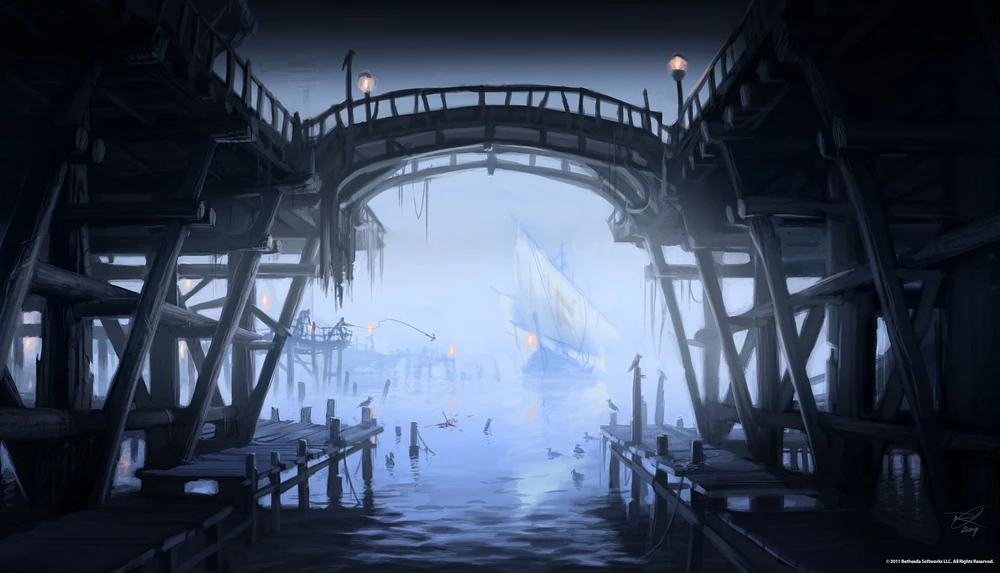

I play video games one of two ways: like an addict or not at all. It’s not easy for me to complete a game. Online multiplayer stresses me out, I don’t have the interest or patience to refine my skills enough to master platformers or racing games, and sports games mean less than nothing to me. I can get very immersed in single player narrative games, but I quit in frustration when a puzzle or battle gets hard, and over time it becomes demotivating to boot up the console and immediately be faced with a difficult and frustrating scenario to move through before I can get back to having fun. I like action RPGs because their controls tend to be pretty simple and their short missions can produce a reward relatively quickly.


In the week between Christmas and New Year’s, I spent a lot of time playing Skyrim. Skyrim is over 10 years old but I tend to play the same games over again rather than seeking out new ones. RPGs fascinate me because they are nothing like life. Even if they do not have a fantastical setting (Is The Sims a deconstructed RPG?) they incorporate the fantasy that skills advance linearly, that we get to make informed decisions at the crossroads of our lives, and that we can reliably predict the consequences of those choices. If RPGs were more like real life, skill descriptions would all have conflicting information, all of it bad. Advancing one more level in one skill might close off others without warning. Halfway through your game a new tool might make all of the skill points you allocated obsolete, and you might discover late in the game that your buddy with all of the achievements started the game with a handful of advantages that you aren’t allowed to mention in their presence.


If you look at RPGs not as games, but as spiritual training tools—and why not so look?—you might notice that even though RPGs simulate the hero’s journey of growth and empowerment with all of the uncertainty and unpredictability  edited out of that process, there is one deeply human dilemma that emerges late in every RPG: the featureless boredom of a life lived too long or with too much ease or with too many resources.

In this play-through of Skyrim, I have progressed to the level where no battles are that challenging, loot and potions are plentiful, and the acquisition of trophies make no emotional impact. Take too much friction out and there is no story in the world that will keep a players interest. Most people are not inherently interested in optimizing weapons or endlessly visiting shopkeepers in a circuit to try and convert loot into gold.  There are different strategies out there to try and mitigate that boredom. GTA: V  brings in a property ownership layer to slowly convert the game into a simple resource management game; Destiny points you increasingly firmly toward online multiplayer content; Fallout 4 slows down your progression by introducing side quests that must be completed quickly to not lose conquered territory. 


So you start to do the things that are rewarding: weird collections, dressing up avatars, making virtual dollhouses, playing the parts of the game that you still find fun and ignoring the rest. I had a friend who tried to collect every coffee mug in Fallout 3, and in another game he kept a house filled with human skulls picked up elsewhere. Which—forget the skulls—is about the range of options that any human has left, once your needs are attended to. You also have the option of trying to figure out ways to break it, there’s a huge catalog of Youtube videos of players catching the perfect bug or perfect coincidence.


This also explains some of the stranger, anti-social behavior of the hyper-wealthy, behavior that I do not understand and yet affects my life so much directly and indirectly. Anybody with any interesting qualities or a healthy self-esteem would have taken the freedom to not have to work and done something more interesting with their time well before their wealth could be measured in billions. Gamers, playing an RPG past the point where the game had any challenge, compulsively optimizing their gameplay for gold acquisition is as good a lens as any to describe their affect and behavior. Time to prestige.

encounters at the rim of the sky

In the last month or so, I’ve probably spend a full work week playing The Elder Scrolls V: Skyrim. For those of you who don’t play games, Skyrim is a fantasy genre based RPG (role-playing game). I’m not much of a gamer, but last year I got addicted to Fallout 3 and Fallout New Vegas and once I made the connection that Bethesda Studios was the developer of both games, I made sure I got a copy of the game.

Another thing that I’ve been occupied with during this last month is thinking deeply about what kind of person I would like to be, what kind of habits and disciplines I want to cultivate, those kind of questions that frequently preoccupy people in my stage of life. In the last few months I decided to confront head on some ongoing problems that I’ve been having with clinical depression and underlying emotional issues.

Where these two things come together is in the strange way that RPGs both allow us some escape from the limitations of our real lives, as well as express some immutable aspects of our own personalities.

One great project that looks at this aspect of games and virtual identity is photographer Robbie Cooper’s Alter Egos. The aspirational aspect of avatars is less pronounced in many of his portraits than those above and below, and you can really see a spectrum from those that model their virtual representations closely after themselves to those that model their avatars on what they most want to be.

And so I thought I’d take a look at my Skyrim character and consider what it might reveal about myself. My character (minus armor and other accouterments) looks more or less like the figure on the left:

The most notable characteristic about my character is that he’s an Argonian (or, as I describe him to other people, “one of the weird lizard guys”). In the world of Skyrim, Argonians are one of the “othered” groups that is furthest away from the Nords. I think the reason that I tend to pick characters that are far outside the normative image of the blond, male hero (my Fallout: New Vegas character was a mixed-race elderly woman) has a root both in my discomfort with that image (and the insecurities that I have about being compared to that standard) as well as some kind of desire to reduce the ambiguity of the privileges that I carry around with me. Both as a sexual minority and as a mixed race person, I will never be able to inhabit that norm, but I feel like I have to take responsibility for the fact that many of the signs that signal to others that I am apart from them–language and vocabulary, skin color, name–are hidden. On some level–and I appreciate how solipsistic this–I envy the lizard man, who will never be able to pass for anything but himself; anyone that accepts him accepting him on his own terms.

My character is a heavily magic reliant character, and I know this is an expression of both the pride that I take in my own intelligence and education, and the desire that raw intelligence would translate into an easier way of life. Magic, as intelligence, is an alternate measure of power independent of physical strength. I’ve relied–to different degrees at different times–all my life on that coping mechanism, that even though other people might be stronger, or scrappier, or faster, or better looking, I’m more intelligent. It’s a thought that has the potential to become poisonous, and it always comes with a corresponding doubt, or insecurity. James Agee expresses this thought well in his novel, A Death in the Family. Six year-old Rufus has stopped with his father at a bar after a movie, and his father is bragging to all of the patrons about how well his boy can read:

Rufus felt a sudden hollowness in his voice, and all along the bar, and in his own heart. But how does he fight, he thought. You don’t brag about smartness if your son is brave. He felt the anguish of shame, but his father did not seem to notice…

Intelligence, of course, does bring about great power and an easier life. But that’s intelligence paired with luck and hard work, and the power and leisure are indirect. By playing a magical character, I’m able to envision a world in which raw intelligence and talent can directly translate into power and wealth. It lets me defeat my enemies without defeating my own demons.

There are countless other things that I read into my character as expressions of myself, again either as myself or as my opposite. My character tends to just rush into situations, taking on dungeons far above my level just for the challenge, instead of the timidness and fearfulness that I see in myself. Like my character, I’m a sentimentalist, and tend to keep random junk well past my sell-by date. But I like to think that by letting my ego run wild in the game, I can open doors to myself that I couldn’t in life. Or at least that’s how I’m justifying the 40+ hours I’ve sunk into the game: therapy.

A couple essays…

1. Tom Bissell writes about being addicted to video games and cocaine.

I’ve never tried cocaine. I wouldn’t, at this point in my life, dismiss the possibility entirely, however one of the things that goes through my mind when I think about it is that I am afraid that I would like it very much.

Tom Bissell writes about being a functional user of cocaine, but in a way that I’ve never heard before. Most description of functional substance users (from alcohol to weed to everything else) emphasize how little their substance use changes the day to day aspects of living. Bissell embraces the changes that have come to his life; he writes unblinkingly about playing video games for days at a time, going weeks without sleeping, and losing completely the motivation to complete writing commissions. The other half of this essay are Bissell’s ruminations on the unique way that video games are art.

I found this essay really challenging and somewhat disturbing. What I find hard to deal with is the fact that Bissell is obviously an intelligent and talented person, and yet he seems to have no problem with the way that he lives his life. I couldn’t live like he does. I highly recommend reading the essay.

2. Steve Almond writes ambiguously about the uselessness of music critics.

I’m not sure what is going on in this essay. Most of the evidence that Almond uses to argue that music critics are useless is that Steve Almond was a bad music critic.

Almond wraps the essay up with a sappy “all that matters is the fans” message (and how can you argue against that?), but I think he makes some assertions that I wouldn’t agree with. He says that [after a fun concert by a “bad” artist], “The very idea of music criticism — of applying some objective standard to the experience of listening to music — suddenly struck me as petty and irrelevant. I spent several more months as a critic, but my essential belief in the pursuit evaporated.” I understand that, and to some extent I agree with it, but I don’t think that’s what the value of music critics is. I think, by and large, music critics write opinions based upon facets of music that are more or less objective. While there is no objective answer to whether one album is better than another, the styles that the band is playing in, their instrumentation, the complexity of their lyrics are all things that a music critic can write about without touching the subjective experience of listening.

He also writes about how music and cultural criticism has become too snarky. I just don’t understand how this is an argument against music criticism. One, blogs and the internet have allowed bad writing of all stripes to be more easily accessible than at any time in history (look at what I’m doing right now!). Second, in an environment where critics are not trusted because their opinions are being influenced by things other than the music, an opportunity arises for another critic to build a base from people actively looking for high-value criticism.