“a little bird told me…”

St. Gregory the Great fresco detail, Church of St. Rupert, Weißpriach, Austria. Photographed at the church by Richard Stracke, shared under Attribution-NonCommercial-ShareAlike license.

Yesterday, I just started reading in earnest the titanic, 5-volume, 3,856-page Oxford History of Western Music by Richard Taruskin. So far, I’m finding it fascinating because I am an arch-dork about music. One tidbit I’m particularly tickled by was this account of the origin of the idiom “a little bird told me:”

[A book of plainchant] could not have existed in St. Gregory’s day, because there would have been no way of putting music into it. […] By the ninth century, however, the legend of Pope Gregory as composer of what has been known ever since as “Gregorian chant” was firmly in place. It was propagated not only in literary accounts like that of John the Deacon but also in an iconographic or pictorial tradition that adapted a motif already established in Roman illuminated manuscripts containing Gregory’s famous Homilies, or sermons, on the biblical books of Job and Ezekiel. According to this tradition, the pope, while dictating his commentary, often paused for a long time. His silences puzzled the scribe, who was separated from Gregory by a screen. Peeping through, the scribe beheld the dove of the Holy Spirit hovering at the head of St. Gregory, who resumed his dictation only when the dove removed its beak from his mouth. (It is from such representations of divine inspiration that we get our expression, “A little bird told me.”)

Taruskin, Richard. Oxford History of Western Music. Oxford University Press.

Some other little tidbits I’ve enjoyed from this first section:

  • The word noon comes from the monastical service held at 3pm called “none,” from the word for nine (the ninth hour since waking at 6am). On why the 3pm service became our name for the 12pm hour? Taruskin: “[it’s] just one of those things.”
  • For the very first time I actually understood what the Holy Roman Empire was.
  • Notated plainchant (which everyone but historians just think of as “Gregorian chant”) was adapted from monastic/ascetic practices, so despite what pop culture and our own filling in the blanks might suggest, all around the church there was instrumental music, ensembles/orchestras, choirs, bands, and music with many harmonies and parts. Plainchant for church use was designed to sound ancient and primitive. If you’ve ever been to a church service with chant and felt a shiver of something primal and magical down your spine, that’s exactly what the church hierarchy hoped might happen… in the 7th century.

Further reading, for the interested: https://robertgreenbergmusic.com/a-most-successful-campaign-of-misinformation-or-listen-to-the-birdie/
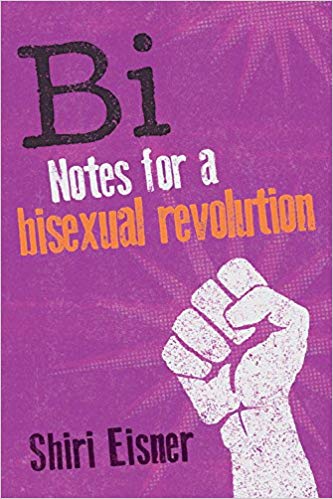
Bi: Notes for a Bisexual Revolution | Shiri Eisner

There is a shelf on the third floor of Central Library in downtown Portland. It contains all of the nonfiction books specifically about bring queer: books about raising your gay teenager, coming out in later life, how to support your partner who is transitioning, and about four books on bisexuality. I have never done anything in my life without reading a book about it first, so I picked out the most relevant of those four books, which was Bi: Notes for a Bisexual Revolution.

It turns out that Bi has everything to do with why there are only four books on that shelf. Shiri Eisner has put together a book that discusses the particular political, economic, and social marginalization experienced by bisexual people—distinguished from the experience of gay, lesbian, and straight people (“monosexuals,” in her terminology). Eisner starts by describing how bisexual can be a radically inclusive term for all sorts of people that experience attraction to more than one gender, then goes through the myths, stereotypes, and stigmas attached to bisexual people. Next, Eisner examines how bisexual identity intersects with sexist and racist axes of oppression, then proposes this vision of a radical bisexuality that inherently destabilizes patriarchy and gender based oppression.

Whew!

There is a lot of material in this book, and because of the jargon-bordering-academic language it uses, the tedious and repetitious disclaimers of privilege, and activist-y eye rolls at global capitalism and the police state, I would say that it’s more of a reference than a book to read front to back. I did appreciate the thoroughness of the work, and I have to admit to a certain bias against radical and activist thinking that sometimes provokes me into greater critical thinking and sometimes makes me churlishly dismissive.

Unfortunately, I was also turned off by some methodological loosey-goosey and an inconsistent analytical lens that made it seem like polemic. For example, a lot of Eisner’s evidence for the argument that bisexuals experience worse health economic etc. outcomes is based on a single set of demographic data. That’s certainly not Eisner’s fault—she argues persuasively that bisexuals are an understudied group of people. But in another part of the book, she points out that because this data set is based on self-reported categories, it dramatically under-represents the group within bisexuals that would have the best outcomes due to other kinds of privilege, namely cis bisexual men.

Whatever gripes I might have with the rigor of some of her evidence, I also have to admit that despite coming in with a lot of skepticism, Eisner ended up convincing me that there is a unique stigma attached to bisexual people, and I came to understand why she considered bisexuals and their relationships as a battlefield of patriarchy and queer liberation.

And yet, I did end up walking away a little disappointed. I was still looking for some idea of what the specific bisexual experience of the world is. My gay identity was built not only from crushes and eyes averted and inconvenient erections and hot shame, but also from books and poetry and movies and narratives and testimony and role models. And a lot of that just isn’t out there for bisexual men—or at least I might have to keep working to find it.

Bi: Notes for a Bisexual Revolution | Shiri Eisner

There is a shelf on the third floor of Central Library in downtown Portland. It contains all of the nonfiction books specifically about bring queer: books about raising your gay teenager, coming out in later life, how to support your partner who is transitioning, and about four books on bisexuality. I have never done anything in my life without reading a book about it first, so I picked out the most relevant of those four books, which was Bi: Notes for a Bisexual Revolution.

It turns out that Bi has everything to do with why there are only four books on that shelf. Shiri Eisner has put together a book that discusses the particular political, economic, and social marginalization experienced by bisexual people—distinguished from the experience of gay, lesbian, and straight people (“monosexuals,” in her terminology). Eisner starts by describing how bisexual can be a radically inclusive term for all sorts of people that experience attraction to more than one gender, then goes through the myths, stereotypes, and stigmas attached to bisexual people. Next, Eisner examines how bisexual identity intersects with sexist and racist axes of oppression, then proposes this vision of a radical bisexuality that inherently destabilizes patriarchy and gender based oppression.

Whew!

There is a lot of material in this book, and because of the jargon-bordering-academic language it uses, the tedious and repetitious disclaimers of privilege, and activist-y eye rolls at global capitalism and the police state, I would say that it’s more of a reference than a book to read front to back. I did appreciate the thoroughness of the work, and I have to admit to a certain bias against radical and activist thinking that sometimes provokes me into greater critical thinking and sometimes makes me churlishly dismissive.

Unfortunately, I was also turned off by some methodological loosey-goosey and an inconsistent analytical lens that made it seem like polemic. For example, a lot of Eisner’s evidence for the argument that bisexuals experience worse health economic etc. outcomes is based on a single set of demographic data. That’s certainly not Eisner’s fault—she argues persuasively that bisexuals are an understudied group of people. But in another part of the book, she points out that because this data set is based on self-reported categories, it dramatically under-represents the group within bisexuals that would have the best outcomes due to other kinds of privilege, namely cis bisexual men.

Whatever gripes I might have with the rigor of some of her evidence, I also have to admit that despite coming in with a lot of skepticism, Eisner ended up convincing me that there is a unique stigma attached to bisexual people, and I came to understand why she considered bisexuals and their relationships as a battlefield of patriarchy and queer liberation.

And yet, I did end up walking away a little disappointed. I was still looking for some idea of what the specific bisexual experience of the world is. My gay identity was built not only from crushes and eyes averted and inconvenient erections and hot shame, but also from books and poetry and movies and narratives and testimony and role models. And a lot of that just isn’t out there for bisexual men—or at least I might have to keep working to find it.

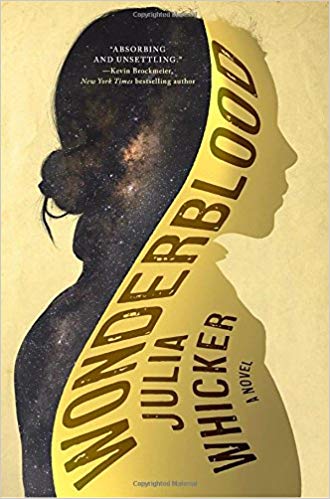
Wonderblood | Julia Whicker

Cover of Wonderblood by Julia Whicker.
Wonderblood cover.

Faith, reason, morality, progress all come into conflict under the shadow of the launch tower at Cape Canaveral! Kings, magicians, doctors, executioners, all bound to their own arcane rituals. A girl appears just like in a prophecy. And then a new bright light appears in the sky.

I really did not care for this book. Whicker has imagined a world where mad cow disease has led to a societal collapse, and after thousands of years, people in the United States have devolved into followers of mystic religions that believe in blood sacrifice to bring about the return of the space shuttles, which will save the world.

You have to invest a lot in this setting to get anything out of the book–which is another way of saying that the plot, character, and prose style didn’t do much for me–and so much of the setting didn’t make any sense. Whicker clearly loved this idea of a medieval/feudal world that has adopted NASA as its religious symbols, but never quite explains how that could have come about. Yes, there is prion disease and societal breakdown, but how are there artifacts from the 20th century but no city ruins? Given what we know about how tribalism forms in times of scarcity, is it really plausible that no characters notice each others skin colors? For that matter, in Florida of all places, why does everybody speak English?

For that matter, Whicker doesn’t have very much respect for medieval knowledge either. In an interview with The Qwillery, Whicker mentions being inspired by figures like Johannes Kepler and Tycho Brahe and yet none of that seems to have made it onto the page, except in cutesy character names.

I’d suggest skipping this book and watch Waterworld instead.

Wonderblood | Julia Whicker

Cover of Wonderblood by Julia Whicker.
Wonderblood cover.

Faith, reason, morality, progress all come into conflict under the shadow of the launch tower at Cape Canaveral! Kings, magicians, doctors, executioners, all bound to their own arcane rituals. A girl appears just like in a prophecy. And then a new bright light appears in the sky.

I really did not care for this book. Whicker has imagined a world where mad cow disease has led to a societal collapse, and after thousands of years, people in the United States have devolved into followers of mystic religions that believe in blood sacrifice to bring about the return of the space shuttles, which will save the world.

You have to invest a lot in this setting to get anything out of the book–which is another way of saying that the plot, character, and prose style didn’t do much for me–and so much of the setting didn’t make any sense. Whicker clearly loved this idea of a medieval/feudal world that has adopted NASA as its religious symbols, but never quite explains how that could have come about. Yes, there is prion disease and societal breakdown, but how are there artifacts from the 20th century but no city ruins? Given what we know about how tribalism forms in times of scarcity, is it really plausible that no characters notice each others skin colors? For that matter, in Florida of all places, why does everybody speak English?

For that matter, Whicker doesn’t have very much respect for medieval knowledge either. In an interview with The Qwillery, Whicker mentions being inspired by figures like Johannes Kepler and Tycho Brahe and yet none of that seems to have made it onto the page, except in cutesy character names.

I’d suggest skipping this book and watch Waterworld instead.