|twenty↫twelve|

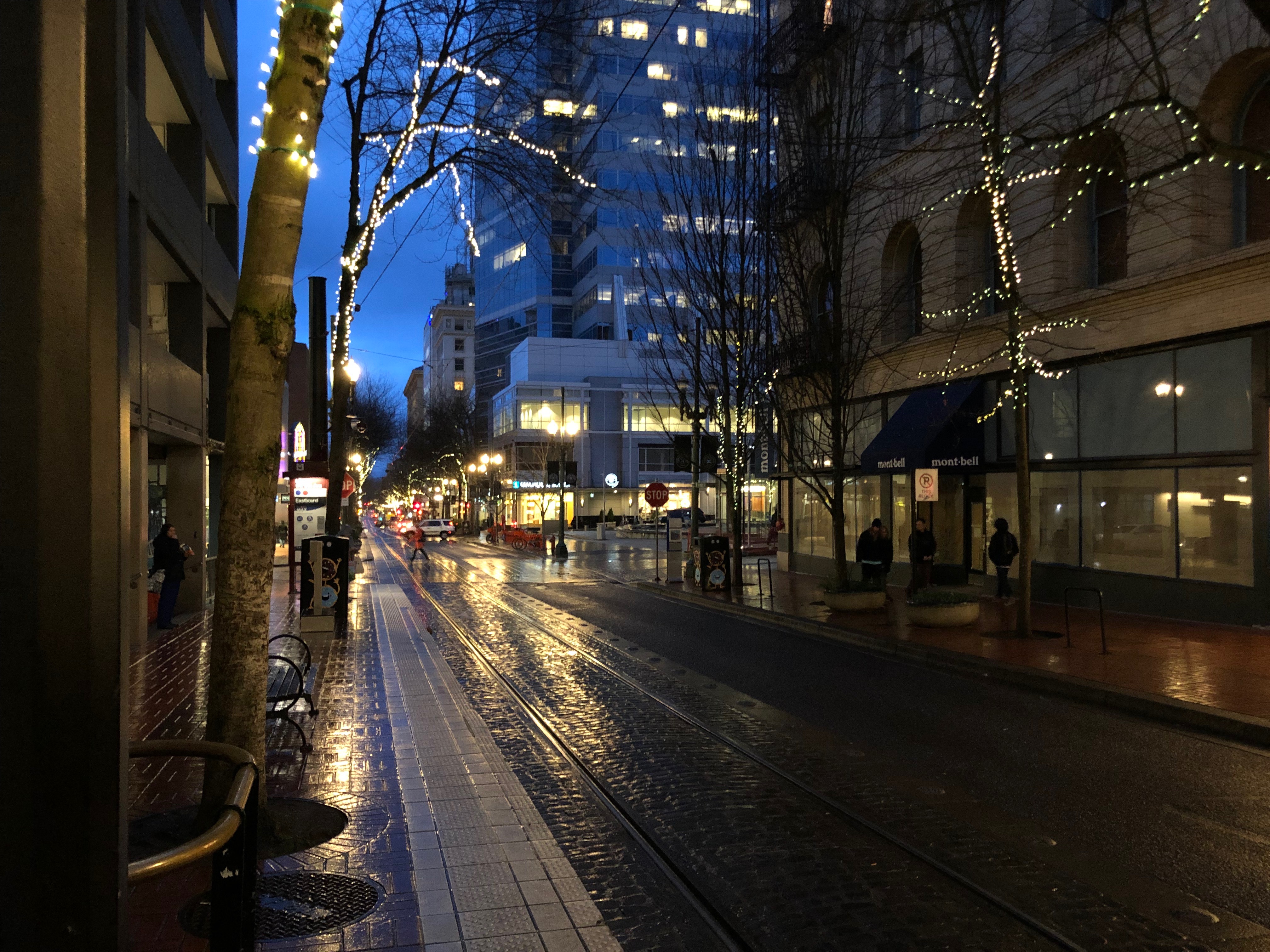
Downtown Portland in late January twilight.

I have published a new post five times this month, which is probably as much as the last three years. It’s on purpose. Sometime around 2012 or 2013, my habits of mind changed, and not for the better. A lot of things in my life have gotten better, and I would never in a million years choose to go back, but I feel less in control over the information that goes in and what I do with it than ever. That’s what I would like to go back to.

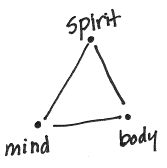
mind-spirit-body

Although I am not Christian anymore, the spirituality of my childhood is still there, even as negative space. The trinity can be a lot of things, but the god in three persons can be a metaphor for ourselves as minds/intellects, bodies/animals, spirits/life-forces. One of the beautiful things about being human is that we all relate to these parts of ourselves differently.

I am someone that is very rooted in the spirit, roots too much of my ego in having a sharp mind, and struggles a lot with being a body. This shows up in so many different ways: I rarely, no matter how old I was, had a sense of wanting to go to sleep when day was done. I always fought exhaustion until I was overpowered. I was a very well-behaved child because I was so good at sitting still and repressing the body’s natural urge to move. I made it to my early 20’s until it became clear to me that I had to try and develop a different kind of sensitivity to the soft animal of my body or I was going to dissociate myself into an early death.

This is a very woo-woo way of getting to this: I worry about the body a lot, I don’t worry about my mind as much.

From the vantage of early 2019, though, something is not right with the mind either. I do a lot of shallow reading, and less and less challenging deep reading. I have to go to a theater to watch a movie, I won’t pay attention at home. I have access to hundreds of hours of streaming video or music or games or reading material, and two times out of three when I sit down to watch something I scroll through the menu for 20 minutes before giving up and shutting it off.

I’m living life like I’m in a waiting room 10 minutes before a doctor’s appointment. (Spoiler alert, that doctor’s appointment is death!)

This sounds very despairing, and I really don’t mean it to be. But I do want to exercise some control over all this, and that means time traveling a little bit to a time when this part of my life was a little better balanced and seeing if there are some different choices I could have made. Not all of the choices are going to be different. I’ve fantasized about going back to a dumbphone, but that’s not a real option. I really loved the era where I lovingly tended to an iTunes library, but a lot of that was sustained by piracy and even though the economics of streaming is precarious, I can’t imagine restricting what I listen to to albums I pay for.

Here’s what I’m thinking:

  • Exercise choice whenever possible. Don’t let recommendation engines take over the drivers seat. Choose something to listen to or watch before opening up the streaming app.
  • Demand more of what gets my attention. Renting four movies or going to the wonderful second-run theaters in my neighborhood costs about as much as a streaming service subscription, but they get to be exactly the movies I want to watch.
  • Write, and let the writing be messy and unfinished and unpolished and bad in every way writing can be bad.
  • Go for dessert first. Get really good at listening to what thing feels shiny and is calling out.
  • Take my own responses seriously.

I was listening to a beautiful On Being interview with the poet Mary Oliver, who died last week. Mary said that she knew from a young age that she wanted to be a poet, and that meant she also knew that she wasn’t going to have a life where she had the nice things, the nice family portrait with Junior with the straight teeth. And it was a little kick in the gut for me, because it reminded me that if it’s true that I am chasing a different kind of lifestyle, the lifestyle described by Heather Havrilesky as:

…lean[ing] into reality–the dirt and grime of survival, the sullen, grim folds of the psyche, the exquisite disappointments, the sour churn of rage, the smog of lust, the petty, uneven, disquieted moments that fall in between. The artist embraces ugliness and beauty with equal passion. The artist knows that this process is always, by its nature, inefficient. It is a slow effort without any promise of a concrete, external reward.

which is such a headfucking difficult thing to put into practice because the mean little bureaucrat in my soul that manages survival says that there’s no time or resources for inefficiency, and I hunger so deeply for those external rewards. But I can feel the undertow pulling on my attention, constantly dragging it away from what is meaningful and what needs attending. So I’m following the instructions you would give to someone swimming in waters where there are rip tides:

DON’T FIGHT THE CURRENT. SWIM OUT OF THE CURRENT, THEN TO SHORE. IF YOU CAN’T ESCAPE, FLOAT. IF YOU NEED HELP, CALL FOR ASSISTANCE.
|twenty↫twelve|

Downtown Portland in late January twilight.

I have published a new post five times this month, which is probably as much as the last three years. It’s on purpose. Sometime around 2012 or 2013, my habits of mind changed, and not for the better. A lot of things in my life have gotten better, and I would never in a million years choose to go back, but I feel less in control over the information that goes in and what I do with it than ever. That’s what I would like to go back to.

mind-spirit-body

Although I am not Christian anymore, the spirituality of my childhood is still there, even as negative space. The trinity can be a lot of things, but the god in three persons can be a metaphor for ourselves as minds/intellects, bodies/animals, spirits/life-forces. One of the beautiful things about being human is that we all relate to these parts of ourselves differently.

I am someone that is very rooted in the spirit, roots too much of my ego in having a sharp mind, and struggles a lot with being a body. This shows up in so many different ways: I rarely, no matter how old I was, had a sense of wanting to go to sleep when day was done. I always fought exhaustion until I was overpowered. I was a very well-behaved child because I was so good at sitting still and repressing the body’s natural urge to move. I made it to my early 20’s until it became clear to me that I had to try and develop a different kind of sensitivity to the soft animal of my body or I was going to dissociate myself into an early death.

This is a very woo-woo way of getting to this: I worry about the body a lot, I don’t worry about my mind as much.

From the vantage of early 2019, though, something is not right with the mind either. I do a lot of shallow reading, and less and less challenging deep reading. I have to go to a theater to watch a movie, I won’t pay attention at home. I have access to hundreds of hours of streaming video or music or games or reading material, and two times out of three when I sit down to watch something I scroll through the menu for 20 minutes before giving up and shutting it off.

I’m living life like I’m in a waiting room 10 minutes before a doctor’s appointment. (Spoiler alert, that doctor’s appointment is death!)

This sounds very despairing, and I really don’t mean it to be. But I do want to exercise some control over all this, and that means time traveling a little bit to a time when this part of my life was a little better balanced and seeing if there are some different choices I could have made. Not all of the choices are going to be different. I’ve fantasized about going back to a dumbphone, but that’s not a real option. I really loved the era where I lovingly tended to an iTunes library, but a lot of that was sustained by piracy and even though the economics of streaming is precarious, I can’t imagine restricting what I listen to to albums I pay for.

Here’s what I’m thinking:

  • Exercise choice whenever possible. Don’t let recommendation engines take over the drivers seat. Choose something to listen to or watch before opening up the streaming app.
  • Demand more of what gets my attention. Renting four movies or going to the wonderful second-run theaters in my neighborhood costs about as much as a streaming service subscription, but they get to be exactly the movies I want to watch.
  • Write, and let the writing be messy and unfinished and unpolished and bad in every way writing can be bad.
  • Go for dessert first. Get really good at listening to what thing feels shiny and is calling out.
  • Take my own responses seriously.

I was listening to a beautiful On Being interview with the poet Mary Oliver, who died last week. Mary said that she knew from a young age that she wanted to be a poet, and that meant she also knew that she wasn’t going to have a life where she had the nice things, the nice family portrait with Junior with the straight teeth. And it was a little kick in the gut for me, because it reminded me that if it’s true that I am chasing a different kind of lifestyle, the lifestyle described by Heather Havrilesky as:

…lean[ing] into reality–the dirt and grime of survival, the sullen, grim folds of the psyche, the exquisite disappointments, the sour churn of rage, the smog of lust, the petty, uneven, disquieted moments that fall in between. The artist embraces ugliness and beauty with equal passion. The artist knows that this process is always, by its nature, inefficient. It is a slow effort without any promise of a concrete, external reward.

which is such a headfucking difficult thing to put into practice because the mean little bureaucrat in my soul that manages survival says that there’s no time or resources for inefficiency, and I hunger so deeply for those external rewards. But I can feel the undertow pulling on my attention, constantly dragging it away from what is meaningful and what needs attending. So I’m following the instructions you would give to someone swimming in waters where there are rip tides:

DON’T FIGHT THE CURRENT. SWIM OUT OF THE CURRENT, THEN TO SHORE. IF YOU CAN’T ESCAPE, FLOAT. IF YOU NEED HELP, CALL FOR ASSISTANCE.
the favourite

I really liked the new movie from that guy who did The Lobster


The Favourite was a joy to watch from start to finish, all the actors are doing their best work, and I finally like a Yorgos Lanthimos movie!

Spoilers!

Continue reading “the favourite”

11.4.18 Midterms

Processed with VSCO with s1 preset
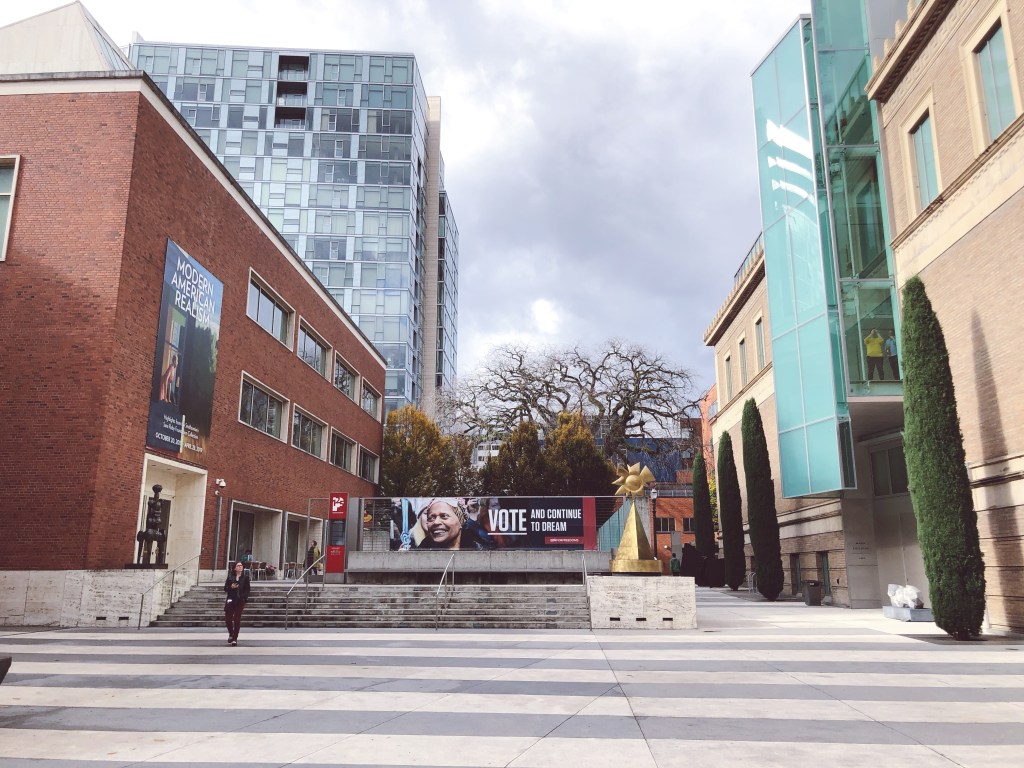
A large banner saying “VOTE” in front of the Portland Art Museum this afternoon.

“I’m going crazy about these midterms. I can’t wait for these next few days to be over” is how I’ve started conversations with about six or eight people this last week. This sounds sociopathic but I’m an external processor, which is a plausibly sciency sounding way to describe how I need to talk things out with others to know what I think (I didn’t make it up, but it still could be bullshit, I guess). It’s led to lots of other conversations:

  • “Ugh. Yes.”
  • “What were you doing on the last Election night? It seems like everybody has a bad story.”
  • “What’s going to happen is going to happen. There’s not really a “good” result and a “bad” result.”
  • “Me too. I keep reading and refreshing 538.”
  • “You’ve done your part, now your focus can go back to your lived life.”

All of which are good and valid responses, fine. What I really want is for somebody to hear the anxiety in my voice and gently show me that I’ve completely misread the course of world history for the last two years, that I’ve made all a big mistake, a hallucination I created myself and that there’s nothing to be worried about. In the absence of that, I’ll share and take comfort in what I can.

On Saturday, I did something about it. Earlier this week, a friend, Z, texted me if I had voted. I texted her that I was walking it over, then she replied by asking if I would be willing to text friends to turn out the vote, and I didn’t reply back because the idea made me uncomfortable, and I felt ashamed for feeling uncomfortable. She wasn’t even asking me to text strangers, just my own friends and network. Still I struggled with the idea of asking.

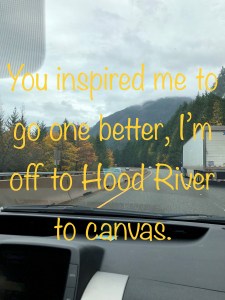
Later in the week, when another friend that works in state government asked if anyone wanted to join him in canvassing in Hood River, I knew that something was calling me out of my comfort zone, and I was going to feel bad if I didn’t listen to that voice. I texted Z:

IMG_0989

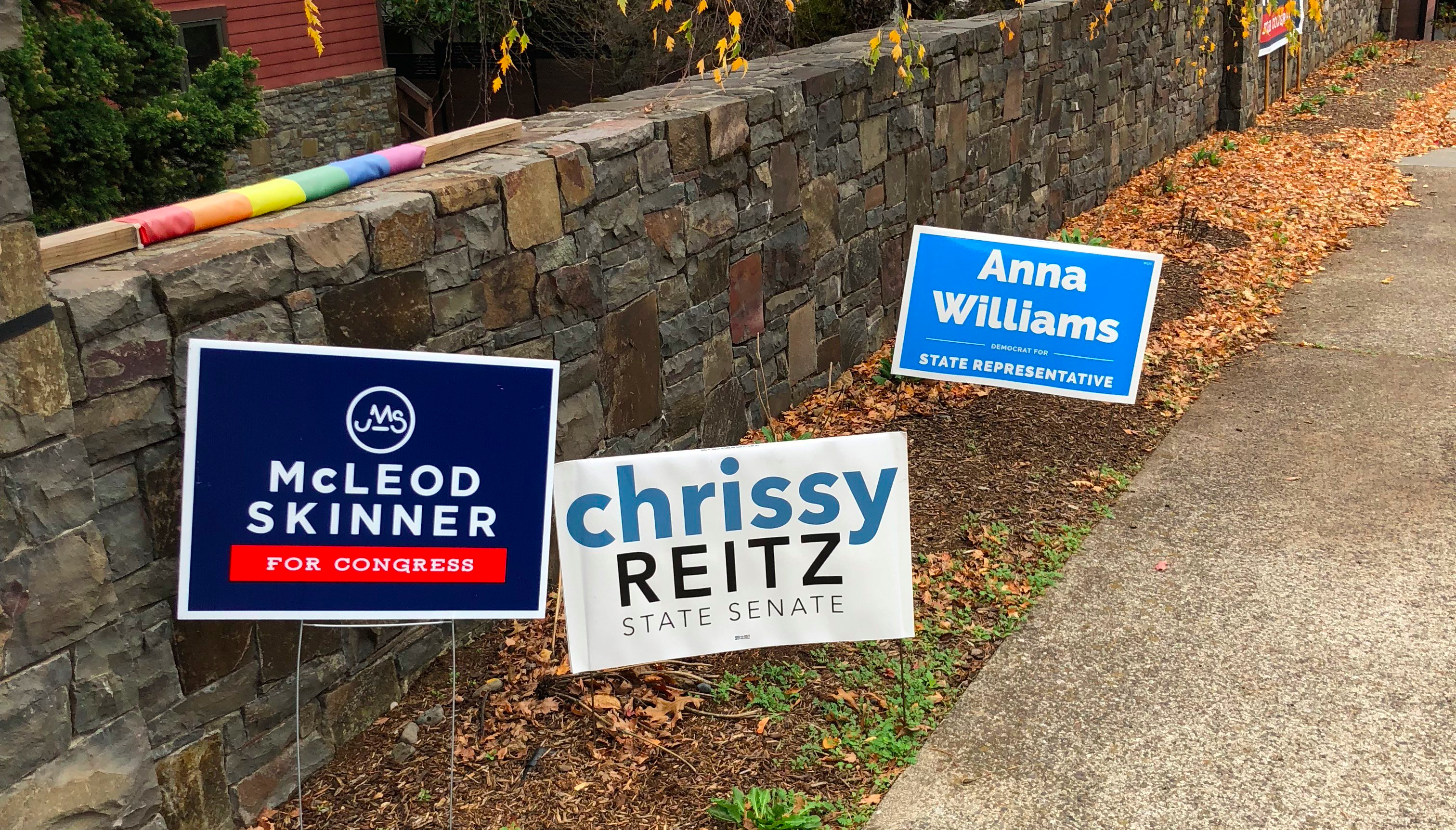
I’ve never canvassed before, and I was nervous about it. We showed up to the campaign office of the state representative we were knocking on doors for. The past two years have been a tremendous political education for the entire country, which is so far the most positive effect of the 2016 election, and hopefully one that lasts. People who never followed politics before cannot escape it, people who were not that engaged are learning about all kinds of mechanisms like the Supreme Court nomination process, gerrymandering, and census manipulation, other people who have always participated in the process are starting to actively think about ways to reform and change the rules to respond to the ways that conservative politicians have already changed them. For me, it’s moved me to donate and try out directly participating in a way that no other election has yet.

This is a pretty long winded way of saying that my schema for what a campaign office looks like was a little more Aaron Sorkiny than the strip mall office I arrived at.

A very earnest and handsome education lobbyist oriented me, and then we were off to door knock. After all of the building up I had done in my head, we mostly hung flyers on doorknobs, and only had about five or six conversations with people the whole afternoon. But those conversations felt great, and even though its very late in the election season, it gave me a real window into how approachable the whole process is, and what a powerful tool and channel for community building it can be.

I’m going to be watching the results on Tuesday night, and I 100% will be on edge until the results are in, not just here in Oregon, but also in Texas, in Kentucky, in Arizona, in Florida, in Georgia. But I feel really good about having taken a big step towards reclaiming power for myself, and I’m already excited to get involved earlier for a candidate I feel passionately about in 2020.

img_0945.jpg


500 Words on Alphonse Elric

Compassion for self and compassion for others grow together and are connected; this means that men finding and recuperating the lost parts of themselves will heal everyone. – Nora Samaran

We don’t get to choose the Grand Themes that move us, and for better and (without question) for worse, the dark cycle of pain, abuse and dysfunction and its light counterpart of growth, healing, and transformation is one of mine. Fullmetal Alchemist is a dear favorite of mine for this reason, and particularly one character, the sad, sweet, and immensely strong Alphonse Elric.

Edward Elric is the Fullmetal Alchemist, the youngest certified State Alchemist in history, and the show is his and follows his adventures. Edward is brilliant, heroic, egotistic, idealistic, quick to anger, loyal, and a perfectionist. Alphonse is gentle, cautious, kind, and equally brilliant. I’m sure there are fans out there who watch because they admire Edward, but I believe sincerely, if pigheadedly, that those of us who Really Get The Show may have compassion for Edward, but could only love Alphonse.

For those who haven’t watched the show, here’s a brief set-up: Alphonse and Edward were alchemical prodigies that tried to bring their mother back to life with magic. They failed, and in the process Edward (the elder brother) lost an arm and a leg, and Alphonse lost his body. Alphonse’s soul was bonded to a suit of armor, and now the brothers wander from town to town developing their skill as alchemists in order to bring Alphonse’s body back to him.

There’s meaningful recurring joke in FMA: whenever the Elric brothers come to a new town, everybody assumes that Alphonse is the elder brother, the Fullmetal Alchemist. Edward is very sensitive, and erupts into rage. I find the interaction telling, and tragic, because despite Edward’s offense that his younger brother is perceived as being older than he is, Alphonse has become more mature than he is. Alphonse’s loss is simply greater, and whereas Edward maintains fanatical focus on mastering the arts of human transfiguration, Alphonse maintains an ambivalent attitude towards the idea of getting his body back, and the price for the knowledge to be able to do so.

Alphonse clearly feels the absence of his body. He is uncomfortable being so large. He is uncomfortable being hollow. Whenever his body is violated, even innocently as by a cat, he reacts with panic. And yet the irony of his appearance and of his relationship to the experiment that maimed him is that he has done his healing, and he lives with his armor down. His brother has never been able to forgive himself, and he lives with his armor up, always.

Edward still believes that his mistake was a technical one, that if he had succeeded in bringing their mother back to life, that there would be no tragedy in their life. Alphonse knows differently, and his awareness, which he is never quite able to communicate with his brother, that there are ruptures too large for magic to undo, makes him the moral center of the show, and in the end, the Elric brother worth watching.