After Hours

One of the listening projects I’ve been pursuing casually on the side is an effort to become a little more familiar with rap. It’s definitely the (US-based) genre that I’m least knowledgable about, and one of the reasons that I don’t plan on blogging on it that much is that my ignorance is so deep about the music that I don’t even know what I don’t know.

I didn’t grow up with it around me. I had cousins that listened to rap and hip-hop, but I was a kid right during the scary days of get-you-shot gangsta rap. I’m pretty sure that my mother saw it as a symptom of All That Was Evil In The World–I never watched The Simpsons growing up either.

Anyway, one of the pleasures of going back and trying to listen (selectively, I know) to the history of rap in roughly chronological order is that there is such a settled body of masterpieces. Although I never recommend that people listen to music this way, I could listen for months without straying from “greatest albums” lists*.

*I think that there’s something missing from listening to music if there’s no risk that what you’re listening to is just terrible. 

Another pleasure is going back and comparing what your favorite tracks from an old album are with the tracks that have emerged over time as the highlights. For example, I’ve been obsessed over the past week with A Tribe Called Quest’s debut album, People’s Instinctive Travels and the Paths Of Rhythm. 

“After Hours” is the third track on the album, and it’s catchy as fuck. It’s built on this insane Sly Stone sample that cuts a groove so strong that sometimes it cuts out and there’s nothing but percussion and still your brain hears the sample because it’s just that strong and just that catchy. It’s the track that I would have picked out as the “single,” but it was never released that way, and it’s one of the tracks on the album that doesn’t have its own Wikipedia page.

Now, it’s probably true that with an album as beloved as this one, every track is regarded as a masterpiece and tallying prestige based on Wikipedia attention is foolish. Still, it’s good to be reminded sometimes that we all have very different ears, and those tracks that you skip might be someone else’s favorite.

Infinite Jest IV

I realized that I was going to have to sacrifice my goal of blogging about each section as I read it to the larger goal of finishing the book this summer. I’m hoping to still check in with a post every week or so. This post covers through roughly page 86.

In this section of the book, I’m starting to get a little bit of a sense of a larger-scale plot. Just glimpses at the fringes: periodic reminders that the doctor is still paralyzed before the mysterious cartridge, the emergence of some character interactions, glimpses of a metafiction.

I’m also constantly awestruck by how many variables DFW juggles in delivering his story. Sometimes the struggle of really reading the texts prevents me from truly appreciating how ambitious a project it is. It’s not just the chronological games he plays, or the vocabulary, or the large stable of characters. It’s also that he’s writing in a variety of tones, modes of writing, degrees of formality and reality. He’s almost always funny and careful, but there’s a tremendous difference between the realism of, say, the Tiny Ewell introduction and the patent absurdity of Les Assassins des Fauteuils Rollents. It’s actually quite the trick, that he’s able to derive humor from both patent absurdity and from closely-observed detail.

Stray Observations:

  • The mysterious cartridge that traps viewers into watching it forever reminds me greatly of Ice-nine from Cat’s Cradle.
  • Inability to communicate continues to be a theme; the novel almost contains a taxonomy of the different ways that we can fail to be understood. The death of the Canadian official in his home contains many: he is attacked by his robbers because of language barrier, he cannot get help from the person that calls at the door because of the tape across his mouth, and he cannot get help from his wife because of distance.
  • I’m enjoying the flashes of metafiction that we get: we’ve had repeated and unrelated references to Toblerone and Byzantine erotica.

The Enduring Van Cliburn

The New York Times has some nice coverage of pianist Van Cliburn’s enduring popularity in Russia:

Legend says that Mr. Gilels was worried enough to approach Khrushchev about the American. “Is he the best?” Khrushchev is said to have asked, and when Mr. Gilels allowed that he was, Khrushchev said, “In this case, give him first prize.”

The mania for “Vanya” or “Vanushka,” as he came to be called, cut through all levels of Soviet society. A Russian violinist, Artur Shtilman, recalled the tremulous words of a janitor who said the performance had left her strangely transfixed: “This young man, really just a boy — he plays, and I sit and cry. I myself don’t know what is happening to me, because I have never listened to this music, and I simply cannot tear myself away.”

Despite the fact that Mr. Cliburn had no plans to play the piano on this visit [to Russia to serve on the jury of the International Tchaikovsky Competition], Yevgeniya Zalyashina traveled 120 miles from Tula to be present at all his appearances — which sometimes consisted of just walking into the concert hall. She was joined by a group of women who had met in 1958 while standing in line all night for tickets.

“You have to understand, people were talking about him on the bus, on the Metro,” said Lyudmila Avdushina, 73. “For us he was never a foreigner, he was one of ours.”

This prompted me to seek out YouTube footage of the performance of Rachmaninov’s 3rd Piano Concerto that won Cliburn the prize.

It’s an amazing performance. I was unprepared for how young Van Cliburn was; he’s almost cherubic. And those rubatos! I don’t think a performance like this would fly on the competition circut today.

Infinite Jest: YDAU I

Year of the Depend Adult Undergarment I

Thinking back, he was sure he’d said whatever, which in retrospect worried him because it might have sounded as if he didn’t care at all, not at all, so little that it wouldn’t matter if she forgot to get it or call, and once he’d made the decision to have marijuana in his home one more time it mattered a lot. It mattered a lot.

In the same Charlie Rose interview I embedded in my last post, DFW is asked what he thinks about the reception and accolades that Infinite Jest was getting. He responded that he was surprised that so many people focused on how funny the book was. It seemed to me like Wallace was uncomfortable by people focusing on the humor of a book that really contained his heart and soul, like a mob laughing at a statement of truth.

If there are many more sections like this, I’m not sure that he had cause to worry. This section is both deeply funny and deeply dark. As it’s basically the stream-of-consciousness ramblings of an addict (repeating the mantra, “Where was the woman who said she’d come.”), it’s extremely closely observed, DFW leads us deep into oversharing territory. As a reader, I felt a strange and conflicting mixture of identification, reactionary disgust, and amusement. There are some of the narrator’s insecurities and coping mechanisms that feel so true, or that I experience to a different degree in my own life, that I can’t help but to identify with him. That feeling is counterbalanced by the part of me that can’t imagine living the way that the man does, in a world of self-delusion completely lacking in perspective. It goes beyond a voyeuristic disgust, I actually find it somewhat scary. And to top it off, it is also witty and funny.

Given what we know of DFW’s struggles with substance abuse and alcohol addiction, and the extensive self-help library he owned, I think it’s probably safe to say that some of the emotional and behavioral truths in this section contain some reflection of Wallace himself. And so you could easily see why he would be threatened by a public that seemed to not even acknowledge the true blackness of some of his writing. Like Hal, he knew the futility of the question, “So yo then man what’s your story?”

Stray Observations

  • In the quotation above, the narrator of the section shows that he too, like Hal, obsesses over the potential of language to betray communication.
  • Throughout the chapter, the narrator refers to a small insect, possibly a manifestation of his insanity (or addiction). One of the things that I love about it is that it pops up casually, like a non sequitur.
  • I imagine that DFW smoked some weed in his lifetime.
  • First appearance of a footnote.
  • Other potential DFW-ian character traits: a strange mixture of optimism and pessimism. A great amount of self-knowledge, coupled with a paralysis that prevents him from acting upon that knowledge.
  • The idea that perhaps the best way to treat a weakness by overindulging seems to be significant to the narrator on a personal level, and also perhaps apply to the broader culture. The way that the narrator treats weed and and entertainment are strongly linked: The moment he recognized what exactly was on one cartridge he had a strong anxious feeling that there was something more entertaining on another cartridge and that he was potentially missing it. He realized that he would have plenty of time to enjoy all the cartridges, and realized intellectually that the feeling of deprived panic over missing something made no sense.

New Vocabulary

  • Rapacious: aggressively greedy or grasping.

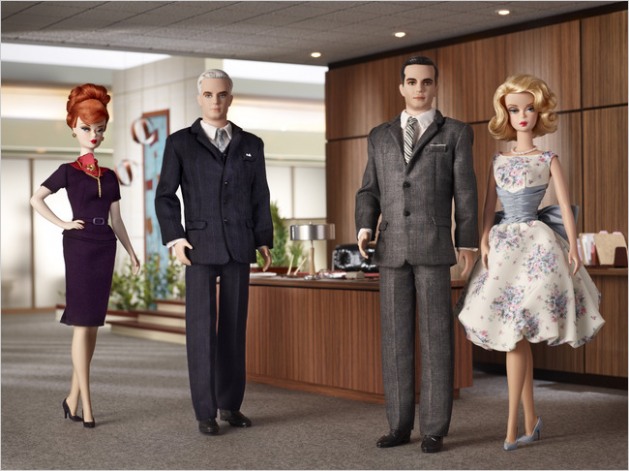
Daniel Mendelsohn on Mad Men

EDIT: I just realized that this is a super old article. My bad. 

Listen, I don’t expect everyone to like everything that I like. That would be boring. That being said, I am flabbergasted by how completely Daniel Mendelsohn, writing for the New York Review of Books (behind a paywall, unfortunately), misunderstands Mad Men‘s dramatic scheme and its appeal to fans:

I am dwelling on the deeper, almost irrational reasons for the series’s appeal—to which I shall return later, and to which I am not at all immune, having been a child in the 1960s—because after watching all fifty-two episodes of Mad Men, I find little else to justify it. We are currently living in a new golden age of television, a medium that has been liberated by cable broadcasting to explore both fantasy and reality with greater frankness and originality than ever before: as witness shows as different as the now-iconic crime dramas The Sopranos and The Wire, with their darkly glinting, almost Aeschylean moral textures; the philosophically provocative, unexpectedly moving sci-fi hit Battlestar Galactica, a kind of futuristic retelling of the Aeneid; and the perennially underappreciated small-town drama Friday Night Lights, which offers, among other things, the finest representation of middle-class marriage in popular culture of which I’m aware.

With these standouts (and there are many more), Mad Men shares virtually no significant qualities except its design. The writing is extremely weak, the plotting haphazard and often preposterous, the characterizations shallow and sometimes incoherent; its attitude toward the past is glib and its self-positioning in the present is unattractively smug; the acting is, almost without exception, bland and sometimes amateurish.

Boom. That’s a motherfuckin’ gauntlet.

There’s little sense in wasting energy refuting the critiques of someone who absolutely does not like the show. And Mendelsohn has some qualitative judgements with which I will never be able to find common ground (for example, where Mendelsohn believes, “The acting itself is remarkably vacant, for the most part—none more so than the performance of Jon Hamm as Don…you sometimes have the impression that Hamm was hired because he looks like the guy in the old Arrow Shirt ads: a foursquare, square-jawed fellow whose tormented interior we are constantly told about but never really feel.,” I’d say that Hamm is a tremendously skilled actor who manages to play basically two parts at once: the Don Draper that needs to be cool and composed at all times and the Dick Whitman who is never far below the surface, insecure and fearful.), others simply do not fit with my interpretation of the series. I’d like to respond to some of those:

The core appeal of the show: In what is probably his real thesis, Mendelsohn writes:

he people who watch Mad Men are, after all, adults—most of them between the ages of nineteen and forty-nine. This is to say that most of the people who are so addicted to the show are either younger adults, to whom its world represents, perhaps, an alluring historical fantasy of a time before the present era’s seemingly endless prohibitions against pleasures once taken for granted (casual sex, careless eating, excessive drinking, and incessant smoking); or younger baby boomers—people in their forties and early fifties who remember, barely, the show’s 1960s setting, attitudes, and look. For either audience, then, the show’s style is, essentially, symbolic: it represents fantasies, or memories, of significant potency.

Obviously I cannot comment on the appeal that the show has to the generation that are contemporaries of the children of the show’s main character. And I think that it is definitely true that Sally and Bobby Draper function, to some degree, as audience stand-ins (a point he expounds upon later in the essay). But he severely misunderstands the appeal to at least some of us on the younger end of the audience.

The main dramatic engine of Mad Men, for me, is that of watching a car crash in slow motion. The employees and families of Sterling Cooper are of a very specific class. They are separated from the average American of their time by a variety of factors: they are urban, wealthy, white, socially and politically connected, at the peak of their careers, and are in a prime position to influence the culture at large.

In short, this is the class of Americans that are going to be most affected by the societal changes that come in the late ’60’s and early ’70’s. The unique genius of the show is that the drivers of those changes, the feminists, gay rights activist, civil rights activists, are always just barely out of frame. In their present, the show’s characters deal with whatever crises arise, but we, with the extra perspective of history, know that any victory will be Pyrrhic and that any survivors will soon be plunged into more upheaval. Situations that Mendelsohn sees as facile winking–Don’s dismissive conversation with the black Sterling Cooper janitor, the gay Sal Romano’s storyline, Kinsey’s bohemian party–become dramatically supercharged because what we know what events those encounters foreshadow, and the show’s characters don’t.

Similarly, when Mendelsohn writes, “To my mind, the picture is too crude and the artist too pleased with himself. In Mad Men, everyone chain-smokes, every executive starts drinking before lunch, every man is a chauvinist pig, every male employee viciously competitive and jealous of his colleagues, every white person a reflexive racist (when not irritatingly patronizing).,” I think he’s watching a different show. There is a tremendous variation in the personal sensitivities of the characters in the show. There’s clearly a spectrum of misogyny, of racism, of classism. The fact that even the most openminded of characters on the show seem backwardly regressive to us shows how much societal norms have changed, not that people in the present are good and people in the past were bad. One of the tragedies of Don Draper is that, even as he sometimes appears to be ten years ahead of everybody around him, he never questions the societal norms that allow him to behave the way that he does and treat others the way that he does.

Verité and Mad Men’s style. As an incredible left-handed compliment, Mendelsohn writes, “With these [standout television shows of the last decade] (and there are many more), Mad Men shares virtually no significant qualities except its design.” And yet he takes exception to the direction of the show as well:

“The show’s directorial style is static, airless. Scenes tend to be boxed: actors will be arranged within a frame—sitting in a car, at a desk, on a bed—and then they recite their lines, and that’s that. Characters seldom enter (or leave) the frame while already engaged in some activity, already talking about something—a useful technique (much used in shows like the old Law & Order) which strongly gives the textured sense of the characters’ reality, that they exist outside of the script.”

It seems to show a tremendous lack of imagination to attack the show for having a house style that is substantially different from other shows on television. Mad Men is much slower paced than most shows on television. Its shots are carefully composed; it’s one of those shows in which almost every frame could work as a still image. And every aspect of the show is heavily stylized. When we like a television show, we describe the show as “having a voice.” When we dislike the show, we get pedantic ramblings like Mendelsohn’s.

Futhermore, one of the benefits of having such a controlled house style is that it heightens the drama in those places where the show chooses to break that style (off the top of my head, I’m thinking of Peggy’s delivery in season two, and Don’s notebook voiceover in season four). This is a feature, not a bug.

Elsewhere, Mendelsohn takes issue with the show trafficking in the same slick, sexualized, advertisement-like imagery that it ostensibly critiques, describing it as the show having its cake and eating it too. This is a valid criticism. There’s certainly a superficial appeal to the show that has everything to do with large breasts, retrosexual men, and amazing clothing. I, and perhaps here I speak as a young person, am fascinated by the slick style of the show and the advertisements within the show for another reason: the world that I live and grew up in is a world shaped by the advertising techniques that are still in their infancy in the world of the show. Season one, which featured Don’s work more than subsequent seasons, was often driven by conflict between two different paradigms of advertising. The kind of advertising that Don has made his name with are the same kinds of advertising that now permeate every aspect of our culture. Again there is a car crash element to this: we know how this story ends, and it is completely fascinating to see people making crucial decisions with now knowledge of the consequences of their actions.