Deco

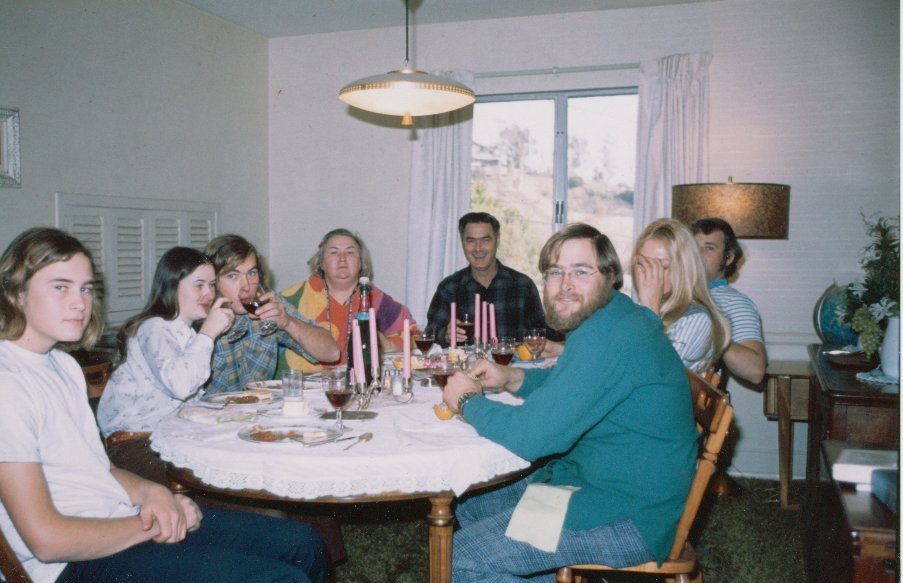
Christmas Breafast 1974
Christmas breakfast in my grandparent’s home, 1974

When my grandmother died, my first thought was of a conversation we had when I was 10 years old. I was visiting her house by myself for four days, my independence as an older child and her failing health meeting each other briefly before continuing on different trajectories. I was saying something obsequious about my grandmothers house—her disdain for others terrified me and I never wanted to be anything other than her favorite grandchild, which of course I was—and she said one day this house can be yours. I did not realize until after her death that this is one of those things you say to children, and you never mean it. I did not realize that in the months after her death the long process of occupancy would be reversed and one day the house would go back to being as empty as when my grandparents bought the house and some days after that would be the last time I walked through the house and some days later I would not allowed to visit the house any more.

[For a second I smelled the exact stone and calcium smell of water wetting the grout in the shower when you first turn on the water. Instead of closing my eyes and drawing the memory out, I blew out my nose because I worried I was going crazy.]

DAVID HOCKNEY "BEVERLY HILLS HOUSEWIFE" ACRYLIC ON  2 CANVASS 72 X144"
DAVID HOCKNEY
“BEVERLY HILLS HOUSEWIFE”
ACRYLIC ON 2 CANVASS
72 X144″
Screen Shot 2015-11-02 at 11.43.49 PM
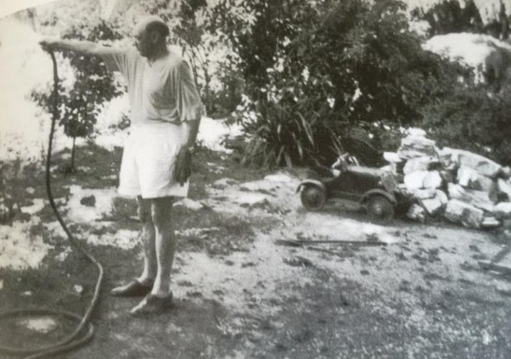
Arnold Schoenberg watering his garden in Brentwood, California

I think I love that house more now than when I actually had access to it. The form and symbolism of the 1950’s ranch house means so much more to me—visions of blank faced David Hockney figures diving into teal swimming pools, Arnold Schoenberg watering his garden in impossibly white shorts encasing hairless legs, the mysticism of the cool Los Angeles evenings, the smell of jasmine in the air. The midcentury modern pieces in the house were oddities to me, and then I understood that they were valuable and only after that did I understand them for myself.

Of course I don’t want the house that existed as much as a fantasy house that I started to build in my head as soon as it stopped being mine. I want the house that has a small formal dining room with a charming pass-through built in from the kitchen, not the dining room filled with letters and documents that never got resolved. I want the bathroom with the original art deco inspired hardware, not the bathroom filled with the assistance devices that let my grandmother live independently as long as she could manage, and maybe a little bit longer. I wanted the hardwood floors that exposed the clean lines of the original design, not the carpets that made the floor manageable for my grandmother and her poor circulation.

I haven’t thought about the house in years, but when I wanted to take a look at a satellite photo, my fingers typed the address as my conscious mind denied that I could remember it.

\\

Last night, after writing and posting, I did not go to sleep. I stayed up and read more Dharma Bums and listened to John Adams’ The Dharma at Big Sur.

John Adams is musically, for me, in that whole vein of Hockney and old Los Angeles and West Coast and Kerouac and Modernism and Buddhism and highways and style and yearning. The Dharma at Big Sur is one of the first new-to-me pieces of classical music I’ve liked like this for a while. I first came across Adams’ music in the context of a class on 80’s minimalism, but he’s not really a minimalist. What I love the most is the interplay in his music between tuneful foregrounded music that is not super outside late romantic harmony without being stuffy, and these lush and complicated background orchestrations. It is like the interplay between conscious and subconscious thought.

After that, my music app recommended Becoming Ocean by John Luther Adams. This is like music that is only subconscious. Like the ocean itself, the music is wild and deep and disorienting. I am not that familiar with his work, and even though the harmonies are not that far out there, theres an absoluteness to this music that I haven’t been able to wrap my head around yet.

//

Overnight, I dreamed that I was a freight truck driver headed west on 84 towards Portland. I was cold, but running the heater all night caused my truck to run out of gas. I woke up panicked that I wouldn’t be able to make it back to the highway.

//

I had enough time in the morning to write morning pages. The feeling that I am on a right track to awaken my creative brain…sometime…hopefully in the near future… is as close as I get to happiness, so I must be happy. Plus, I was wearing a brand new outfit, which is enough to lift my mood because I am deeply vain.

I forgot to eat breakfast before getting on the road to North Portland and our weekly staff training session. On the drive over, I listen to the latest episode of This American Life. There was this story about men that paid to be on a mailing list where another man pretended to be young women and strung these guys along as a pen pal, asking constantly for more money. This story was reported like 20 years later, and many of these men are still stuck in whatever hellish state of loneliness they were in to get trapped in the first place, and I was getting close to having some of my empathy circuits blown out just imagining that existence. It made me question whether my melancholy was a twisted form of optimism, because there’s a whole other way of looking at the world where I don’t have it bad not because my existence is so good but because there are infinitely deep wells to drown in.

Our staff training was as grim as it usually is. There’s a little anecdote from The Count of Monte Cristo that I think of. The Count is throwing an outlandishly grand dinner party, and is describing the lampreys that he has brought alive from Italy to his house in France:

Oh, do not give me credit for this, madame; it was done by the Romans, who much esteemed them. Pliny relates that they sent slaves from Ostia to Rome, who carried on their heads fish which he calls the mulus, and which, from the description, must probably be the goldfish. It was also considered a luxury to have them alive, it being an amusing sight to see them die, for, when dying, they change color three or four times, and like the rainbow when it disappears, pass through all the prismatic shades, after which they were sent to the kitchen. Their agony formed part of their merit—if they were not seen alive, they were despised when dead.”

When I think of the way that I’ve cycled so many times between inspiration, to disappointment, to anger, to numbness, to frustration at my job, I think of those fishes changing color like the rainbow and I hope it’s all amusing for somebody because it’s pretty tiresome for me.

I distracted myself by reading more Bums. I read through the beginning of Kerouac’s mountain climbing trip with Snyder. I kept being surprised that the book is so much of a homosocial romance. Kerouac seems caught in that space between wanting to be Snyder, and wanting to possess him. The writing comes alive when he’s describing Snyder as the coolest hep cat in all of the west coast, but there’s this weird strain of taking small moments as though Kerouac sees in him things no one else does:

We parked the car and got all our gear out and arranged it in the warm sun. Japhy put things in my knapsack and told me I had to carry it or jump in the lake. He was being very serious and leaderly and it pleased me more than anything else.

Kerouac’s enthusiasm for almost everything else—the nobility of the working class, the plight of the Native American, the wisdom of those crazy Zen masters—has to be measured against the colossal counterweight of condescension and self-congratulation. But his boyish hero worship of Snyder reads totally clearly, and totally authentically as coming from the space between envy and attraction. There’s a no-homo sexual undercurrent that comes up from to time, like when Snyder invites Kerouac to jerk off while he wanders away from camp, or when Kerouac is totally distracted by Snyder wanting to hike in nothing but a jockstrap.

//

Work.

//

On my way home from work, I stopped by Trader Joe’s for some mulling wine, and Movie Madness to rent another movie. I walked through browsing, and decided for no compelling reason on Olivier Assayas’ Lheure d’été (English title: Summer Hours). 
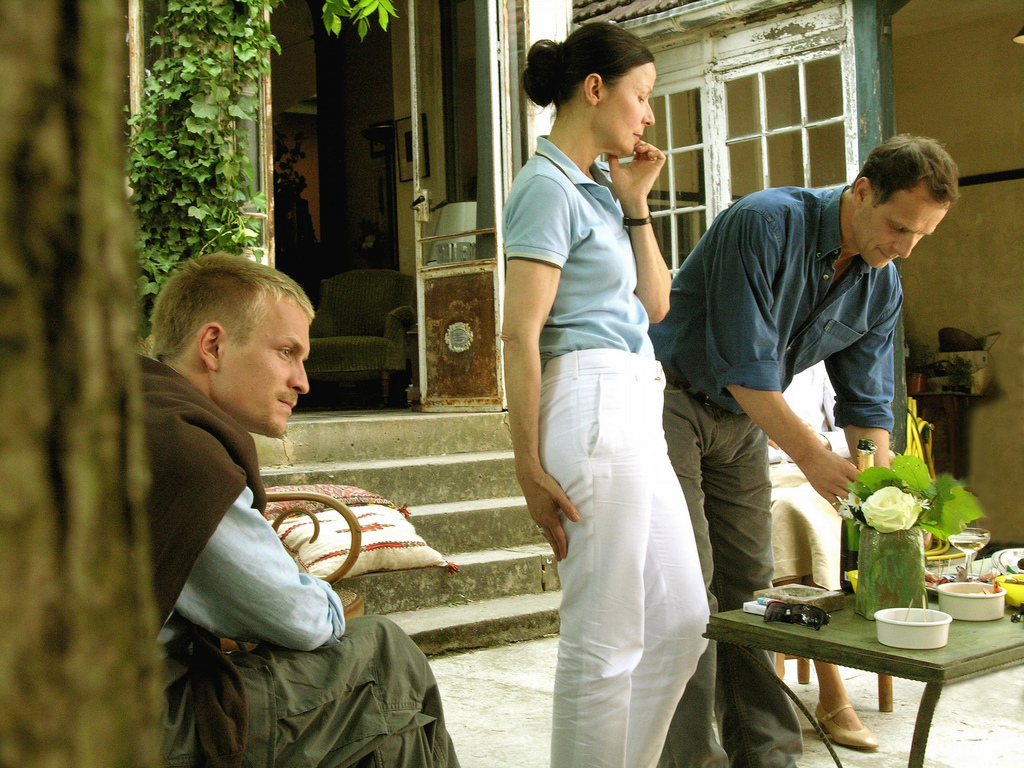
l-heure-d-ete

Summer Hours is about a lot of things. it’s about French culture, art, generational shifts, legacy, death, globalization. It’s a movie that I thought was going to be really pessimistic about the world that we live in, but that turned out to be touchingly optimistic.

At first glance, it seems like it’s going to be a King Lear story. An elderly woman celebrates her birthday with her three adult children and their families. Everyone remembers the good times had in her house, and the memory of their great-uncle, the painter that lived and worked there, and whose furnishings and collected artwork still live in the house. One child is an economist that goes on French radio to protest the existence of economic science. Another lives in America and designs accessories to be mass produced. Another has moved his family to China where he works as an executive for a sportswear manufacturer. The woman gives her wishes as to the disposal of the estate to her oldest child, he who stayed in France, he who will not let these products of French culture disappear into the anonymous hands of the international art market.

And the movie will play out. The younger children who have left France and don’t care for French culture will try and sell everything and he who truly had his mother’s heart will try and save it and he is going to be heartbroken because his own children only care about videogames and how will culture survive?

bird-of-paradise-flowers-2544072-2298-1181

But that’s not where the movie goes. It’s way too smart for that. Frederic does adopt his mother’s passion for the estate and the artwork and the idea of keeping everything intact more than his siblings, but that makes him blind to seeing his mother as a person, in a way making him more removed from her than his sister or brother. He is completely blindsided by the idea that his mother had a sexual relationship with her much older painter uncle, an unspoken truth to his siblings. We come to see that Adrienne, one of the siblings, is not so much disdainful of the paintings her mother loved, but resentful that the painter, her uncle, had stolen so much of her mother’s individual identity by entrusting his legacy to her (Adrienne, with her functional yet beautiful furnishings, also is the closest to the actual artistic expression that nucleates this family). Jeremie, the last sibling, is the least developed, but he is the only person to openly express that his great-uncle was an artist with some great works but more misses. The movie constantly twists around these kind of expectations and we truly feel both the sadness of the furnishings of this other life disappearing and yet also that maybe this is the best outcome.

But not very hopeful for the particularities of place in the face of a new international culture. Or of French culture. Or of culture at all. Until the very end.

in the last ten minutes of the film, there is a radical shift in perspective as we begin to follow the youngest generation in this family, teenagers, as they move into the estate for a last party, playing basketball on the boomy wooden floors of the artist’s studio and smoking weed leaning against plaster walls. The house comes back to life and we realize that as the adults have worried about whether there would be any legacy to leave to their children, it has already anchored itself in their hearts and memory on the strength of the pleasures of running through overgrown hedges, climbing over walls, jumping into ponds, picking cherries.

The scene of the movie is where the elderly housekeeper is asked to pick one thing from the house to take for herself. She chooses her favorite vase to put cut flowers in, unaware that an appraiser has told the family its a piece of rare 19th century glasswork. “I couldn’t choose something expensive” she says, “just something ordinary to remember her by.” The twin to her vase goes into a museum display case. Just like with Frederic and the woman herself, Assayas is saying that if you build up the art, the culture, the whatever to something other than what it is, you cut off your ability to appreciate it for what it is. If you build up a painter to be a stand in for culture, you cut yourself from truly engaging with his work. If you build up your mother into a flawless person, you might be suprised to learn that you never really knew her at all. If you build up the historical artifacts of traditional European culture too much, you might extinguish the culture that is developing right now.

Summer Hours has so many layers and so many great details I could write twice as much and not get everything I liked in, but how lucky I am to be rewarded for sustained attention.

lentejas

rolled out to work a little earlier because i had to go to a training workshop at the site in sellwood. this turned out to be a wild overstatement of what it was, which was to have my time wasted by a patronizing dude that understood about half of what he was talking about while we worked on computers that are too crippled and slow and poorly maintained to run the program that we were supposed to learn. about half an hour into it, i was trying to keep down feelings of how is this my life and fuck i hate my job.

work happened. the most notable and best thing that happened during the day was that the 3rd graders were all rockstars, and we had a good time playing scattegories. I gave them a little free time at the end of the hour, and was amazed to see them organize into a group playing legos on the floor and another group playing hangman on the whiteboard, completely self-directed.

I finally ripped the bandaid off my numbers this month to try and figure out how to get back on track after having to pay for medicine unexpectedly, and tires for my car late last month. it was pretty brutal, and i’m a little freaked out. there’s not a whole lot i can do for a couple more days, but its going to be hard for me to relax until then.

i decided to stop by the store and make myself a proper meal. I made a delicious lentil soup:

imagejpeg

with chicken stock, whole fresh garlic, cilantro, dried pasilla chile and a couple spoonfuls of sambal oelekunfortunately, i overate. i think all the time about changing the way that I look, at least I have a sense of how much to eat to stay the same size. last night was the first time in a while that I can remember unhappy bingeing, just eating to numb out feelings. money stuff does that to me.

after dinner, i didn’t feel like doing much of anything, so i read a little more of  Daniel Kahneman’s Thinking, Fast and Slow, which I’ve been working on for a couple of weeks. its pretty well written, and I found a lot of the cognitive traps that he describes really provocative. i realized last night, though, that i was getting tired of the formula of description of bias, how we know, consequence, how to hedge against falling for the trap, repeat, and decided that I didn’t want to finish it. i’ve been looking around for a cognitive science perspective book on creativity. I tried sampling Flow by Mihaly Csíkszentmihályi, but found it frustrating in the same way that many accessible positive psychology books are, which is that we understand the measurable beneficial outcomes of certain life philosophies way better than we understand how to adopt them or why they work.

i fell asleep to Friends once again, the one where monica dates hot tom selleck and the one with the grumpy cat video.

1.9.15

i had a golden opportunity to catch up on sleep that I threw away happily to see my friend S, who is visiting for a conference. i waded through morning traffic to get to powells to finally sell all those books that i maniacleaned (I got 50 bucks for them, not too shabby. it was pretty depressing to see so many books I liked that they didn’t need to buy/there was no market for though). it was my first time seeing her for probably over a year, so things were a lot different but one of the reasons I love her so much is that we always pick right back up where we left off and she is one of the world’s least demanding human beings and ch/illest because she’s a super introvert, so leave her alone for a few minutes and she’s already found something awesome to do, and yet she’s always game when I have the hankering to do something I’d like.

she helped me acquire my copy of As You Like It, which I had been needing to prepare for a social gathering I’m hosting next month (more on that another day), a copy of Mrs. Dalloway to mark up (more coming below), and a new journal, which I’m starting before finishing the old one but it feels like time. after putzing around for a little while—it’s a mistake to be a bookish person and go to a bookstore with another bookish person, because we both just want to wander around like zombies and get lost in our own particularities—we hit up a little breakfast deli to catch up.

the crucible that forged our friendship was that we both happened to be complete shitty pile of goop messes at the same time, and so way before I had the vocabulary to describe what the friendship was, there was a safety that I found in her to express some of my insecurities and vulnerabilities. every once in awhile, i’ll be caught off guard by something she reads in me and realize that it’s something she remembers from a conversation where i’ve said something more private and more exposed than I meant to.

we talked a little bit about personality types, and how much we love them, our own version of pseudo/quasi-scientific horoscopes and how much we want them to be true but how they can’t possibly be. talking through our meyer-briggs brought to the forefront one of those ways in which growing and becoming more ourselves reveals that we are more different people from each other than ever before in our friendship. i’ve tried to embrace my social and extroverted self pretty hard this last year, and she’s a superintrovert. listening to her talk about herself makes me realize that her potential for world domination and cold, grinding dominance through superiority is much higher than I ever gave her credit for.

2015-01-08 11.45.55-1

when i got back home to take a breather before work, I took a second to label the spines of my collection of journals, diaries, workbooks, and planners going back to 2002, when I was a 12 year old. none of them are particularly comprehensive; the ones from about 2010 or so are more complete chronicles of time, but it’s incredible how many important things never got covered. I’ve been working on being someone that’s more comfortable showing my mess & edges & roughness & harshness & humanity to the world, and that’s part of the reason that I wanted to experiment with journaling out in the open, online in 2015. moving my daily journal online and off paper opened up some room for me to start something that I’ve been wanting for so long, a real artist’s journal. the second one from the bottom in the stack above is where my earliest poems, songs, sketches, stories are, and one thing I missed so much from it was the lack of lines. for whatever reason, i’ve always been good about journaling with lined paper, but its impossible for me to muse or brainstorm or collect the soup with lines on the page. we’ll see how long this lasts; one reason that there’s a weird chronological overlap in the top three books is because they each started as something else before drifting back to being a daily diary.

I love having the books around. they can puncture the clever rearranging the past that we all do to create and preserve our worldtrack, but at the same time, the most heinous and stupid and sad things i’ve ever thought are all there. conspicuous sadness is often there. conspicuous happiness never is.

i fucked off at work and cracked into Mrs. Dalloway. last year, i read fewer books than the year before that, but had a couple of very intense reading experiences, the most memorable of which was an excruciatingly slow read of Portrait of the Artist as a Young Man. i love technology and new technology. i love the ease and convenience of ebooks. i love the way that they are always with me, and i especially love the way that they facilitate real engagement with some supertomes, like Dumas’ Le Comte or Infinite Jest, that read a lot better when you can easily access notes. but.

even so.

i read a lot better with pen or pencil and copious notes. i’ve been trying to resist this truth ever since my first high school english class. i hate rereading copies with annotations, i kind of hate “hurting” my books, i almost always hate at least 20% of my thoughts a day after writing them in the margins (a hard-won reduction from the 100% in my high-school copy of A Midsummer Night’s Dream which I burned in shame). but reading with a pencil focuses my insight, in makes me slow down, it rewards me for discovering beautiful turns of phrase, sentences that don’t open themselves up with just a quick skim. i’ve been thinking all day of Woolf’s description of clock bells as “leaden circles dissolved in the air,” and I never would have focused on that particular description if I hadn’t first been looking for anything first. i had made my way about 30 pages in, but decided to just start over now that I had my own copy.

the rest of the workday passed.

I listened several times to the Byrd’s “Eight Miles High,” and was pointed by music history both to the orientalism of indian-inspired psychedelic rock and Coltrane. it’s just about time for a deep dive, I think.

i took 12 kids at the end of the day to a University of Portland Pilots basketball game. we all had a lot of fun, but there was something irritating that happened at the end that got me steamed, and forced me to stay an extra hour late on top of the late schedule, so I didn’t leave work until about 9:45pm and very grumpy.

I finished up the day with a visit to Dot’s and catching up with HaRT, who I hadn’t seen for almost a month. we talked and bullshitted and discussed online dating strategy, which seems to be an evergreen topic of conversation that I have with anybody that’s not paired up right now.

I started watching Friends as a mindgame to see if me watching a few episodes around the house while L was around would be enough for her to feel like she didn’t need to watch the whole thing again. Unfortunately, it’s kind of caught, so I’m not sure that what i did was any better, especially since my whole motivation was to not hear that fucking theme song a thousand times over. I’m guessing I have a few more episodes in my future.

The Handmaid’s Tale

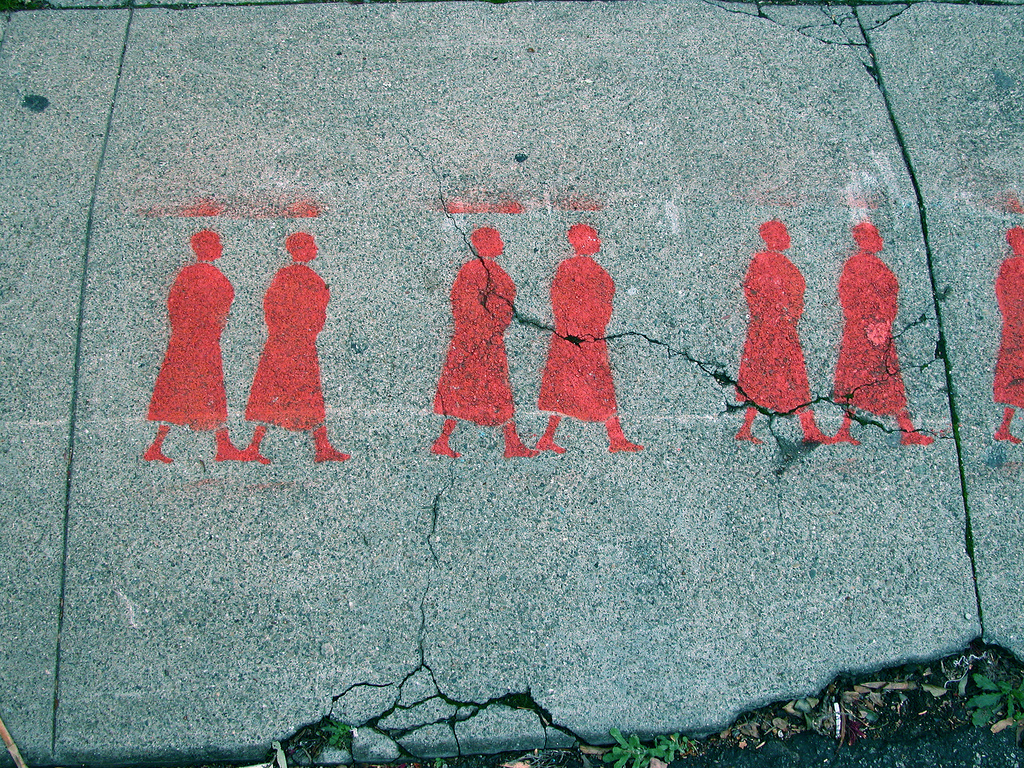
red stencil walkers

Many people that I know read The Handmaid’s Tale in high school. I didn’t. Because so many people come to it when they are younger, when they are developing their consciousnesses, I thought the book would be more polemical, more manifesto. The book makes a clear statement, and has the anger and righteousness of a manifesto, but I was surprised to discover that Offred’s voice was an ambivalent, human voice. I thought it was an extremely brave thing of Atwood to do to have so much of Offred’s internal monologues, especially her regrets, to focus on the loss of her child and husband. It would be less complicated to have a character that only has hate for men, only resents her own ability to create children, but by embracing that complication, the book seems more truthful to me. It’s incredible to think how much time has passed since the publication of the book, and how nothing so substantial has changed that it seems to invalidate the premise of the story.

I’m thinking of this story in Fortune about women in the tech industry. One way of saying that “Everyone was the same, and no one was like me.” is that these jobs are not designed to be filled by people who have a family. Sometimes that means no women, but even their male workers are expected to have a “traditional” family structure simply because these men cannot contribute in that way to the household. There’s a scene in the Tale where all women workers are summarily fired and their financial accounts frozen. We despise the men in that story for saying nothing. Maybe that wouldn’t happen in reality today, but if there was suddenly a new law that meant that maternity leave was more inconvenient/more expensive for employers and women workers suddenly found their careers stalled or themselves forced out, how many workplaces are there in which men would stand up? Would we say anything if it didn’t happen all in one day? Would I notice?

I’m also thinking of an episode of The Dick Cavett Show  I watched once while I was fucked up. Carole Burnett was the guest.I thought it was the craziest thing I had ever seen, because she was so comfortable, relaxed, bantery, funny. And also because she seemed to have the cool/funny girl schtick that I associate with entertainers like Mindy Kaling, Tina Fey or Lena Dunham. The pose that says that Sexism is bullshit and totally happens to me but I can joke about it and I’m not going to let it stop me because eh, what are you going to do? But then again, there’s something aggressive about a male interviewer opening his segment by grilling her about her sexual history. And we look at that as both banter and also as something uncomfortable, something that probably wouldn’t happen today. But if it did, it would seem “edgy” and “honest” and we would all get a thrill out of breaking the same taboo that Burnett and Cavett were breaking. Especially now as Lena Dunham becomes the center, again, of whether she is or is not a Feminist Icon of Our Times, I can’t help but look back and forth between Dunham and Burnett and the context of their times and think This will never be enough. And then I think about how lonely Margaret Atwood must get sometimes if she’s spent her entire life thinking that all of it will never be enough.

The Handmaid's Tale

red stencil walkers
Many people that I know read The Handmaid’s Tale in high school. I didn’t. Because so many people come to it when they are younger, when they are developing their consciousnesses, I thought the book would be more polemical, more manifesto. The book makes a clear statement, and has the anger and righteousness of a manifesto, but I was surprised to discover that Offred’s voice was an ambivalent, human voice. I thought it was an extremely brave thing of Atwood to do to have so much of Offred’s internal monologues, especially her regrets, to focus on the loss of her child and husband. It would be less complicated to have a character that only has hate for men, only resents her own ability to create children, but by embracing that complication, the book seems more truthful to me. It’s incredible to think how much time has passed since the publication of the book, and how nothing so substantial has changed that it seems to invalidate the premise of the story.
I’m thinking of this story in Fortune about women in the tech industry. One way of saying that “Everyone was the same, and no one was like me.” is that these jobs are not designed to be filled by people who have a family. Sometimes that means no women, but even their male workers are expected to have a “traditional” family structure simply because these men cannot contribute in that way to the household. There’s a scene in the Tale where all women workers are summarily fired and their financial accounts frozen. We despise the men in that story for saying nothing. Maybe that wouldn’t happen in reality today, but if there was suddenly a new law that meant that maternity leave was more inconvenient/more expensive for employers and women workers suddenly found their careers stalled or themselves forced out, how many workplaces are there in which men would stand up? Would we say anything if it didn’t happen all in one day? Would I notice?

I’m also thinking of an episode of The Dick Cavett Show  I watched once while I was fucked up. Carole Burnett was the guest.I thought it was the craziest thing I had ever seen, because she was so comfortable, relaxed, bantery, funny. And also because she seemed to have the cool/funny girl schtick that I associate with entertainers like Mindy Kaling, Tina Fey or Lena Dunham. The pose that says that Sexism is bullshit and totally happens to me but I can joke about it and I’m not going to let it stop me because eh, what are you going to do? But then again, there’s something aggressive about a male interviewer opening his segment by grilling her about her sexual history. And we look at that as both banter and also as something uncomfortable, something that probably wouldn’t happen today. But if it did, it would seem “edgy” and “honest” and we would all get a thrill out of breaking the same taboo that Burnett and Cavett were breaking. Especially now as Lena Dunham becomes the center, again, of whether she is or is not a Feminist Icon of Our Times, I can’t help but look back and forth between Dunham and Burnett and the context of their times and think This will never be enough. And then I think about how lonely Margaret Atwood must get sometimes if she’s spent her entire life thinking that all of it will never be enough.