
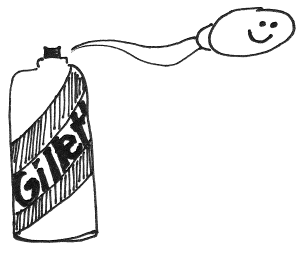
Last week Gillette released an advertisement called The Best Men Can Be (25m+ views) which in 90 seconds presents this masculinity pageant: toxic masculinity has been perpetrated by men forever, now the #MeToo movement has shed light on it, now nothing will be the same, we’re not afraid of it because men can be better, here’s a couple of clips of men already being better.
This morning, I read this plainspoken line in Heather Havrilesky’s new book of essays, What If This Were Enough: “We are living in a time of extreme delusion, disorientation, and dishonesty.” There’s a fever going on right now and the dead-end racist, sexist bluster that is destroying our governmental infrastructure by pushing out government workers, the two documentaries about the fraud and waste of the Fyre Festival (resplendant in its stupid fucking novelty spelling), and Tony Blair grinning like a naughty schoolboy as he struggles to defend himself against the characterization of Davos as “a family reunion for the people who broke the modern world” all seem to be in dialogue with each other.
We’re also trapped in this this slow motion racist gaslighting sparked by a group of white boys from a Catholic school harassing a man they assumed had no power. When the public gave that man power through their attention, their parents circled to protect them and used every connection they had to take it back. A friendly CNN interviewer and the President helped them do it.
Last year, the Canadian government asked the Pope for an apology to the Inuit and Métis peoples for the role the church played in operating genocidal boarding schools and orphanages for Native children. A spokesman for the Pope responded: “After carefully considering the request and extensive dialogue with the bishops of Canada, he felt that he could not personally respond.”
Nick Sandmann, the boy from Covington, when asked if he felt like apologizing for his actions, said “I wish we could’ve walked away and avoided the whole thing, but I can’t say that I’m sorry for listening to (Phillips) and standing there.” In his written statement, he wrote, “I am a faithful Christian and practicing Catholic, and I always try to live up to the ideals my faith teaches me”.
Here’s what connects these phenomena: We are living through a time where the mechanism by which privilege perpetuates itself—by controlling the story and by controlling what context gets incorporated into the story—is becoming more and more nakedly visible as the divide between those who are benefitting from current political, cultural and economic conditions and those who must change those conditions in order to have a thriving future is becoming wider. Privilege is the power to say “you didn’t see what you saw. And if you did it wasn’t that bad. And if it is that bad, you should see what this other person did. And if you still have a problem with that, Jesus said ‘Let he who is without sin cast the first stone.'”
It’s bullshit.
Here’s why the Gillette advertisement is bullshit, too:
- Gillette’s shaving products do not play a significant role in gender-based violence or economic inequality. They did not, for example, run a PSA about not using single-use plastic items.
- The advertisement perpetuates a fantasy alternate history where toxic masculinity was a thing that nobody knew was wrong, then #MeToo happened and men realized it was wrong and changed the world. You can’t simplify the narrative like that without performing the same erasure that toxic masculinity needs to perpetuate itself.
- Gillette continues to sell rectangular razors to men in tough blue and gray boxes and oval razors to women in pretty pink and green boxes.
- Gillette apparently believes that you solve toxic masculinity by being tough and intervening in fights and shouting positive affirmations at your daughter in the mirror*, as opposed to, say, looking at pay inequalities and family leave policies in their company and supply chain.
- You cannot credit with–or protest–Gillette changing the culture of masculinity without imputing authority over masculinity to Gillette. Both sides reinforce the desired message, which is that buying Gillette is being a man.
*Which was very cute, I’m not a monster.
Pointing all of this out pedantic, because we all have a baseline expectation that power and bullshit go together. The government is so clogged with bullshit it cannot perform even the most basic functions. The church is so full of shit that people stopped going then discovered what a better social adaptation that is. Institutions that used to police bullshit like universities and newspapers now support themselves by distributing the bullshit (plus, we know that they only ever policed bullshit for white dominant culture, so even calling them the bullshit police is itself a kind of bullshit). Brands are bullshit, but they also seem to kind of work and are kind of accountable to the public sometimes so we give them feedback with love or scorn because that sometimes works and nothing else seems to work.
Gillette has total control over its workplace. It has control over its products, its marketing. It has a lot of influence over the city and state in which it has offices. It did not choose to make change in those spheres in which it has a lot of power. Instead, Gillette is trying to change the way you think about masculinity, which is a power that you have to give it.
So gender progressives have to pretend that liking an advertisement means supporting women and gender troglodytes have to pretend that their honor was sullied by a razor blades and queer folks have to pretend that a company that differentiates its products by gender are going to teach men to protect nonbinary kids and on and on and on…
I think all of that pretending has a cost. I think every time that we do it we erode, just a little bit, our ability to see what else could be possible, what real change would look like. Resisting, though, is not cute and feels useless. In my own real life, where I have total control over me, someone asked what I thought of the Gillette ad and I just shrugged and didn’t say anything.

 hammer & jack