Coronavirus Diaries No. 1

I have been working from home for the last week and cutting down on socializing (due to an unrelated cold and asthma flare up) for a couple weeks. I have a million ideas of how to use my time, but the unstructured openness of the day makes it hard to focus on any one thing. Working from home feels like neither working nor being home

I’m trying to manage my worry. Entire industries are collapsing, and there is a tsunami of unemployment claims coming. The west coast might be ahead of the country on these measures, but viruses don’t respect state borders and every state that delays responding is going to be hit harder by it in 2-3 weeks. I think it’s possible that we will witness Great Depression-level destruction of the economy.

Oregon has been a half step behind California and Washington in covid cases and public health response, but this week is when the anticipation has become visible. Restaurants and bars have shut down (a big deal here—between coffee, beer, and cocktails it feels like 2/3 of the Portland economy involves pouring liquids). I live on a busy street that usually has two hours of rush hour traffic in the evenings, and it’s been empty.  I have a job, for now, but arts organizations are very vulnerable to recession. My office has felt tense since it became clear that we would need to cancel almost half of our concert season.

I’m doing my best to keep functioning. I make breakfast in the morning. In the absence of free office coffee, I bought beans for the first time in several months and brought my beloved tiny, one-and-a-quarter-mug French press out of storage. In the middle of the day, when I’m feeling bored and antsy after being in my computer chair for too long, I use a jump rope I bought on an impulse. I play video games, I read, I write, I play music. Yesterday I got a tremendous gift from a friend who let me take a long soaking bath in his oversize tub.

I’m not trying to say that everything is so cozy! or wow, isn’t this quarantine kind of like a staycation! I am deeply unsettled right now. When the part of my brain that wants to find the bright side of everything starts to speak up, I have to remind it that we haven’t seen the worst yet, we are still living through the very beginning of this story. What I’m thinking about is how we are navigating a perfect natural experiment in the practice of self-care cut off from the commercial appropriation of the idea.

The writer Tara Brach has a concept she calls “the trance of unworthiness”—a default state of busyness, distraction, dissatisfaction, disassociation, and self-loathing* that defines much of our time, if we let it. Although time goes by quickly without intention, it’s the opposite of a creative flow state. It’s the emotional induced by a society oriented towards trade and; we yield to jobs and technologies that take our time and attention, we work hard for rewards that do not make us feel better or contribute to our growth, and we blame ourselves and the people around us for the eternal discomforts that go along with being alive.

*what are their antonyms? Steadiness, focus, satisfaction, being present, and self-love—­what a great list of virtues to cultivate!

It is not worth the cost that many people are going to pay, but in this brief moment, it seems like the trance is not working. Every daily action, from going to the grocery store to texting your parents to going to work is invested with meaning, danger, and a true understanding of its value to our lives.

Self-care has become a cliché because it has been so successfully coopted by advertising. At the root of the concept is political and economic resistance, though. If the world around you is trying to destroy or oppress you, every act of care that you give to yourself is an act of resistance. It turns out that that’s a big “if” though—big enough to drive an advertising campaign through. Our culture teaches us its most important lesson from a very young age: spending money makes you happy. It establishes a lifelong relationship of cause and effect: when I’m feeling bad, I spend money, then I feel better. Once that lesson and relationship are established, all every company from soap to soda-pop has to do is pull that lever.

But look at where we are! It feels like the world is trying to destroy us. We are being called upon to do something difficult and counter-cultural: stay home, stop spending money, stop socializing in person, be with yourself. We have suspended one of the most powerful parts of our economy: paying other people to distract us from ourselves and make us feel better.

When we develop an understanding of how we can meet our own needs, that relationship to the self is so strong that no commercial interest can exploit it. Feeling good in our own bodies, feeling fulfilled by our work, feeling connected to our relationships, these are all so particular to our individual selves that no product can perfectly fill that need. The satisfaction and strength that we feel when we fill our own needs have so much integrity that we can’t be lured into dissatisfaction.

I think that we are at the beginning of a very difficult few months or years. There is a lot of death coming. We will need to adapt to the need for extended distancing until effective vaccines or medical treatments come into use. There is a possibility that our political institutions are too broken to meet this moment, and if that is the case we may be in for an extended economic depression. Finding ways to meet our own needs and the needs of our close kin and friend communities is going to be a survival skill.

I want to hear about what needs you are discovering and what ways you are discovering to fill them. I’m OK, and I hope that you are OK too.
january book roundup

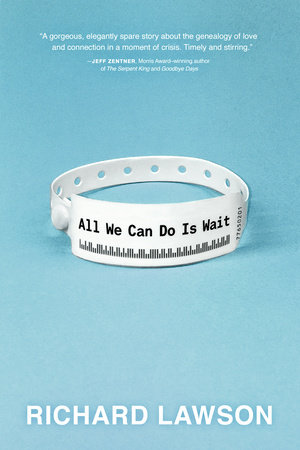
All We Can Do is Wait Richard Lawson

What a sweet little book! I picked it up because I follow Richard Lawson on Twitter, but I guess I wasn’t following him when it was released. Although the novel starts with a dramatic bridge collapse, most of what unfolds are the quotidian dramas of being alive: insights into the self that you try and shove down into the unconscious, trying to be brave enough to make a leap into what you know you have to do, the loneliness and despair of trying to stay connected to someone who is trying like hell to run away.

All We Can Do Is Wait by Richard Lawson book cover.

Now, maybe you watch a lot of Netflix crime shows and the only thing that seems dramatic now is a race to decode cryptic clues before a baby rapist detonates explosives underneath the final match of the world cup. Compared to that, this book may very well seem plotless and boring to you. I cannot help you there.

I give it a few extra points for incorporating some teen characters that are neither the bland upper-middle class that usually peoples YA nor are they only in the book to edify the white characters. A few points knocked off for still centering bland upper-middle class teens.

The only reservation to my recommendation is that it never answers why we were looking at these characters. They were all compelling, but they never quite cohered together or interact with each other dramatically because the present-day narrative is packed into a single day. Second, although it has a beautiful message about dealing with uncertainty and taking each day as it comes, it doesn’t quite allows the reader to take it away for their own life, unless your loved one has been trapped in a bridge collapse.

Overall I thought it was a strong debut novel and I’d love for Lawson to get the chance to write another one.

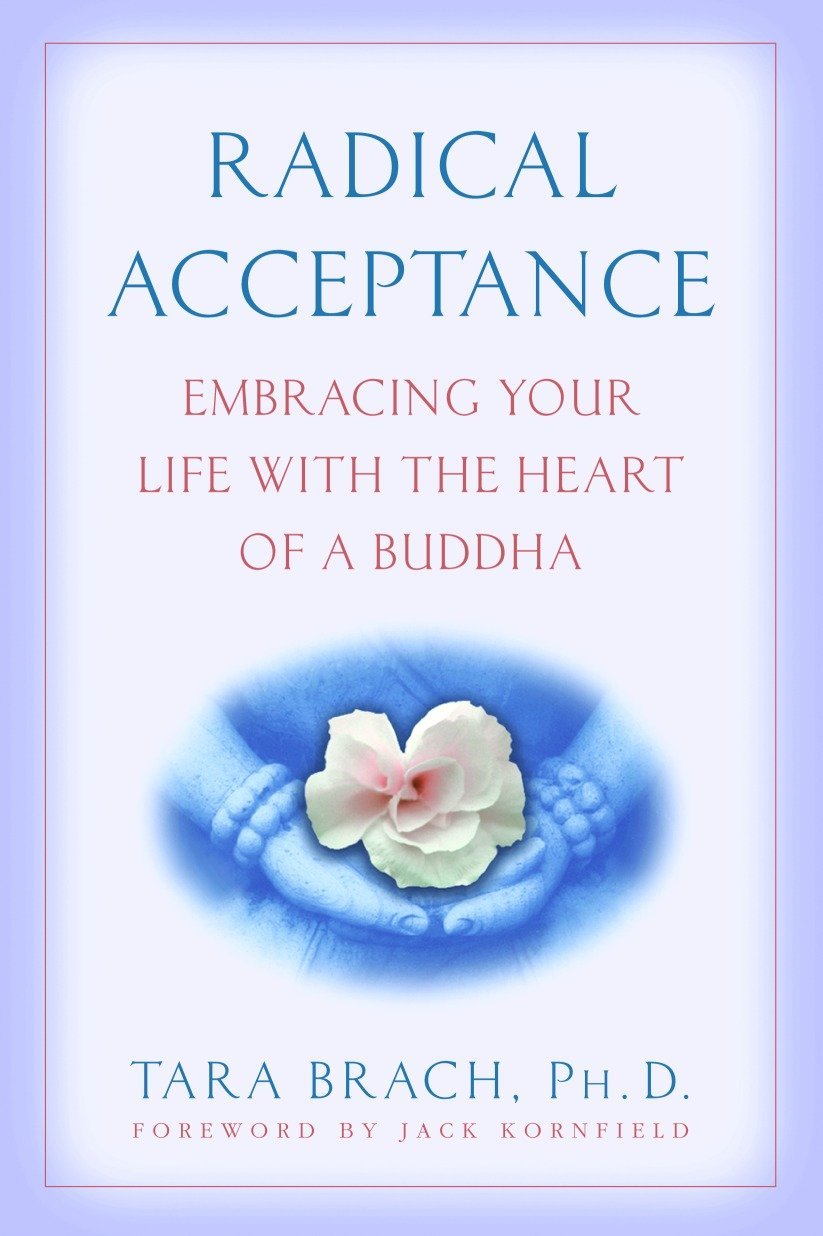
Radical Acceptance ⪼ Tara Brach

This is, like, a very important and beautiful book to me. Tara Brach takes clear aim at the voices in our heads that tell us that we don’t deserve happiness, that keep us stuck in our wounds, and try and keep us disconnected from our true feelings because we worry that if we open ourselves up to them they might drown us, like one more passenger on a lifeboat that’s barely above water.

Writing about self-help is vulnerable to me because it’s like shouting Hi! I have all these problems. And they are also easy to make fun of, and not even in a mean-spirited way. There is something a little goofy about looking to Buddhism for answers (as an American, given the cultural history of “looking to the East” for enlightenment) or taking in meditations with exercises like saying hello to your pain. There’s a real and sad truth to texts like these: I turn to them when I need to hear them. I allow them in when trying to muddle through endless grey days without compassion for myself is worse than trying to do something about it.

Self-help/growth books are one of those things where some work for some folks and others work for other folks, so I wouldn’t just blanket recommend it to everyone. The most I can say is that if it seems like it might contain something you’re trying to find, you owe it to yourself to open it up and see if it is.

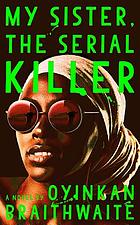
My Sister, the Serial Killer ⪼ Oyinkan Braithwaite

I did not love this book. I appreciated its unabashed pulpiness, but the premise is stated in the title and it doesn’t develop much beyond that.

What really worked for me is that the story is set in Lagos, and Braithwaite doesn’t waste much time explaining details in the setting for a reader like me that is not that familiar with Nigerian culture. Food, clothing, common phrases are incorporated and the onus on the reader is to learn or keep up. I really appreciate that because if Ezra Pound can drop in untranslated Italian, German, French and Sanskrit into poems that high school students are supposed to give a shit about, I think US reading audiences can grow up when it comes to non-European settings. I also loved the grotesquerie of the main character, there’s a slow inversion in the plot where we realize that a binary that we’ve been presented with is maybe not all as it seems, and I thought that was great.

What did not work for me is that the sharpness of the satire of beauty culture and social media culture kind of trails off, and I did not find it as clever as folks who loved it. I also think there wasn’t quite enough conflict, either external conflict in plot or in the internal conflict of the main character.

Don’t let me turn you off from the book, though. It’s a strong first book, and my rating is way more “this was not for me” rather than “this was bad.”

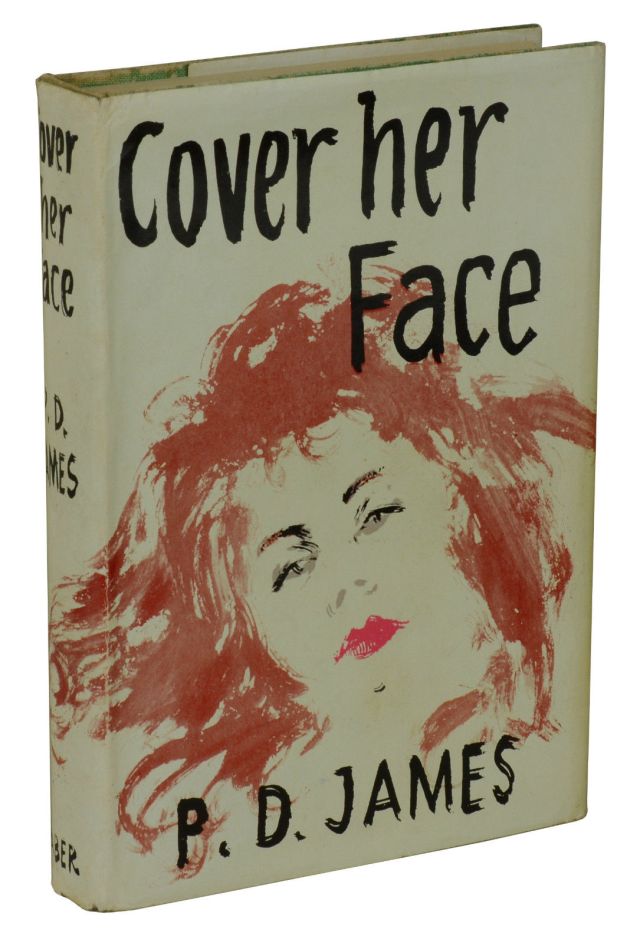
Cover Her Face ⪼ P.D. James

Read a whole post about it.

The Sandcastle Empire ⪼ Kayla Olson

This was, and I am not exaggerating, a terrible book.

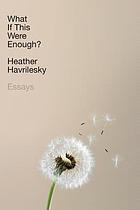
What If This Were Enough ⪼ Heather Havrilesky

I am a huuuge fan of the Ask Polly advice column in The Cut. I come back again and again because I feel some kinship with her. She’s got sharper edges than a Dear Sugar, but like Sugar is deeply compassionate. Polly is funny, but not flippant or sarcastic like Choire Sicha’s NYT Styles section advice column.

I guess what I love the most is that she has become the person that people like me—millennial weirdos who feel stuck because all we seem capable of doing is looking around in shock and disappointment asking “oh my god, is this really it?”—send their deepest questions. And we have changed her in turn.

Like any book of essays, there are some that speak right to me, some that don’t speak to me at all, and some that I hope to god speak to some future, more courageous and secure form of myself.

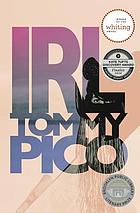
IRL ⪼ Tommy Pico

Tommy Pico is incredible, and if you haven’t read him you should run not walk to one of his poetry collections. He writes directly to my sensibility–insecure, introspective, and horny–and the beautiful experience of reading something written for you is like drinking deeply of spring water or breathing in the air after a rain.