I had a great day today. I spent Monday in a weird funk, just caught up in confused, unhappy thoughts and feeling restless and slightly dissociated. In the evening, I went out for a walk, and about halfway into the walk I started to come back into myself. More precisely I finally started putting words to the way that I was feeling. I realized that I have been feeling the kind of restless feeling of transition. It’s the feeling when you need to wait for a friend in a building lobby. You sit down and try to get comfortable, but your eyes shoot up when a new person walks in the door and it’s not enough time to do much of anything.
[It truly didn’t occur to me until just this second that not everybody experiences waiting for a friend in the lobby as a stressful experience.]
So now I have to wait things out for a little bit, and play one of my least favourite games: You’re Getting Way Too Into Your Head vs. You Are Finally Tuning Into Important Feelings. If it’s one, I should go out and do things that get me out of my head and engage me in the world around me. If it’s the other, I should absolutely not do that and instead tune into the self and accept whatever uncomfortable feelings I have without judgment.
There’s not really a viable “no choice” option—I have a certain number of hours in a day. A portion of them go to my work, a portion of them I spend asleep, and the rest I have available to do whatever I want with them. I’m running a little bit short on want. I am engaging thoughtfully with the questions: what brings a little bit of joy? what do you think is fun? what would be pleasurable to do? and all I’m getting back is dead air.
Wednesday
Today was more or less the same. It started out feeling better but the enthusiasm and energy I brought to the day lasted until about 11am.
I did get to talk all this out with a friend at dinner.
As I was drifting into a nap, I realized what I’ve been looking for: danger, a sense of adventure. What I should be navigating towards is what makes me afraid.
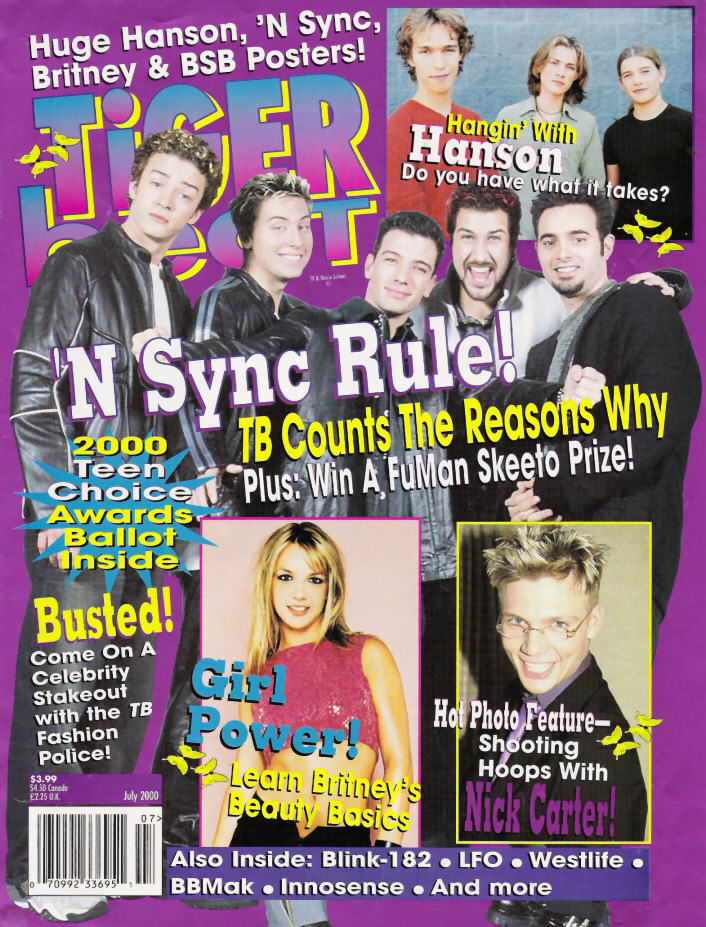
A few weeks ago I was having dinner with a newish person I’ve been enjoying getting to know better, who is about 10 years younger than I am. I was talking about playing music in high school, and he asked “Did you ever dream of becoming a big pop star?”
That question caught me off guard. I tried not to get it on my face but inside I was wincing. Even worse, I then got totally in my head, getting stuck in a thought loop about whether that was a valid reaction and oh god what does it mean that I’m even picking apart my reaction, and on and on. The part of me that was melting down heard the question as Obviously you are not a pop star, and nothing about what I know suggests that you want to be famous, but you play music and people who play music generally want attention, so did you ever dream of becoming a big star? and if I’m going deeper, and not flinching from the sensitive part of that interaction, I think I also heard it as You are a nobody, and you don’t seem like you’re trying to be a somebody, so did you ever dream of being somebody?
Obviously, that is a pretty dark way to interpret a totally normal question. It just hit really close to the thoughts I use to beat myself up, the broadcast that Anne Lamotte calls “radio K-FUCKED” that becomes depression when it’s turned up too loud. I walk around every day with at least a small part of me telling myself that I’m a nobody who spends all his life force maintaining a life that I don’t want. Sometimes countering that voice gives me a higher self-esteem, other times I feel a flood of shame for thinking that I could be better.
It is true that I wanted to be a pop star when I was a teenager. But here’s another truth: I know so much more about what being a pop star is. I am grateful that I wasn’t my family’s breadwinner since I was 16, like Beyoncé, or sexualized from a young age through beauty pageants and needing to immigrate alone to a different country as a teenager like Rihanna, or navigating having my image made over by coaches and dealing with body image issues in the public eye like D’Angelo. I know now that whether I have talent is as important a question as whether I had rich parents. I know that the whole conversation about what is luck and what is talent is not real. It’s always both, and if they lived 1,000 times, in 999 of them we wouldn’t recognize their name.
Classical music is cruel not because there are winners and losers, first chairs and second chairs, but because it lies about the fact that these winners and losers are chosen long before the first moment a young child picks up an instrument. It doesn’t matter if you study composition, devote years to an instrument, or simply have the desire to teach—either at the university level or in the public school system. If you come from a less-than-wealthy family, or from a place other than the wealthiest cities, the odds are stacked against you no matter how much you sacrifice, how hard you work, or, yes, how talented you are.
Wagner describes how classical music requires a long, expensive training process as a price of entry to even compete for a small number of high paying spots at the top of the pyramid. And, as always, social connections and family wealth allow you to jump the line:
The prestige of classical music obscures a range of unseemly realizations: arts managers are union-busting bosses like any other; private conservatories cost hundreds of thousands of dollars to attend partially because schools figured out they can charge that much and people will still go—either out of desperation to make it or because certain students are wealthy enough to afford it. And, at the same time, scholarships are cut under austerity deanships, tenure is eliminated, and adjuncts are paid poverty wages with no benefits, while the administrators get bigger and bigger paychecks. The rest of us sacrifice to prove our dedication, go to school full-time, work under the table, and teach for free in order to get a degree. And if you bow out of this gladiatorial arena, where only the affluent and well-connected are armed, like I did, like many of my friends did, you are understood to be a failure who didn’t try hard enough. In the meantime, the gilded band plays on, scoring the lives of the well-heeled and propertied.
There are some truths that it’s taken me a long time to learn. There are some that my head knows and it’s taken a lot longer for my heart to learn them, and there are some that my head knows and my heart still doesn’t believe. One such truth is that what I love about classical music—the thing I find in it that mirrors something that is in me— is not the same thing as the institutions, the traditions, and even the people that produce it. It is always in the interest of the institution to claim that they are the sole caretakers of the art form, and to conflate any change to the way that the art and their position in the hierarchy with a threat to the art form. I couldn’t see that college, and I paid a price for it. I always saw myself in the music. But month by month, semester by semester, the more that I learned about this cultural world that I wanted to take my place in, the less I saw myself in the people in it. The dissonance of trying to maintain a self-mythology in which I was a genius in training with a bright and shiny future ahead of me in the face of this discouragement was stressful, and I couldn’t keep it going for very long. That experience left me with this profound feeling of failure which has taken me years to dig out of.
Another truth that’s taken me even longer to come to is that this fantasy self that I carry around, the version of myself who was even luckier, who got the breaks that I didn’t or took advantage of the opportunities that I blew or had the mentors I didn’t meet—that person is not real. If I’m really looking deeply inside, even though my head knows better, on an emotional level, I think I do believe that if you add up the sum total of all the advantages and opportunities I’ve had, and compare them against the next person’s, it all kind of evens out. Therefore, there’s some kind of “perfect playthrough” where making all the right decisions and getting all of the breaks means that I get success, however I envision it. Because my other self is not real, he never makes mistakes. Because his perfect future is known and mine is very not, he can have a confidence that all of his compromises were worth it that I will never feel as I make my way through living with mine.
When I get hung up on ideas about myself, particularly when there are Principles and Beliefs attached, my therapist asks me, “Does this belief serve you now?” For the longest time it seemed like that doppelganger was my motivator, the source of my ambition. Now it’s only around to compare myself negatively to, and it probably was never as good a motivator as others. When I fixate on imperfect choices, I end up looking at my life with contempt, and that doesn’t serve anyone. On the other hand, letting go of the idea of the perfect playthrough still scares me, and still feels like a betrayal of so many past iterations of myself. I think I’m there in my head, my heart still has a ways to go.
I don’t know what’s on the other side of that belief, I can’t even imagine what it might feel like to move through the world without that drag. A quality I admire, though, is the courage to look at what is, to remove the filters and fears that adjust reality to suit us. I am not afraid to look at myself, and that’s the truth. Going back to the question, I wish I had just said, “Yes.”
I never get tired of the highbrow/lowbrow debate. There’s a long article in the Chronicle of Higher Educationon (according to the writer, Michael Clune) a reluctance for humanities scholars to engage in critical evaluation (as opposed to interpretation).
This eschewal of hierarchy appears eminently progressive. Who am I to say that one book is better than another? Why should I tell you what you should read? Everyone’s taste is equal. No one’s judgment is any better or worse than anyone else’s. […] The abdication of professional judgment throws all questions of value into the marketplace. The free market is where consumers, whose preferences are all accorded equal status, exercise their cultural choices.
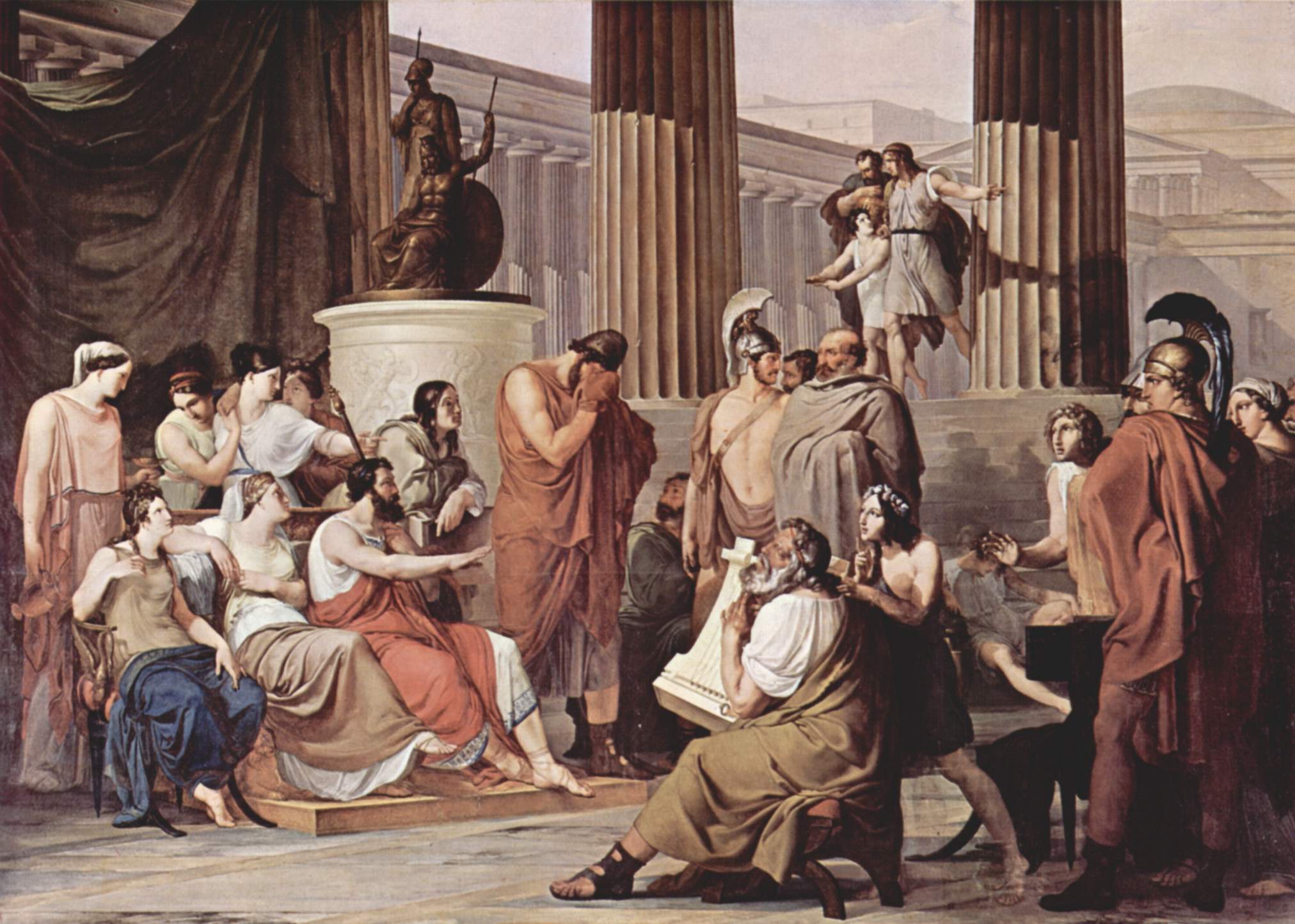
Ulysses at the court of Alcinous by Francesco Hayez. In other words, poetry in the literal marketplace.
Is making a hierarchical ranking the same thing as making an aesthetic judgement? Clune performs this little misdirection throughout the essay. Ranking things in lists seems like an insane way to engage with any art form to me. Art criticism must start with what’s on the page or on the canvas, but it’s no longer tenable to ignore the other axes of power and cultural capital that lead to one thing being considered a masterpiece and another forgotten. Clune tries to head off this argument: “Criticizing the limits of equality doesn’t mean ignoring the pathologies of expertise. Many expert judgments of the past bear the ugly marks of racism and sexism. Probably many of our own judgments will seem similarly distorted in the future.” Clune seems unwilling to entertain the idea that the cultural hierarchy he’s defending is simply a mirror of social hierarchy.
The deadliest trap in art is the circular logic trap that comes about when “Is this the best?” leads to “To whom?” which is then answered by “Us!” The exclusivity of the connoisseur becomes evidence the greatness of the work, and the greatness of the work becomes evidence of the enlightened nature of the connoisseur. This is something I am very passionate about: I think that the whole world of art and literature and culture opens up when you get away from that question.
I do think Clune is coming from a good place, he writes sentimentally about a vivid reading experience he had as a teenager, exploring the Japanese poet Bashō. This is a great example of the questions that go unexplored when you’re just looking at hierarchy: why is Bashō a part of your poetry canon, when he would not have been if you were reading poetry at Oxford 100 years ago? How does a poem move in and out of “greatness?”
Like any feedback-addicted millennial* I love online personality quizzes etc. Here’s one that claims to be less bullshit:
Now Scott Barry Kaufman, a psychologist at Barnard College, Columbia University, believes it is time to revive the concept [of self-actualization], and link it with contemporary psychological theory. … To this end, he’s used modern statistical methods to create a test of self-actualisation or, more specifically, of the 10 characteristics exhibited by self-actualised people, and it was recently published in the Journal of Humanistic Psychology.
You can take the test here. Here are the traits that they measure for (maybe take a look at these after taking the test):
My strengths were Efficient perception of reality, Authenticity, and Purpose, and lowest scores on Peak experience, Continued freshness of appreciation, and Good moral intuition, which tracks very closely to my self-perception. My only quibble with the grading is that I don’t think that having a fast/quick moral sense is the same thing as having a good moral sense. I’d rather come to the right answer than the fast answer.
*My pet theory about this is that it comes from a marriage of the eternal human desire to fit in and not stick out in the herd with the brand-new dogma that data driven insights are more true than our own lived insights.
St. Gregory the Great fresco detail, Church of St. Rupert, Weißpriach, Austria. Photographed at the church by Richard Stracke, shared under Attribution-NonCommercial-ShareAlike license.
Yesterday, I just started reading in earnest the titanic, 5-volume, 3,856-page Oxford History of Western Music by Richard Taruskin. So far, I’m finding it fascinating because I am an arch-dork about music. One tidbit I’m particularly tickled by was this account of the origin of the idiom “a little bird told me:”
[A book of plainchant] could not have existed in St. Gregory’s day, because there would have been no way of putting music into it. […] By the ninth century, however, the legend of Pope Gregory as composer of what has been known ever since as “Gregorian chant” was firmly in place. It was propagated not only in literary accounts like that of John the Deacon but also in an iconographic or pictorial tradition that adapted a motif already established in Roman illuminated manuscripts containing Gregory’s famous Homilies, or sermons, on the biblical books of Job and Ezekiel. According to this tradition, the pope, while dictating his commentary, often paused for a long time. His silences puzzled the scribe, who was separated from Gregory by a screen. Peeping through, the scribe beheld the dove of the Holy Spirit hovering at the head of St. Gregory, who resumed his dictation only when the dove removed its beak from his mouth. (It is from such representations of divine inspiration that we get our expression, “A little bird told me.”)
Taruskin, Richard. Oxford History of Western Music. Oxford University Press.
Some other little tidbits I’ve enjoyed from this first section:
The word noon comes from the monastical service held at 3pm called “none,” from the word for nine (the ninth hour since waking at 6am). On why the 3pm service became our name for the 12pm hour? Taruskin: “[it’s] just one of those things.”
For the very first time I actually understood what the Holy Roman Empire was.
Notated plainchant (which everyone but historians just think of as “Gregorian chant”) was adapted from monastic/ascetic practices, so despite what pop culture and our own filling in the blanks might suggest, all around the church there was instrumental music, ensembles/orchestras, choirs, bands, and music with many harmonies and parts. Plainchant for church use was designed to sound ancient and primitive. If you’ve ever been to a church service with chant and felt a shiver of something primal and magical down your spine, that’s exactly what the church hierarchy hoped might happen… in the 7th century.



 hammer & jack