january book roundup

All We Can Do is Wait Richard Lawson

What a sweet little book! I picked it up because I follow Richard Lawson on Twitter, but I guess I wasn’t following him when it was released. Although the novel starts with a dramatic bridge collapse, most of what unfolds are the quotidian dramas of being alive: insights into the self that you try and shove down into the unconscious, trying to be brave enough to make a leap into what you know you have to do, the loneliness and despair of trying to stay connected to someone who is trying like hell to run away.
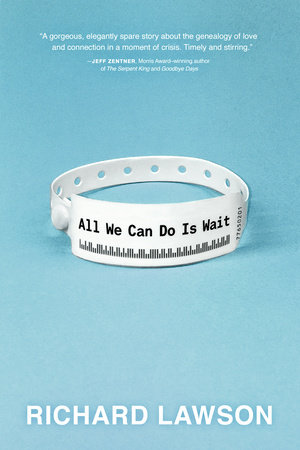
All We Can Do Is Wait by Richard Lawson book cover.

Now, maybe you watch a lot of Netflix crime shows and the only thing that seems dramatic now is a race to decode cryptic clues before a baby rapist detonates explosives underneath the final match of the world cup. Compared to that, this book may very well seem plotless and boring to you. I cannot help you there.

I give it a few extra points for incorporating some teen characters that are neither the bland upper-middle class that usually peoples YA nor are they only in the book to edify the white characters. A few points knocked off for still centering bland upper-middle class teens.

The only reservation to my recommendation is that it never answers why we were looking at these characters. They were all compelling, but they never quite cohered together or interact with each other dramatically because the present-day narrative is packed into a single day. Second, although it has a beautiful message about dealing with uncertainty and taking each day as it comes, it doesn’t quite allows the reader to take it away for their own life, unless your loved one has been trapped in a bridge collapse.

Overall I thought it was a strong debut novel and I’d love for Lawson to get the chance to write another one.

Radical Acceptance ⪼ Tara Brach

This is, like, a very important and beautiful book to me. Tara Brach takes clear aim at the voices in our heads that tell us that we don’t deserve happiness, that keep us stuck in our wounds, and try and keep us disconnected from our true feelings because we worry that if we open ourselves up to them they might drown us, like one more passenger on a lifeboat that’s barely above water.
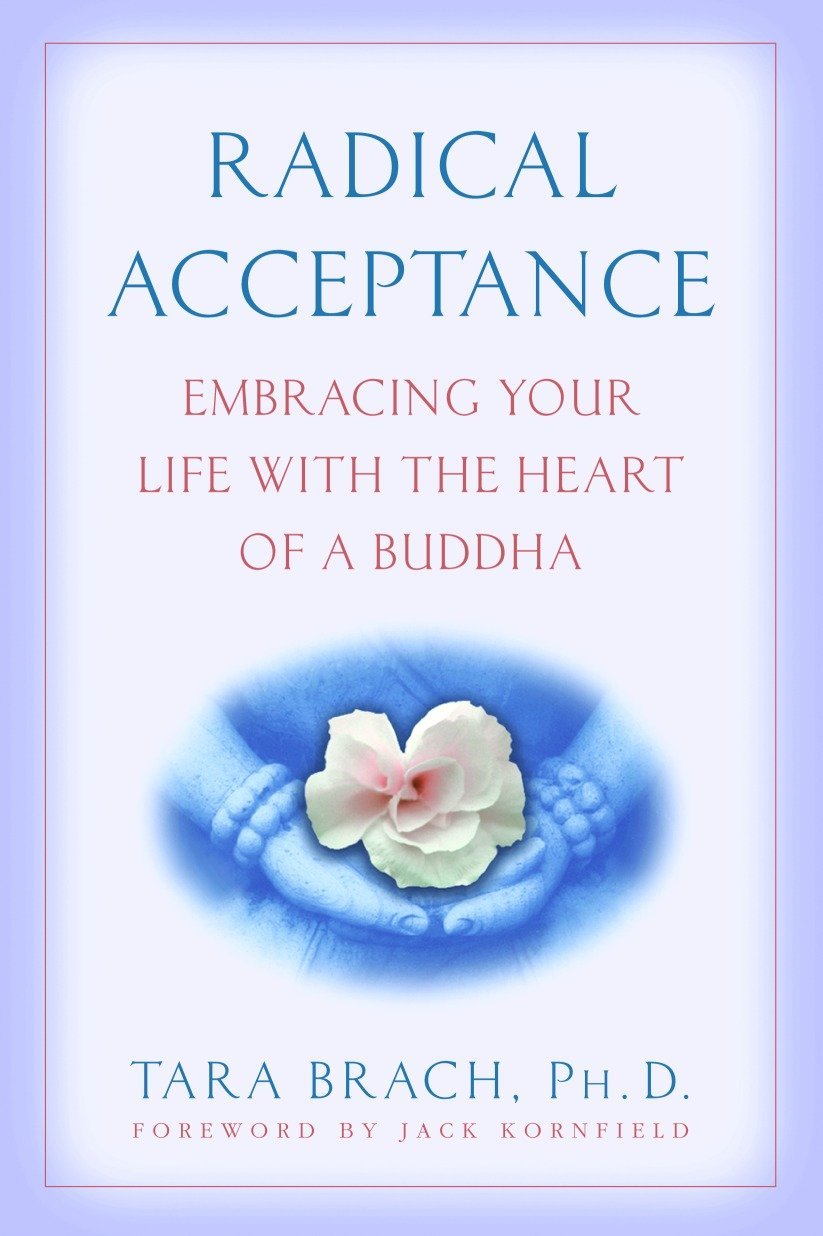
Writing about self-help is vulnerable to me because it’s like shouting Hi! I have all these problems. And they are also easy to make fun of, and not even in a mean-spirited way. There is something a little goofy about looking to Buddhism for answers (as an American, given the cultural history of “looking to the East” for enlightenment) or taking in meditations with exercises like saying hello to your pain. There’s a real and sad truth to texts like these: I turn to them when I need to hear them. I allow them in when trying to muddle through endless grey days without compassion for myself is worse than trying to do something about it.

Self-help/growth books are one of those things where some work for some folks and others work for other folks, so I wouldn’t just blanket recommend it to everyone. The most I can say is that if it seems like it might contain something you’re trying to find, you owe it to yourself to open it up and see if it is.

My Sister, the Serial Killer ⪼ Oyinkan Braithwaite

I did not love this book. I appreciated its unabashed pulpiness, but the premise is stated in the title and it doesn’t develop much beyond that.

What really worked for me is that the story is set in Lagos, and Braithwaite doesn’t waste much time explaining details in the setting for a reader like me that is not that familiar with Nigerian culture. Food, clothing, common phrases are incorporated and the onus on the reader is to learn or keep up. I really appreciate that because if Ezra Pound can drop in untranslated Italian, German, French and Sanskrit into poems that high school students are supposed to give a shit about, I think US reading audiences can grow up when it comes to non-European settings. I also loved the grotesquerie of the main character, there’s a slow inversion in the plot where we realize that a binary that we’ve been presented with is maybe not all as it seems, and I thought that was great.

What did not work for me is that the sharpness of the satire of beauty culture and social media culture kind of trails off, and I did not find it as clever as folks who loved it. I also think there wasn’t quite enough conflict, either external conflict in plot or in the internal conflict of the main character.

Don’t let me turn you off from the book, though. It’s a strong first book, and my rating is way more “this was not for me” rather than “this was bad.”
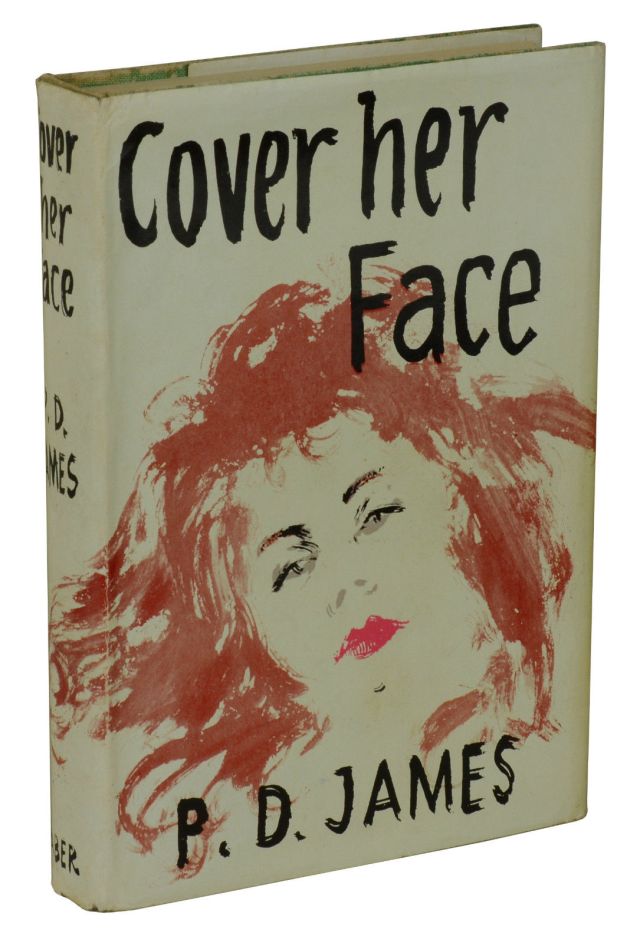
Cover Her Face ⪼ P.D. James

Read a whole post about it.

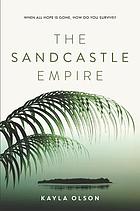
The Sandcastle Empire ⪼ Kayla Olson

This was, and I am not exaggerating, a terrible book.

What If This Were Enough ⪼ Heather Havrilesky
I am a huuuge fan of the Ask Polly advice column in The Cut. I come back again and again because I feel some kinship with her. She’s got sharper edges than a Dear Sugar, but like Sugar is deeply compassionate. Polly is funny, but not flippant or sarcastic like Choire Sicha’s NYT Styles section advice column.

I guess what I love the most is that she has become the person that people like me—millennial weirdos who feel stuck because all we seem capable of doing is looking around in shock and disappointment asking “oh my god, is this really it?”—send their deepest questions. And we have changed her in turn.

Like any book of essays, there are some that speak right to me, some that don’t speak to me at all, and some that I hope to god speak to some future, more courageous and secure form of myself.
IRL ⪼ Tommy Pico

Tommy Pico is incredible, and if you haven’t read him you should run not walk to one of his poetry collections. He writes directly to my sensibility–insecure, introspective, and horny–and the beautiful experience of reading something written for you is like drinking deeply of spring water or breathing in the air after a rain.

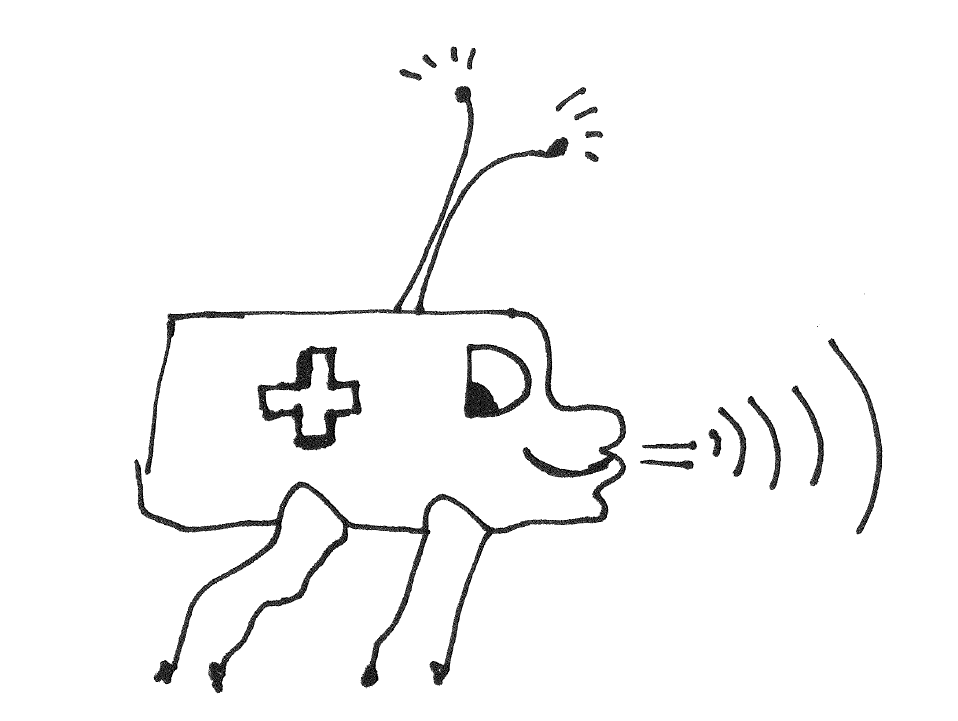
➕ new.amsterdam ➕

New Amsterdam is a mediocre vodka, New Amsterdam is a bad TV show. I can’t stop watching it.

I made a conscious decision in college to stop hate-watching things because I was spending a lot of time with a friend, let’s call him Trip, that only seemed to hate-watch things that he thought was bad and it made me feel like I was only ever choosing to watch things I didn’t like. This is five or seven years later and I feel good about the movies I’ve watched since then.

In Trip’s defense, there were some common themes to the bad movies that he liked to watch. He loved movies where filmmakers were un-self-aware in various ways: uncool movies that unconvincingly treat uncool things as cool, movies where the screenwriter thinks they’re a god and too good for an editor and the actors are always a little confused, movies from other countries trying to introduce a new genre, movies with jarring and inexplicable shifts toward adolescent-boy lecherous tone. He loved what came when a creative team team was in a little over its head, like the faces you make when reaching for a dish on a shelf just out of your reach.

When I hate watch, I look for something different. I love to hate-watch movies and TV shows that are trying to copy something else but don’t seem to understand what made the original good. Sometimes formulas are copied and the copy is pretty good, or better than the original. If it works, I don’t care that it’s a copy. There’s an clunky uncanny valley that I find frustrating when part of the formula is right and part of it is wrong (here’s looking at you, Netflix originals and the entire Greg Berlanti TV universe). And then there are the copies that miss it completely. Complexity is simplified, the specific becomes generic, and characters are flattened like a pancake. Any part of the show that provokes the viewer to consider something differently is repurposed to cut a deeper groove into our preconceptions.

Which is what draws me to New Amsterdam. It’s a really, really bad copy of a copy of ER.

Hospital dramas are TV staples and will never go away because the setting lends itself so well to episodic stories. The stakes are inherently life and death, there are a lot of different things that motivate doctors, medical care touches people from all strata of society, and medicine is always at the center of our political and moral battleground. Patients come in and out, and doctors and nurses make new relationships with them in every episode.

ER premiered in 1994 and made a huge leap forward for hospital shows because of two special advantages. First, Michael Crichton, the series creator, was a doctor who had been a resident and was a perceptive enough observer of emergency rooms to get the emotional tone right. Second, Jurassic Park-era Steven Spielberg was the first executive producer, and it seems that his production choices led to better medical special effects than had ever been on TV. ER invested deeply in its cast, too. Certain characters got most of the attention, however background characters played by regular guest stars got to be real too. Different characters worked day shifts and night shifts. Malik, Jerry and Heleah all managed the intake stations and answered phones differently. Most importantly, ER understood what was dramatic about a TV show and (at least in the early seasons) did not underestimate its audience. We always got glimpses into character’s lives outside the hospital, but that was never the most interesting part of the show. What we knew about the rest of their lives allowed viewers to decode the emotions underneath the surface as characters went about their work.

New Amsterdam gets this hilariously wrong. It’s based on the fairly sober seeming and workmanlike memoir Twelve Patients: Life and Death at Bellevue Hospital  by Eric Mannheimer, but its hard to imagine him recognizing his work in the show. Doctors almost never practice any medicine. Background characters get no lines so even though the show is shot on a giant set with lots of extras, we only ever interact with about six doctors. Instead of exploring any number of inherently dramatic scenarios that happen in hospitals, all the drama is interpersonal and involves two characters conflicting then slowly telling the other four characters what is going on while ignoring the patients in front of them. Maybe the writers knew they were working with a turkey because the main character is (and I’m not joking): taking over the largest public hospital in New York, while mourning the death of his sister at the very same hospital, while his wife is having complications from a pregnancy, and also he has brain cancer.

But the worst thing of all, and the car crash that I can’t turn away from, is that it is the most blatantly cynical or un-self-aware (or both) White Savior story I have ever seen. I am surprised, and also not, that this got made in 2018. The implicit message of the show is that all of the ills of modern medicine: high medical bills, impersonal care, corporatization, lack of mental health care; all could be solved by a white man with unlimited authority. It’s Trump, M.D., and if you think that I’m overstating, the very first act of this incoming medical director is to fire all tenured doctors. [This is after an excruciating scene where the hospital’s janitors are gossiping in Spanish and the medical director responds in Spanish because he’s Down Like That™️ and Not That Kind of White™️]. His plan to turn the hospital around? I don’t know and neither does he because his only instruction to his doctors is to give a shit. This is meant to be inspiring.

It’s racist and cynical, but the reason I can’t look away is that it so deluded about what the challenges of the day are. Climate change, economic collapse, infrastructure deterioration, these are all big problems that are going to require big thinkers. But this show is so nakedly wishing for a simpler time when someone powerful like a doctor at the top of the pyramid could just order the reality he wanted and all the people in the jobs that don’t get lines on this show: the nurses, the janitors, orderlies, billing techs, patients; they all have to fall in line and make that reality. Through that lens, this show may be a part of white America coming to grips with the failure of the Trump presidency. New Amsterdam believes that the system we had in the past was pretty good, as long as you had someone goodhearted running it.

I don’t think it’s coming back.

⧑ the best/a man/can get ⧒

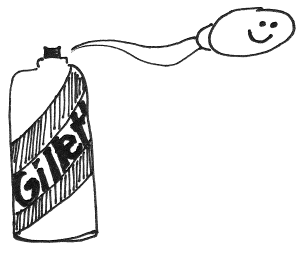
Last week Gillette released an advertisement called The Best Men Can Be (25m+ views) which in 90 seconds presents this masculinity pageant: toxic masculinity has been perpetrated by men forever, now the #MeToo movement has shed light on it, now nothing will be the same, we’re not afraid of it because men can be better, here’s a couple of clips of men already being better.

This morning, I read this plainspoken line in Heather Havrilesky’s new book of essays, What If This Were Enough: “We are living in a time of extreme delusion, disorientation, and dishonesty.” There’s a fever going on right now and the dead-end racist, sexist bluster that is destroying our governmental infrastructure by pushing out government workers, the two documentaries about the fraud and waste of the Fyre Festival (resplendant in its stupid fucking novelty spelling), and Tony Blair grinning like a naughty schoolboy as he struggles to defend himself against the characterization of Davos as “a family reunion for the people who broke the modern world” all seem to be in dialogue with each other.

We’re also trapped in this this slow motion racist gaslighting sparked by a group of white boys from a Catholic school harassing a man they assumed had no power. When the public gave that man power through their attention, their parents circled to protect them and used every connection they had to take it back. A friendly CNN interviewer and the President helped them do it.

Last year, the Canadian government asked the Pope for an apology to the Inuit and Métis peoples for the role the church played in operating genocidal boarding schools and orphanages for Native children. A spokesman for the Pope responded: “After carefully considering the request and extensive dialogue with the bishops of Canada, he felt that he could not personally respond.”

Nick Sandmann, the boy from Covington, when asked if he felt like apologizing for his actions, said “I wish we could’ve walked away and avoided the whole thing, but I can’t say that I’m sorry for listening to (Phillips) and standing there.” In his written statement, he wrote, “I am a faithful Christian and practicing Catholic, and I always try to live up to the ideals my faith teaches me”.

Here’s what connects these phenomena: We are living through a time where the mechanism by which privilege perpetuates itself—by controlling the story and by controlling what context gets incorporated into the story—is becoming more and more nakedly visible as the divide between those who are benefitting from current political, cultural and economic conditions and those who must change those conditions in order to have a thriving future is becoming wider. Privilege is the power to say “you didn’t see what you saw. And if you did it wasn’t that bad. And if it is that bad, you should see what this other person did. And if you still have a problem with that, Jesus said ‘Let he who is without sin cast the first stone.'”

It’s bullshit.

Here’s why the Gillette advertisement is bullshit, too:

  • Gillette’s shaving products do not play a significant role in gender-based violence or economic inequality. They did not, for example, run a PSA about not using single-use plastic items.
  • The advertisement perpetuates a fantasy alternate history where toxic masculinity was a thing that nobody knew was wrong, then #MeToo happened and men realized it was wrong and changed the world. You can’t simplify the narrative like that without performing the same erasure that toxic masculinity needs to perpetuate itself.
  • Gillette continues to sell rectangular razors to men in tough blue and gray boxes and oval razors to women in pretty pink and green boxes.
  • Gillette apparently believes that you solve toxic masculinity by being tough and intervening in fights and shouting positive affirmations at your daughter in the mirror*, as opposed to, say, looking at pay inequalities and family leave policies in their company and supply chain.
  • You cannot credit with–or protest–Gillette changing the culture of masculinity without imputing authority over masculinity to Gillette. Both sides reinforce the desired message, which is that buying Gillette is being a man.

*Which was very cute, I’m not a monster.

Pointing all of this out pedantic, because we all have a baseline expectation that power and bullshit go together. The government is so clogged with bullshit it cannot perform even the most basic functions. The church is so full of shit that people stopped going then discovered what a better social adaptation that is. Institutions that used to police bullshit like universities and newspapers now support themselves by distributing the bullshit (plus, we know that they only ever policed bullshit for white dominant culture, so even calling them the bullshit police is itself a kind of bullshit). Brands are bullshit, but they also seem to kind of work and are kind of accountable to the public sometimes so we give them feedback with love or scorn because that sometimes works and nothing else seems to work.

Gillette has total control over its workplace. It has control over its products, its marketing. It has a lot of influence over the city and state in which it has offices. It did not choose to make change in those spheres in which it has a lot of power. Instead, Gillette is trying to change the way you think about masculinity, which is a power that you have to give it.

So gender progressives have to pretend that liking an advertisement means supporting women and gender troglodytes have to pretend that their honor was sullied by a razor blades and queer folks have to pretend that a company that differentiates its products by gender are going to teach men to protect nonbinary kids and on and on and on…

I think all of that pretending has a cost. I think every time that we do it we erode, just a little bit, our ability to see what else could be possible, what real change would look like. Resisting, though, is not cute and feels useless. In my own real life, where I have total control over me, someone asked what I thought of the Gillette ad and I just shrugged and didn’t say anything. 

|twenty↫twelve|

Downtown Portland in late January twilight.

I have published a new post five times this month, which is probably as much as the last three years. It’s on purpose. Sometime around 2012 or 2013, my habits of mind changed, and not for the better. A lot of things in my life have gotten better, and I would never in a million years choose to go back, but I feel less in control over the information that goes in and what I do with it than ever. That’s what I would like to go back to.

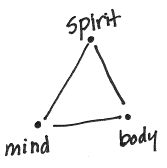
mind-spirit-body

Although I am not Christian anymore, the spirituality of my childhood is still there, even as negative space. The trinity can be a lot of things, but the god in three persons can be a metaphor for ourselves as minds/intellects, bodies/animals, spirits/life-forces. One of the beautiful things about being human is that we all relate to these parts of ourselves differently.

I am someone that is very rooted in the spirit, roots too much of my ego in having a sharp mind, and struggles a lot with being a body. This shows up in so many different ways: I rarely, no matter how old I was, had a sense of wanting to go to sleep when day was done. I always fought exhaustion until I was overpowered. I was a very well-behaved child because I was so good at sitting still and repressing the body’s natural urge to move. I made it to my early 20’s until it became clear to me that I had to try and develop a different kind of sensitivity to the soft animal of my body or I was going to dissociate myself into an early death.

This is a very woo-woo way of getting to this: I worry about the body a lot, I don’t worry about my mind as much.

From the vantage of early 2019, though, something is not right with the mind either. I do a lot of shallow reading, and less and less challenging deep reading. I have to go to a theater to watch a movie, I won’t pay attention at home. I have access to hundreds of hours of streaming video or music or games or reading material, and two times out of three when I sit down to watch something I scroll through the menu for 20 minutes before giving up and shutting it off.

I’m living life like I’m in a waiting room 10 minutes before a doctor’s appointment. (Spoiler alert, that doctor’s appointment is death!)

This sounds very despairing, and I really don’t mean it to be. But I do want to exercise some control over all this, and that means time traveling a little bit to a time when this part of my life was a little better balanced and seeing if there are some different choices I could have made. Not all of the choices are going to be different. I’ve fantasized about going back to a dumbphone, but that’s not a real option. I really loved the era where I lovingly tended to an iTunes library, but a lot of that was sustained by piracy and even though the economics of streaming is precarious, I can’t imagine restricting what I listen to to albums I pay for.

Here’s what I’m thinking:

  • Exercise choice whenever possible. Don’t let recommendation engines take over the drivers seat. Choose something to listen to or watch before opening up the streaming app.
  • Demand more of what gets my attention. Renting four movies or going to the wonderful second-run theaters in my neighborhood costs about as much as a streaming service subscription, but they get to be exactly the movies I want to watch.
  • Write, and let the writing be messy and unfinished and unpolished and bad in every way writing can be bad.
  • Go for dessert first. Get really good at listening to what thing feels shiny and is calling out.
  • Take my own responses seriously.

I was listening to a beautiful On Being interview with the poet Mary Oliver, who died last week. Mary said that she knew from a young age that she wanted to be a poet, and that meant she also knew that she wasn’t going to have a life where she had the nice things, the nice family portrait with Junior with the straight teeth. And it was a little kick in the gut for me, because it reminded me that if it’s true that I am chasing a different kind of lifestyle, the lifestyle described by Heather Havrilesky as:

…lean[ing] into reality–the dirt and grime of survival, the sullen, grim folds of the psyche, the exquisite disappointments, the sour churn of rage, the smog of lust, the petty, uneven, disquieted moments that fall in between. The artist embraces ugliness and beauty with equal passion. The artist knows that this process is always, by its nature, inefficient. It is a slow effort without any promise of a concrete, external reward.

which is such a headfucking difficult thing to put into practice because the mean little bureaucrat in my soul that manages survival says that there’s no time or resources for inefficiency, and I hunger so deeply for those external rewards. But I can feel the undertow pulling on my attention, constantly dragging it away from what is meaningful and what needs attending. So I’m following the instructions you would give to someone swimming in waters where there are rip tides:

DON’T FIGHT THE CURRENT. SWIM OUT OF THE CURRENT, THEN TO SHORE. IF YOU CAN’T ESCAPE, FLOAT. IF YOU NEED HELP, CALL FOR ASSISTANCE.

|twenty↫twelve|

Downtown Portland in late January twilight.

I have published a new post five times this month, which is probably as much as the last three years. It’s on purpose. Sometime around 2012 or 2013, my habits of mind changed, and not for the better. A lot of things in my life have gotten better, and I would never in a million years choose to go back, but I feel less in control over the information that goes in and what I do with it than ever. That’s what I would like to go back to.

mind-spirit-body

Although I am not Christian anymore, the spirituality of my childhood is still there, even as negative space. The trinity can be a lot of things, but the god in three persons can be a metaphor for ourselves as minds/intellects, bodies/animals, spirits/life-forces. One of the beautiful things about being human is that we all relate to these parts of ourselves differently.

I am someone that is very rooted in the spirit, roots too much of my ego in having a sharp mind, and struggles a lot with being a body. This shows up in so many different ways: I rarely, no matter how old I was, had a sense of wanting to go to sleep when day was done. I always fought exhaustion until I was overpowered. I was a very well-behaved child because I was so good at sitting still and repressing the body’s natural urge to move. I made it to my early 20’s until it became clear to me that I had to try and develop a different kind of sensitivity to the soft animal of my body or I was going to dissociate myself into an early death.

This is a very woo-woo way of getting to this: I worry about the body a lot, I don’t worry about my mind as much.

From the vantage of early 2019, though, something is not right with the mind either. I do a lot of shallow reading, and less and less challenging deep reading. I have to go to a theater to watch a movie, I won’t pay attention at home. I have access to hundreds of hours of streaming video or music or games or reading material, and two times out of three when I sit down to watch something I scroll through the menu for 20 minutes before giving up and shutting it off.

I’m living life like I’m in a waiting room 10 minutes before a doctor’s appointment. (Spoiler alert, that doctor’s appointment is death!)

This sounds very despairing, and I really don’t mean it to be. But I do want to exercise some control over all this, and that means time traveling a little bit to a time when this part of my life was a little better balanced and seeing if there are some different choices I could have made. Not all of the choices are going to be different. I’ve fantasized about going back to a dumbphone, but that’s not a real option. I really loved the era where I lovingly tended to an iTunes library, but a lot of that was sustained by piracy and even though the economics of streaming is precarious, I can’t imagine restricting what I listen to to albums I pay for.

Here’s what I’m thinking:

  • Exercise choice whenever possible. Don’t let recommendation engines take over the drivers seat. Choose something to listen to or watch before opening up the streaming app.
  • Demand more of what gets my attention. Renting four movies or going to the wonderful second-run theaters in my neighborhood costs about as much as a streaming service subscription, but they get to be exactly the movies I want to watch.
  • Write, and let the writing be messy and unfinished and unpolished and bad in every way writing can be bad.
  • Go for dessert first. Get really good at listening to what thing feels shiny and is calling out.
  • Take my own responses seriously.

I was listening to a beautiful On Being interview with the poet Mary Oliver, who died last week. Mary said that she knew from a young age that she wanted to be a poet, and that meant she also knew that she wasn’t going to have a life where she had the nice things, the nice family portrait with Junior with the straight teeth. And it was a little kick in the gut for me, because it reminded me that if it’s true that I am chasing a different kind of lifestyle, the lifestyle described by Heather Havrilesky as:

…lean[ing] into reality–the dirt and grime of survival, the sullen, grim folds of the psyche, the exquisite disappointments, the sour churn of rage, the smog of lust, the petty, uneven, disquieted moments that fall in between. The artist embraces ugliness and beauty with equal passion. The artist knows that this process is always, by its nature, inefficient. It is a slow effort without any promise of a concrete, external reward.

which is such a headfucking difficult thing to put into practice because the mean little bureaucrat in my soul that manages survival says that there’s no time or resources for inefficiency, and I hunger so deeply for those external rewards. But I can feel the undertow pulling on my attention, constantly dragging it away from what is meaningful and what needs attending. So I’m following the instructions you would give to someone swimming in waters where there are rip tides:

DON’T FIGHT THE CURRENT. SWIM OUT OF THE CURRENT, THEN TO SHORE. IF YOU CAN’T ESCAPE, FLOAT. IF YOU NEED HELP, CALL FOR ASSISTANCE.