Happy New Year!

web log (late 20th c. – early 21st c.)
Happy New Year!
At my high school, we were required to have regular meetings with the college counselor starting in junior year. They would get more intense as the clock ticked toward senior year college application season, but the first meeting was a get-to-know-you. Couselors would get a sense of your goals, and start to get the ground ready by making a connection between our current academic performance and the options that might be open to us next year.
My meeting was with a woman I’ll call Ms. Troy. Ms. Troy was a lovely, warm person. She was mixed race and Chicana, and an anchoring presence for many students of color. She had a funny—sometimes infuriating—ability to slip out of any social friction, unpleasantness, or conflict by giving a little laugh like you had said something funny.
I was meeting with her and sharing some of my goals for college. I have no idea where this came from, but at some point I mentioned something about exploring my Latino identity. Ms. Troy gave her little laugh and said, “Oh don’t worry about that right now. That’s what college is for!”
I understand now what she meant. The campus we were conversing in had a lot of pressure to socially conform, and there was only so much room to express an identity counter to the dominant culture. Colleges have resources that our school didn’t: access to international communities, academic circles, student activity funds. In just over a year, she was saying, you’re going to have so much more room to explore.
That’s not how I understood it at the time. What I took from her words was that there was going to be some mysical process of identity formation coming my way in college. I was asking some huge questions: Am I Latino enough? Enough for what? Why Latino, why not Chicano or Mexican-American? How important is it that I don’t speak Spanish very well? What stories am I at the center of? What stories am I on the periphery of? What is my relation to whiteness? How has whiteness advantaged me in my life?
These are questions I deeply wanted to know the answer to, and I really took to heart this short conversation. Those questions were unsettling. Exploring them led to places I didn’t enjoy thinking about. It was a nice thought, that they would resolve themselves in college all by themselves.
I am still living those questions. I no longer believe that there is someone out there that can give me the answers. I don’t believe my individual construction of identity has much of an impact one way or another.
One person who explores this territory, and specifically as a gay Latino (with bad Spanish!) is JP Brammer. I loved this recent piece of his on the funny position that Dia de los Muertos occupies in US culture right now. It’s both a unifying example of Mexican identity, and also filled with iconography that are surprisingly new:
It might surprise some to hear that the Día de Muertos parade [in Mexico City] stemmed from a single scene in a James Bond movie in 2015. Día de Muertos is, after all, a beloved tradition that many people hold close to their hearts. Indeed, the fact that it is a tradition, an heirloom of sorts, makes people protective, at times precious about it.
That it centers on the ancestors, a word that commands reverence, only adds to the idea that this holiday is an old, brittle thing that must be handled with great care. It’s understandable that some might view the parade through a cynical lens, as a tourist trap or as an inauthentic take on an ancient custom. “Fake,” others might say.
But I’m not one of those people. In fact, in the James-Bond-inspired Día de Muertos parade, I see something else entirely: a cypher for how culture is generated and, frankly, for how absurd it can be. I mean that in a good, fun way.
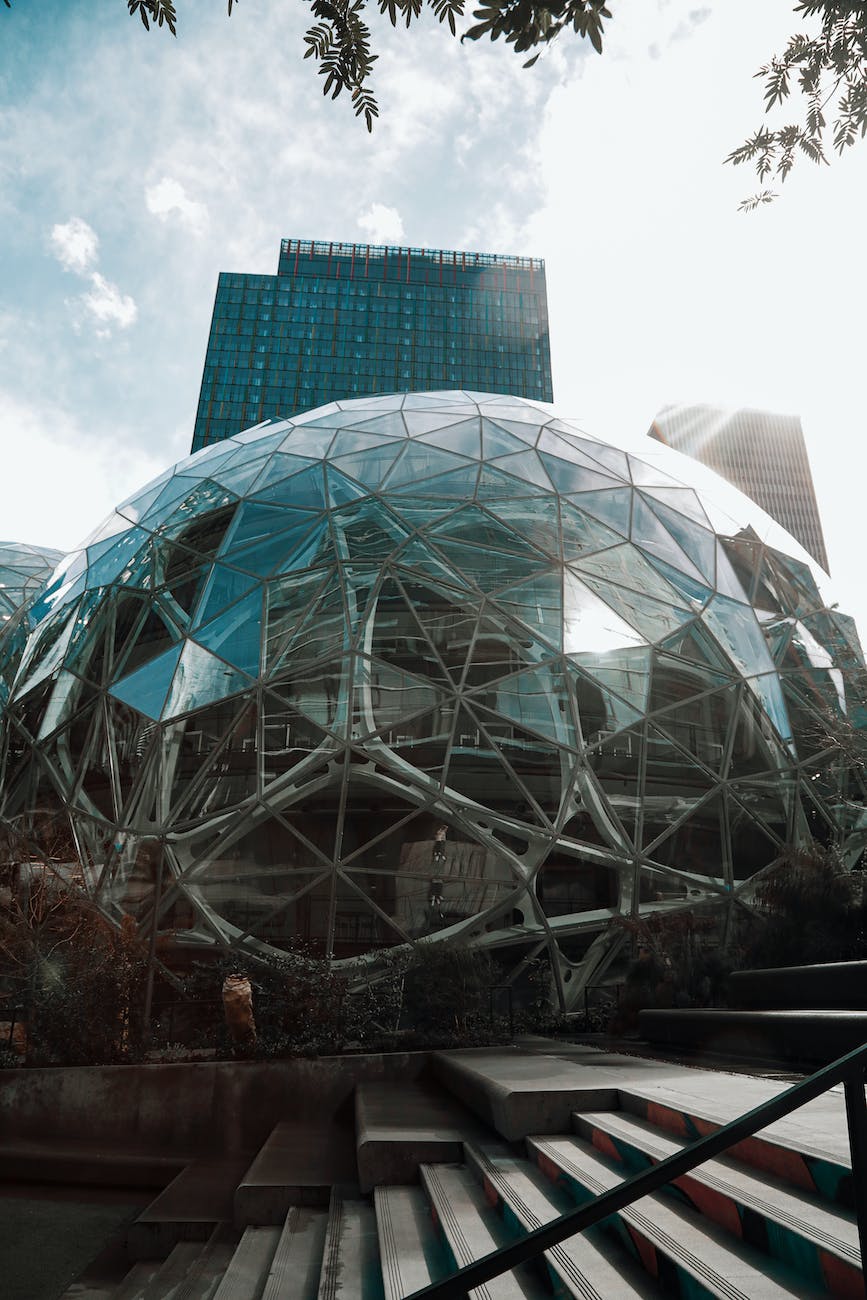
Last month I attended a one-day conference hosted at Amazon’s conference center in the South Lake Union area of Seattle. There’s a tech industry psychic hum in the streets there, just like the entertainment industry hum that runs through anonymous looking three-story office parks in northern LA or the legal hum that saturates certain blocks in downtown Portland. The office workers getting their morning coffee look focused and unencumbered by family or community commitments. They are men and women, and stylish. The pinup shirt wearing, punk rock programmer dude and the carebear gothic tenderqueer have both been disciplined by three tech recessions since the year 2000. The clothes are less formal and structured than the norm for, say, finance, but there is a look and bright colors are a risk.
Right across the street from the Amazon campus, a forest of huge rainbow glass-walled skyscrapers that hold the back office of the everything store, there is a humble red building. It’s a sex toy boutique with an old-school porn screening room. I find this delightful.
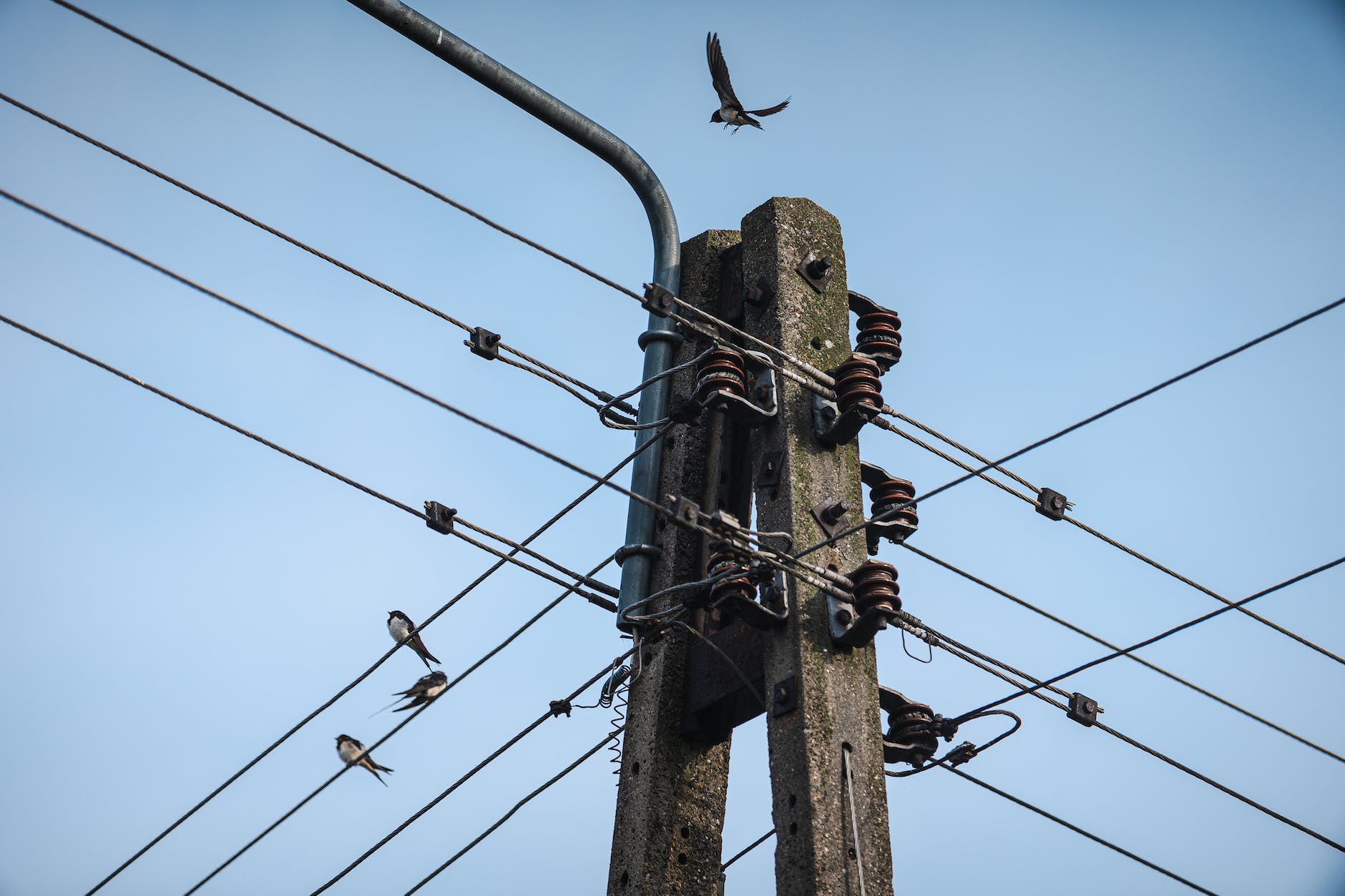
When a platform goes away, especially when it has just left, it is hard to preserve memory of what it looked like when it was healthy. Especially things that you might not think of as platforms. Take phone calls. When the platform was built (not with lines of code but with redwood and creosote and copper) it was too expensive to use as a social network. Later, with home phone service and party lines, it got closer, but it wasn’t private enough. Once digital switching and billing and private home service came into being, there was a glorious period in which phone calls were welcome. Infrastructure to support the network sprang up, like answering services and phone booths and cordless phones. Friendships and relationships were built, distances shrunk.
That golden age was long gone by the time I was a kid. The phone system was becoming overwhelmed by telemarketing. Small breakdowns in the system were everywhere. For example, when everyone screens their calls using an answering machine, getting someone on the phone could take a full minute, much slower than in the era where each call was too expensive to waste on a cold call. Phone booths were always vandalized and often didn’t work. By the time that cell phones came around and changed the paradigm again, the stereotype of the Millennial that hates talking on the phone was well ingrained.
That same arc plays out over and over, for as long as humans have or will exist. Letters through the postal service, the bulletin board at the laundromat, philosophers at the agora. There are situations where these media survive long past when the rest of the world has moved on from them. Letters and phone calls still maintain relationships in prison. Astronauts swap movies on thumb drives on the International Space Station.
The porn store represents a node on a very particular kind of retail platform. That platform is rapidly disappearing, in no small part due to the work of Amazon. On that platform, you exchanged cash for a physical good. The store knew nothing about you, or where your money came from. You didn’t know anything about where the good came from. Somewhere out there, you could buy almost anything.
That platform didn’t exist everywhere. In cities where the power of the city government was finite and the size was big enough that there was some undesirable area where a sleazy, taboo business could exist without neighbors complaining, there could be remarkable freedom. In most places, the power of the local government could keep them out. If the government couldn’t do anything, customers could be harassed.
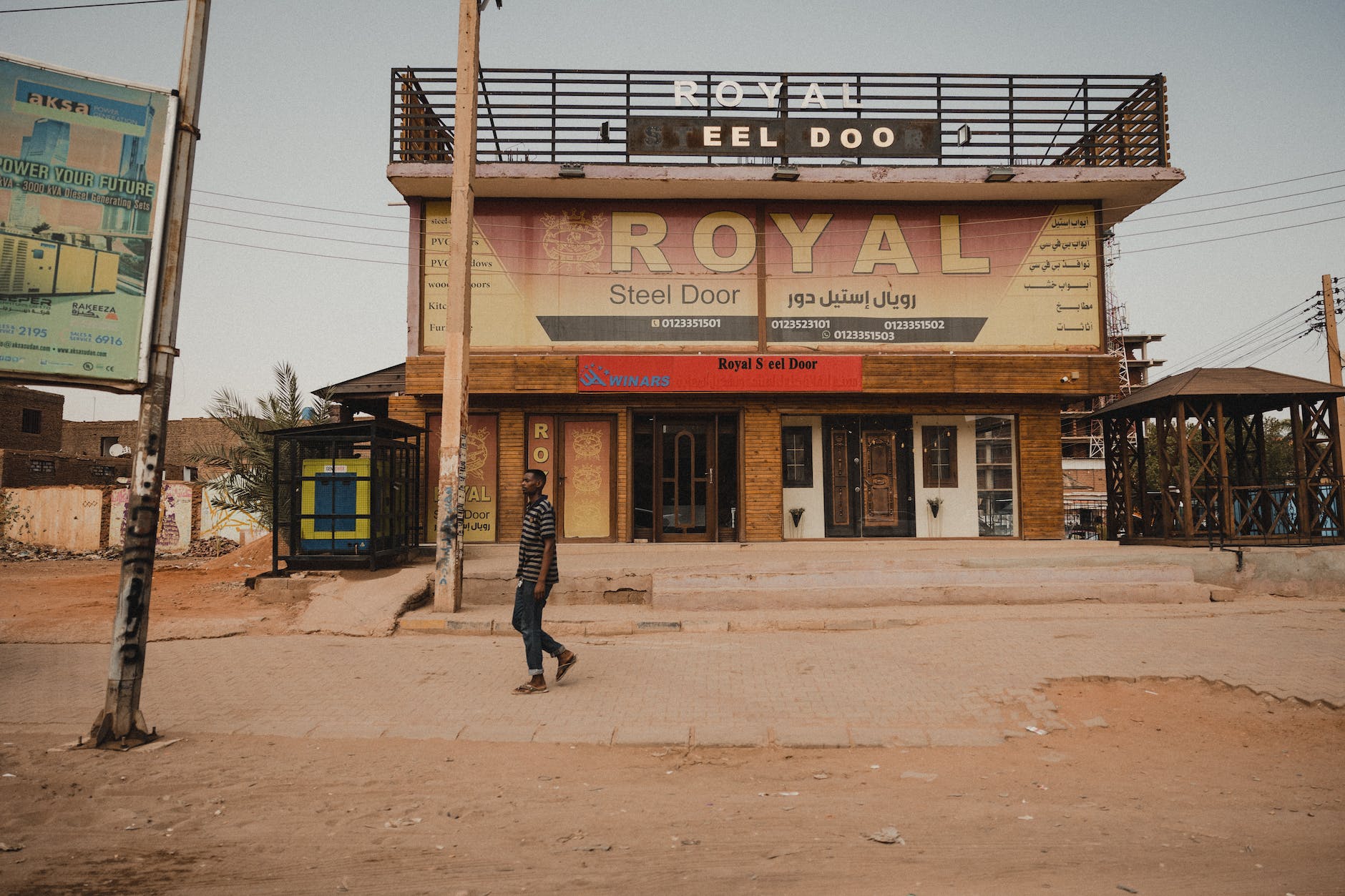
You can’t really go back. As much as I miss the good parts of healthy local retail, and as much as I worry about what will happen if the right wing succeeds in enforcing repressive suburban values onto the internet, internet retail does work better for most people in more places than local retail did in the late 1990’s.
But I love that these powerful symbols, one the last of its kind, the other the worldkiller, face each other on Westlake Avenue.
“Well, if there’s a bright center to the universe, you’re on the planet that it’s farthest from.”
Luke Skywalker, Star Wars
Los Angeles is the movies, and the movies is LA. If you drive north of the city on the 101 for an hour, you get to suburbs filled with peripheral industry people. Somebody did a rewrite on Lethal Weapon II and put a downpayment on a house. Another person did the same with royalties from an insurance commercial. That’s every third house in Sherman Oaks or Woodland Hills.
Drive up the 101 another half hour and you start hitting farms and beach communities. This is where industry people go when they don’t want to be found. Hang a right and drive another half hour inland and you’ll get to the citrus groves and chaparral hills. That’s where I grew up. My house is 45 miles as the crow flies from the Hollywood sign. 45 miles and a different cultural universe.
It used to be almost impossible to watch cool movies. If you were lucky, your had access to an independent video rental store with some personality. We had a Blockbuster. Our selection of “Foreign” movies consisted of about one shelf of DVDs.
Anime, black and white classics, silent film, these were hard to find. Forget gay and lesbian movies. You could put in the work to see them. You could make a trip to a bigger city with a better selection. Universities sometimes had media libraries. You would watch movies on a 15″ screen with headphones in an uncomfortable study carrel warmed by CRT tubes. Local libraries having big, good movie collections is a recent phenomenon. If you could afford it, you could order from a mail order catalog, or from Amazon. Amazon’s deep catalog of old books and movies used to be a killer feature.
If you were lucky, really lucky, you knew someone with a killer home video collection. That used to be what it meant to be “into film”. It meant shelves and shelves of tapes in their basement or living room. Those people shaped so much of my taste. Indie dramas, foreign films and music documentaries from L——. Queer cinema classics and Merchant and Ivory films from M——. Studio action films from G——.
This assumes that the movie got a home video release. There were plenty of movies that never got a VHS release.
The arrival of Netflix DVD-by-mail changed everything overnight. It had a broad collection, accessible to anywhere the Postal Service reached. It improved some other parts of the video rental experience that sucked. No late fees, keep it as long as you want, drop it back in the mail when you’re ready to send it back. “I have to return some videotapes” is a punchline in American Psycho. We really did have to figure out when to return tapes all the time.
Netflix swept away Blockbuster. It delivered the killing blow to the independent rental stores*. It devalued physical media. Netflix originals ducked legacy union contracts by streaming instead of releasing in theaters or on home video. Now it is killing its DVD by mail service, as it has wanted to since the early 2010s.
I sometimes think about those people with big collections in the 90’s and early 2000’s. They paid a lot of money, and even the big collections only had a fraction of what is available on the big services now. In the last 10 years I have paid a lot for streaming. I have nothing in my house to show for that spending. We used to have more power to shape the culture that got left to the future through the objects we left behind. Movies can disappear, or be censored so easily now. The entire paradigm where I hand you money, you give me something I want, and we both go our separate ways seems to be ebbing away. In this new world, anything that provides you ongoing value, that brings you joy must be paid for, again and again, until you cannot afford to keep it.
*Except my beloved Movie Madness in Portland, Oregon, which has not died but did retire—it’s now operated by a non-profit.
There’s Las Vegas and there’s Las Vegas. Technically the Las Vegas Strip isn’t even in Las Vegas. It’s in the Clark County townships of Winchester and Paradise. The name Winchester was chosen by the public in a naming contest. “It was said to have more of a Western flavor” than the other nominations. The name Paradise was chosen by five casino owners in celebration of its shelter from the Mojave Desert and municipal tax collectors. And somewhere off the Strip, far from Paradise, was a resort that my aunt owned a timeshare in.
I’ve heard that timeshares suck. I don’t understand how they work. I do know that my family ended up in Las Vegas often. I don’t know it if the timeshare ended up less expensive than regular hotels, but we used it.
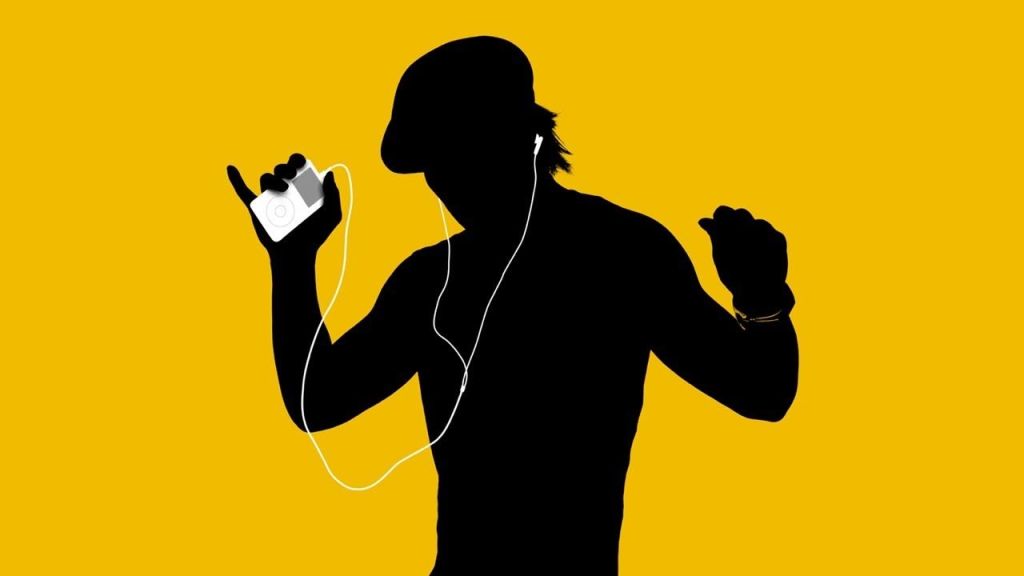
One day in 2002, I was waiting outside the resort for the Deuce to take me and my family to the Strip. There was a guy, a townie, waiting for another bus. I saw two things that would become omnipresent over the next 10 years. I saw a pair of Apple earbuds, and I saw him reach into his pocket, pull out his iPod, change a song, and put it back into his pocket.
I may have seen The iPod ads with the dancing silhouettes. If so, they hadn’t made an impression. In an instant I saw that the iPod was freedom. No more flipping tapes. No more pretending that the Walkman’s anti-skip buffer was enough to make CD playing portable. I had to have it.
I never quite owned an iPod classic. Their time came and went. For years they were too expensive. I had a knockoff, then lost the knockoff. The iPhone came out and I begged my dad for one. In the Apple Store, my dad mugged a heart attack to the guy ringing us up after hearing the total. He thought he was hilarious. The Apple guy awkwardly stood waiting for him to stop laughing at his own joke. I wanted to die.
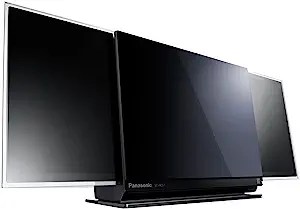
This weekend I bought a secondhand Panasonic CD player with integrated iPod dock. I love designer CD players from the early to mid 2000s. They will never design them like that again. It’s all Bluetooth speakers from here on out.
It’s hipster consumerism, but I can’t apologize for being sentimental. It’s a beautiful thing to construct romance and meaning from consumer technology that was everywhere basically yesterday. I’ll find the poetry in the Bluetooth speaker too. Give it time.
 hammer & jack