the right way to be ignorant

I’ve been thinking a little about ignorance.

It was prompted by this mini-Twitter-rant on July 2 by Sean O’Neal, who writes for the A.V. Club (@seanoneal on Twitter):

What is it with this recent rush to proclaim proudly that you’ve never heard of someone/something? When did not knowing stuff become “cool”? To follow up on my last tweet and the many replies: I don’t mean eschewing the “mainstream” or some anti-populist stance. Nor do I mean admitting you aren’t familiar with something as opposed to lying that you do. I mean saying “who?” or “never heard of them” while sitting in front of a machine that can quickly get you familiar. Or worse, after reading an article that gives you that very info. Why is that cool? People used to take pains to appear knowledgeable, even about things they hate. Is it just so easy to be informed now that it’s somehow cooler to completely ignore it? Are we really that self-centered as a culture now?


I’m gonna quit talking about this. Point being: Google it, bitches. Then glibly dismiss it knowledgeably. That’s what the cool kids do.

I’m someone that has an unfillable appetite for things that I don’t know, and I’m also a person that needs to write things down to process them. So when I’m blogging, I’m constantly deciding how much I want to write from a position of ignorance. Sometimes it’s an easy call; if I’m writing about a concert I’ve been to, I can be pretty confident in my own opinions, even if they could be more informed. With other topics, there’s always a little more that I could know before I write. But one thing that I hold to like a shield is that I only write from what I know, not from what I kind-of know.

College taught me (or is teaching me!) the difference between what you know and what you kind-of know. I came to the school thinking that I would play it like a free agent; taking a few classes then deciding on a major. But then I experienced what it was like to be in a real music class, where people were interested in the things that I was interested, and where the professors knew what I wanted to know. And in that first semester, I realized that the things that I kinda knew–pieces of information that other people had told me, all manner of “conventional wisdom,” pieces of music I only knew from reviews and history books, ideas I had stitched together from fragments of knowledge–none of it was going to cut it in class. It’s a humbling position to be in. It means asking a lot of questions. It means holding back first impressions. It means being always open to the idea that you could be wrong.

[Bear with me, this will come back to O’Neal]

The most important change that I made was to begin maintaining a mental firewall between those things I know and the things I kind-of knew. It meant that when I heard of something new–this band has a new record out and it’s pretty good, X composer’s first piece is his best, X writer’s essays are better than her fiction–I would bookmark it as something to come back to before I added it to my body of knowledge. And this is where I really resonate with O’Neal’s question: “Is it just so easy to be informed now that it’s somehow cooler to completely ignore it?” It’s really hard to maintain that firewall on the internet. We’re constantly bombarded with fragments of information that we don’t follow up on, from RSS feeds, Twitter feeds, Tumblr tags, likes on Facebook. While sometimes the headline is the story (deaths, elections), just as often I catch myself being subconsciously affected by the sheer repetition of opinion. It’s sometimes useful to have this tool that can instantly allow us to take the temperature of a large group of people, but this same power can also amplify facts and ideas that bear no relation to reality.

So I have a couple of answers to O’Neal:

The first speaks to his question about why people don’t bother to educate themselves about important things they might not be interested in. On the internet, it’s possible to get endless opinions really quickly. Because the internet is an archive, those reviews, blogposts, etc. are going to stick around, and because there’s always somebody that’s formed that opinion before you, for most people, discovery and criticism are simultaneous. Things don’t disappear anymore. That new record is going to be around forever, and so are the album reviews. That really takes away incentive to educate yourself about something now. You can always borrow a perspective later.

The second is more directly aimed at the “why should I care?” crowd. The internet is in a phase where you’re constantly asked to share yourself. Everything has a social tie-in somehow. It’s a demand that you share an opinion, and even more basically, that you have  one. So the most basic opinion is to say that this thing, this thing that everybody is talking about, is completely below my notice. I think it’s a shitty attitude, but even I am guilty of it sometimes. There’s just so much out there that sometimes, as basic triage, you just have to accept that there are other things you want to spend your time on.

Of course, that’s the time to keep your mouth shut.
Frank Ocean – We All Try

A couple of hours ago, I got completely blindsided by my emotional reaction to a piece of news, gossip really. The R&B and Hip Hop blogosphere has been buzzing over a Tumblr post by Frank Ocean in which he, in poetry and elipses, comes out as gay or bisexual (the Tumblr post is a screenshot of a TextEdit window, click here for a more readable version). And I was immediately flooded with such happiness.

I think it’s really hard to get a read of what a person is like from their music. It’s so much easier to convey an attitude, a pose, to name your opposites. To really convey what your soul is like… that’s more difficult and is possibly too revealing, too open for some artists. But when Frank Ocean sings, “i still believe in man/a wise one asked me why/cause i just don’t believe we’re wicked /i know that we sin but i do believe we try” in “We All Try,” I completely believe him. And his enjoyment of life, in as-is condition, permeates his best songs* (We All Try, Strawberry Swing, Song for Women, Novacane).

*Caveat: based on his one record that I’ve listened to, nostalgia,ULTA.

He is also a capital-R Romantic. And that comes through in his post:

4 summers ago, I met somebody. I was 19 years old. He was too. WE spent that summer, and the summer after, together. Everyday almost. And on the days we were together, time would glide. Most of the day I’d see him, and his smile. I’d hear his conversation and his silence until it was time to sleep. Sleep I would often share with him. By the time I realized I was in love, it was malignant. It was hopeless. There was no escaping, no negotiation with the feeling. No choice. It was my first love, it changed my life.

and that too made me happy. Because as acceptance has grown, coming out has become increasingly a non-event, and you hear so many repeated ideas (I’m gay, but that’s only a part of who I am as a person; I’m proud, but don’t consider myself a spokesperson; I never really considered myself in the closet) that it’s really refreshing to see Frank Ocean cut right to the heart of what separates us: falling in love with a man.

I sometimes think about what a ridiculous idea it is, that people that share a sexual orientation are a community. I shouldn’t have anything in common with gay people than I have with brown eyed people, or 6’1″ tall people. But we’re linked together by our time and context, by other’s assumptions and by our journeys to know ourselves. So though I may have little else in common, Frank Ocean speaks for me too when he says:

Before writing this I’d told some people my story. I’m sure these people kept me alive, kept me safe. Sincerely. These are the folks I wanna thank from the floor of my heart. Everyone of you knows who you are. Great humans, probably angels. I don’t know what happens now, and that’s alright. I don’t have any secrets I need kept anymore… I feel like a free man.

Happy Independence Day, Frank.


Either this is amazing or I'm dumb


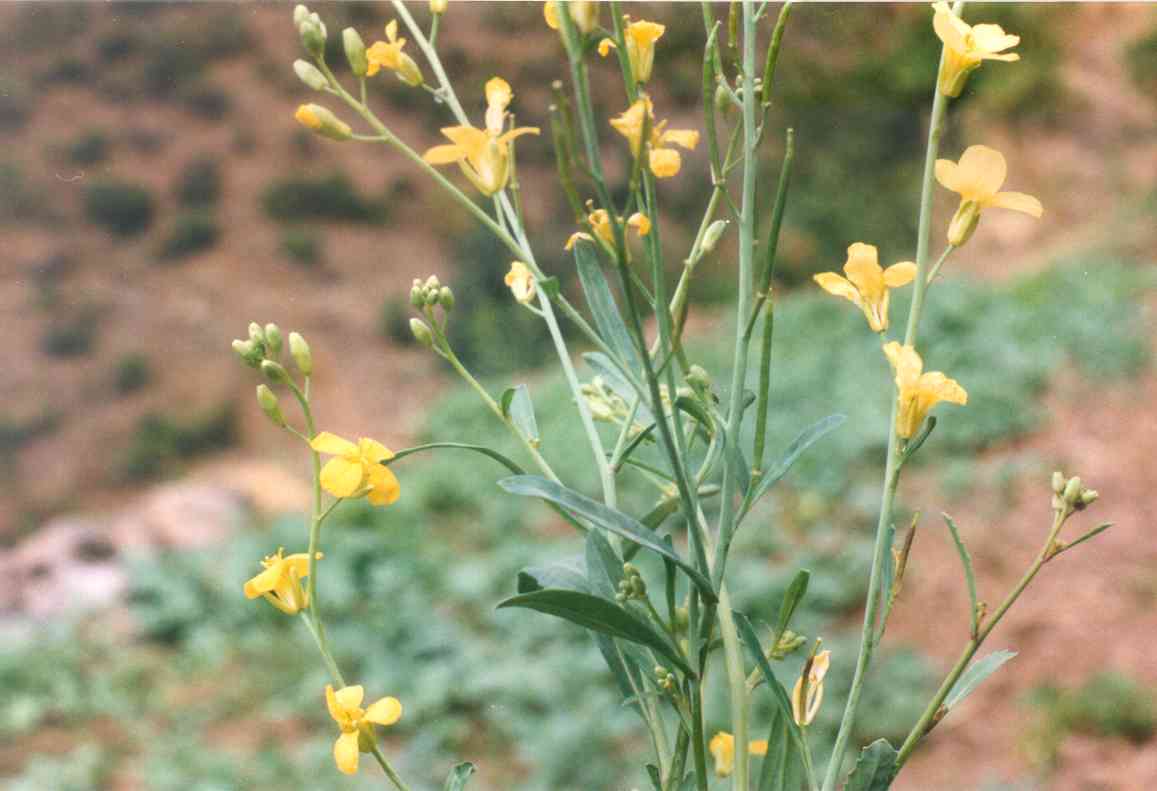
I stumbled upon this Wikipedia page for the Triangle of U, which as far as I understand is a phenomenon whereby three different genomes, in different combinations, create different crops, including: turnips, kale, different mustard species, cauliflower and rapeseed (canola).  I’m terrible at even basic biology, but this seems so amazing to me. I’d love to get some feedback in the comments if anybody knows if this is more common than I think.

To Live and Die in LA

Epic car chase from To Live and Die in LA (1985).

Mentioned by stuntmaster Darren Prescott in this list of the greatest car chases of all time: “Every director I talk to wants me to do Bullitt or Ronin, but when I show them this they’re blown away. It’s the best car chase ever done.”

Tempest in a Tumblr

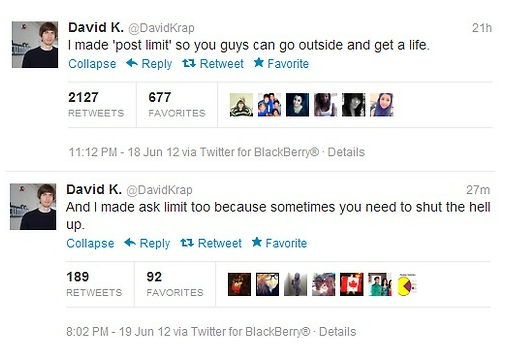
Image

There is absolutely nowhere in the world for righteous anger than Tumblr. That tweet up there? That ignited the Tumblr equivalent of a firestorm. My dash was filled by reblogs of this post by thisiswhiteprivilege.tumblr:

To David Karp [creator and CEO of Tumblr] and all of those who work under the Support Staff:

You are all misogynist, racist, homophobic trash—every single one of you. And David? Yeah, you, David Karp. You need to make some changes.

The post continues with a mixed list of grievances ranging from legitimate disagreements about how the site is moderated (requiring users to block other users that they find abusive vs. proactively censuring user) to a pretty thin misreading of a two year old blog post (it may be stupid, but David Karp asking “Can I use the word “nigga” if I’m quoting a song?” is in no way the same as:

“3.) After all of this, you, a white man have the nerve to ask, “It’s okay if I say the n word, right?” (Spoiler alert: NO IT ISN’T, because it’s a fucking racial slur, you racist fuckface.)

Let’s take a minute to think about that one. David Karp thinks people using racial slurs at people of color is acceptable, thinks people of color responding with justified anger is hate speech, and then has the nerve to ask if he can use one of said slurs himself.”

to taking offense at a couple of statements made not by David Karp, but by a parody account (identified as such in the bio section), @DavidKrap (source of the screenshot above). So basically the “open letter” post is conservatively 80% bullshit, and works against whatever changes thisiswhiteprivilege wants to bring to the platform.

It’s also just pure Tumblr.

It goes almost without saying that the restraints created by the design of a social platform shape the way that its users interact. Facebook has traditionally been very good at semi-private, horizontal interactions between users, not so much for broadcasting or keeping in touch with those outside the walled garden. Twitter’s 140 character limit. Traditional blogs’ comment sections. And Tumblr’s design choices have made it a platform that anybody can access but is extremely limited in user interaction.

Tumblogs are like a parody of Web 2.0, WordPress or Blogger or Typepad-powered blogs (although WordPress has made huge changes in the last year to bring it closer to the Tumblr model). Every user has a URL that can be used to navigate to a public-facing page. Every user can set their own design. But spend any time on the site, and you can see how different a beast it is.

There is no way to comment on a post, except by “reblogging*” and appending your own text. Actually, “liking” (which adds a comment: “____ liked this” to the bottom of the post) and reblogging are the only ways that users can interact at all (this becomes very annoying. My dashboard (90% of any user’s time on Tumblr will be at http://www.tumblr.com/dashboard; nobody sees that custom theme you spent a couple hours deciding on) is constantly filled with the same posts, reblogged to add a comment). Thus reblogging becomes the social focus of the site. This is summed up well by a Quora user answering the question, “How do teenagers waste hours upon hours consuming Tumblr? My 15-year old daughter wastes hours upon hours everyday mindlessly scrolling rapidly through her “endless” tumblr stream. She also brags about her own blog on tumblr and how much love it gets, but it doesn’t contain any original content (only reblogs). I don’t understand.”:

Reblogging is a great and made-easy way to define my newly-established online self. It is how I quickly pass along the things that I care about and keep my followers interested in my blog. Despite it not consisting of all-original content, my blog is the equivalent of making a portfolio to sum myself up. I spend much time and care making my blog unique and look good.

My followers rely on me for discovery, as I rely on the people I follow. So, I feel responsible for doing just this; not doing so would run the risk of me losing followers, which will impact the amount of users who see my original content when I choose to write something myself or post a photo of mine or a video I found. So as I am browsing my feed for hours and hours, I am also looking for things that I think my followers would be interested in, like to see, or content that would go nicely given the other stuff on my blog. And, yeah, it is endless, which only increases the amount of time I spend on the site (the scrolling is set up so that as I near the bottom, more content loads). And I see it as crucial that I search through everything in my feed since my last visit to Tumblr, as I wouldn’t want to miss anything potentially interesting (that may make good blogging material or just suits my own interests).

What this means in practice is that Tumblr functions as a parody of conspicuous consumption: where everything costs nothing and goes on infinitely. Images and reblogs become the ways to signal your education, or your hipness, or your personality. And ultimately it shows everything but you.

But its greatest sins are in obscuring the chain of information. Whenever you reblog, you have the option of removing attribution to a previous user. This can mean that it’s very confusing to find the original post that another user might be quoting. Because reblogging is the only way to make a comment, there’s no linear order to comments & users can fork a conversation at any point**. Furthermore, while there are tools to embed URLS and captions to images, most tumblr users are very bad about attributing images. I’m not even talking about getting permission from artists, simply crediting them by name. While traditional blogs may be less sharey/social (if you want to discuss this article, you have to make a comment on this page and keep checking back to follow the discussion***), there is more interactivity with the information. All of the links I’ve embedded in the post allow you to go back and disagree with my interpretations. And I think it makes this a more durable platform.

If it seems like I’m dumping on the platform: don’t worry. I’m completely addicted to Tumblr.

The signal to noise ratio is crazy low, don’t get me wrong. But what I find irresistible about the platform is that when people do actually write original posts, when they write about their own feelings or opinions, users of Tumblr have absolutely no filter. And so more than any other place on the internet, if you want to hear how people feel about being mixed race, or people who have scoliosis, or people who were raised fundamentalists, there is no better place to look then on those Tumblr tags. When users give themselves permission to be themselves, they’re completely themselves.

And that’s why I keep coming back.

My tumblr can be found at sauntodo.tumblr.com

*a phrase which I find–frankly–a contradiction in terms. 

**In a hilarious, “This is supposed to be Web 3.0?” twist, these comments are displayed with c. 1998-chain-letter carats >>>.

***and, by the way, please do.