A couple thoughts that I couldn’t work into the earlier post:
–You may think I’m being melodramatic, but look at the face of Damon Albarn (Blur, Gorillaz, The Good, The Bad and The Queen) when he talks about Glee:
–I don’t buy for a second that music being featured on Glee is good for musicians because it exposes people to their music (at least when talking about Glee covers released commercially. If the music stayed on the show, I probably wouldn’t have anything to say). I’m not saying that the original song artists are being exploited financially (although some of them probably are, as I would imagine that only the credited songwriters are paid), I’m saying that its dirty money.
–Interestingly, that same conversation happened about the legitimacy of samples in hip-hop. I think a continuum from good sampling and bad sampling has emerged: Kanye West (just as an example) sampling “21st Century Schizoid Man” in “POWER” is brilliant, while Kanye West lifting “Harder, Better, Faster, Stronger” wholesale in “Stronger” is lazy. Of course, that was a hit too, so maybe we’re just fucked.
–If anyone wanted to know why could never in any way get on board with Greg Sandow’s idea that the classical music should look to Glee to see how can it can become culturally relevant again, that was it.
–It’s really strange to me that we have a force on the music charts that is such a cipher. Look at the other top 10 artists I mentioned in the first section, all of which have their own flavor completely different from each other. And all of them were tremendously influential–you could probably find a direct musical descendant of each of them on the top 100 list I liked to. How could Glee possibly be influential? The sound of their music seems to have no connection to the popularity of their music, it’s simply an expression of a marketing machine. In other words, no musician would ever want to copy their sound (they don’t have one) or their song strategies (they don’t have one), and if they did, there’s no way they would succeed anyway. It’s like a weird backwards culture where Kidz Bop was the number 1 recording artist of all time.
–I spontaneously made the Kidz Bop/Glee comparison, but a quick Google search shows me that I’m not the first. It should be a bigger part of the conversation. As much as I hate the use of music to signal social status and identity, if I could shame people into not buying Glee music, I would.
In the category of computer-aided statistics micronews*, the Official Charts Company (which sounds like a fake name) has stated that the Glee cast has broken Elvis Presley’s record for fastest act to score 20 top 40 hits. That particular “record” may or may not mean anything to you, but it’s undeniable that Glee singles are, to use Joe Biden’s charming turn of phrase, a big fucking deal. After all, look who (with the Glee cast and Elvis) rounds out the top 10 list of most entries in the top 40 charts: James Brown, Ray Charles, Aretha Franklin, The Beatles, Fats Domino, Elton John, Stevie Wonder, and FRANK MOTHERFUCKIN’ SINATRA**.
I think Glee is pretty mediocre as a television show, but that it’s popular doesn’t make me depressed about the future of television. In fact, it even works for me on occasion, like when it nods to the past by recreating a famous TV moment, or when it tweaks conventional gender roles, or when the combination of music and choreography is so well executed you can’t help but be entertained. But Glee‘s supremacy on the pop charts deeply depresses me, and to understand why, we have to take a detour through some pop music theory.
*It’s kind of like sports: if you have enough statistics kept over a long enough period of time, you’re likely to find two or three “records” being broken in any given game, which is why it’s sometimes hard not to laugh at the bullshit the commentators are slinging.
**Although the piano is usually peripheral to pop music, it’s interesting to see how many keyboardists are on this list. Ray Charles, Fats Domino, Elton John and Stevie Wonder often use piano as their primary instruments, everybody knows that Paul McCartney loves his ebony and ivory, and not as many people know that Aretha Franklin is a wonderful gospel pianist.
2. painting with sound
In 1979, Brian Eno gave a lecture titled “The Studio As Compositional Tool” at a conference sponsored by the New Music America Festival, which was subsequently published in Downbeat. In it, he addresses the musical implications of multitrack recording, a technology that was relatively new (Earlier music studios were limited to 4- or 8-track recording. Eno is talking about 32 & 64 track machines; the virtually unlimited tracks that come with today’s computer technology was a couple decades in the future.) Eno:
The move to tape was very important, because as soon as something’s on tape, it becomes a substance which is malleable and mutable and cuttable and reversible in ways that discs aren’t. It’s hard to do anything very interesting with a disc – all you can do is play it at a different speed, probably; you can’t actually cut a groove out and make a little loop of it. The effect of tape was that it really put music in a spatial dimension, making it possible to squeeze the music, or expand it.
…
In a compositional sense this takes the making of music away from any traditional way that composers worked, as far as I’m concerned, and one becomes empirical in a way that the classical composer never was. You’re working directly with sound, and there’s no transmission loss between you and the sound – you handle it. It puts the composer in the identical position of the painter – he’s working directly with a material, working directly onto a substance, and he always retains the options to chop and change, to paint a bit out, add a piece, etc.
Eno makes many points in this lecture, but what I want to focus on is the idea that pop music has a specificity that’s different from classical music, or from folk music. Every musical tradition has a loose set of values that define what music is*. For classical music, you might say that the music is defined by the written score, or the composers intention. The defining characteristic for a folk song might be anything from a set of chords to the words of a refrain.
One of the strengths of recorded pop music** is that it is so sonically specific–the sounds that make it on the record define the song. Minute adjustments to the tone of individual instruments, carefully tailored studio effects, all of these details make up the identity of the song.
*Keep in mind that I definitely don’t want to say that these values are universally accepted, or that there aren’t exceptions.
**To distinguish from live music, which is a whole different beast. If it weren’t then there would never be any bands who are great live but have shitty albums, or vice versa.
3. a case study
The very first time I remember becoming completely enchanted with a detail in a pop song was listening to Tommy James and the Shondells’ “Crimson and Clover.”
Many of my early music memories consist of listening to KRTH 101.1, the oldies station, in my mother’s car. There’s a moment—right after a climax of guitar, backing vocals, and noise—where the music simplifies to a guitar arpeggio over a relaxed percussion groove, and this voice, this voice, enters (4:28 in the video above*). The story I’ve heard is that Tommy James was just fucking around in the studio and wanted to hear what it sounded like if he plugged his mic into a guitar amp with the tremolo effect on. That effect blew my mind.
This song has been covered many times before, and it was probably played many different times live, but that effect is inseparable from the song’s identity. Any music fan can point out those things that, taken together, make up the music that they love.
*The best comment on that video: “I remember riding in the car and listening to this song on the radio and asking my dad why the singers voice gets all weird. He replied, “That’s for people who are fucked up on drugs and listening to the song”, then he turned it up.”
4. bringing it all together
Which is why Glee‘s dominance of the music charts deeply depresses me. The show’s production strategy is always to dull any edges, to plane any uneven surface. Just listen to that Jason Mraz song at the top of the post, a song that’s insipid to begin with. It doesn’t just change the details I was talking about–it obliterates them. Glee never met a guitar solo it couldn’t castrate. All the Glee voices are competent and pleasant but processed beyond belief, as far away from real singing as Oscar Meyer wieners are from beef. Somehow every song manages to sound like a commercial jingle (from back when, you know, they made those).
I think it encourages listeners not to care. There are many forces, from the increase in ambient music in public places to the sheer amount of music available in the internet, that discourage real listening. And I cannot accept that if people are really listening, and caring about what they’re listening to, they will choose the Glee version of a song, rather than the real thing.
The Guardian has a short profile/interview of the first classical soloist to be signed to Warner’s rock label. He sounds like a swell guy, and I don’t want to make any judgments on his music without hearing it, but a couple things mentioned in the interview make me curious.
Rhodes is also currently presenting his own primetime music show, Piano Man, on Sky Arts, in which he plays his favourite composers, all the while peering at sheet music on his iPad through trendy spectacles.
If he uses the iPad to explain the pieces, or reference the score, to the televised audience, then I think that’s great; I think it’s incredibly valuable for musicians to be able to explain what they’re thinking about as they convert a piece of written music into sound. If he’s just using it as a score…what the fuck does he need a score for?
The other thing that’s kind of bothering me is something that Rhodes probably can’t help. I’m all for changing the uptight appearance standards that soloists and conductors are held to, but if that becomes the conversation about you in place of your music, you come across like a Christian band trying way too hard to prove their “alternative” credentials. His albumcovers do not inspire confidence. This probably has nothing to do with Rhodes, and everything to do with lazy journalism. I suspect this is the case because of the way that the writer describes Rhodes: “Clearly, this is a man who has no need for added stimulation: it is barely 11am and he is already bouncing off the walls, a tightly wrapped bundle of tics and jitters.” I feel like I read a version of this sentence every time I read about a young (read: under 30) classical musician in a mainstream publication–it’s almost like they go in to the interview barely expecting a pulse, so anything more feels like a revelation.
I had a couple initial reactions to this list. The first was an appreciation of the long tradition of Western notated music–a tradition so long that you can make a top 10 list like this without saying anything remotely controversial. Of course, not everyone would pick this particular list, however it would be hard to take seriously an argument that any one of these composers does not deserve to be on the list because their music was insubstantial, or there wasn’t enough of it, or that it didn’t distinguish itself from the other music of its time. All of these composers had exceptional, rare talent and it’s only because we have centuries of music to pick from that we can make a list like this.
My second reaction was just awe at just how much music is out there, and how much I have to learn. Beethoven has always been one of my favorite composers, and I was extremely pleased that Tommasini placed him above Mozart. I’ve been blown away by Bach’s music over and over in the context of organ and compositional studies. But about half of the other composers only exist as uninformed, vague impressions in my consciousness. Brahms? Stuffy and heavy. Mozart? Monotonous and empty. Schubert? A complete unknown.
3. miami gets a new, gehry-designed concert hall
At first, I was all fired up to rant about Gehry becoming the go-to starchitect for concert halls, and why don’t we give other architects a chance and blah blah blah…then I actually read the article about the fundraising and construction process and decided that I was being a little bitch.
The picture above is actually the interior of the building. Miami blog Miamism gives a really good overview of the design of the building, what its goals are, and how it fits into the area.
4. conservative conservatory
The NYT published a story that looks a little more in depth at the New England Conservatory’s decision to sever ties with the fledgling El Sistema U.S.A. I’ve gotta say, this stinks to high heaven of an organization underestimating the extent of its commitment, then getting cold feet and backing out.
I think it’s important to keep in mind that El Sistema is supported by the federal government of Venezuela. It was always going to be a challenge for any music institution, or nonprofit organization, to provide the same level of support to a U.S. organization that is provided by the federal government in Venezuela. The decision to focus on training graduate students rather than directly establishing youth orchestras already was a compromise, and this public vote of no confidence by the New England Conservatory leaves the movement in a weaker position than before the Abreu Fellowship program was established. The program has only been in existence for two years, and that the NEC wants out of the partnership so quickly is a joke, and I can only believe that either the NEC severely underestimated the support it would need to provide to the program for it to have a hope of being effective, or that the organization was acting in bad faith from the beginning. I do not see a way that this does not reflect poorly on the New England Conservatory.
Above all, though, this is a missed opportunity. The NEC had a once in a generation chance (and it’s possible that another organization will take up this mantle) to radically redefine the mission of a top level conservatory. The conservatory’s president, quoted in the article, makes it clear that he wasn’t interested in that, “We really felt this was outside our mission altogether.” Music education has always been a part of the conservatory because so many professional, performing musicians also teach. This was different because it was an attempt to rebuild the musical infrastructure of the country on a societal level. It’s a shame, a shame, that the NEC had so little commitment to this organization in its crucial first years, and such a lack of follow through to see this vision realized.
5. on a lighter note
David Stabler, critic for The Oregonian, writes about an effective use of the second movement of Beethoven’s 7th Symphony in the movie The Kings Speech. I think I’ll always associate that movement with the great children’s audio program Beethoven Lives Upstairs, but I think that it’s best use in film is in the opening credits to Tarsem Singh’s masterpiece The Fall:
I’m only 20 years old. That makes me 3 years out of high school, 7 years out of middle school. Although it feels like ages ago…it really wasn’t. And yet I found out about the Hunger Games phenomenon from the A.V. Talk podcast, which is only one or two steps away from finding out about teen culture trends from Newsweek or The New York Times. Their opinion of the book (they were discussing the third in the trilogy, Mockingjay) was that it was grimmer than any other YA series that they had encountered before. I was intrigued, so I picked up the first book.
Aside: I’m really not in a position to know how popular these books are in the middle/high school set, but there must be someone interested, because the Wikipedia page on The Hunger Games universe is absurdly detailed.
2. plot & reading experience
Wikipedia has a perfectly adequate summary of the trilogy’s plot.
What it doesn’t tell you is that the book is super fast paced, even though it doesn’t always avoid the YA sins of simultaneous over- and under-explanation, characters that grasp the situation they are in far later than the reader does, and character interactions that read like stalling for time (Don’t worry. It’s no Harry Potter and the Deathly Hallows). It reads like crack. I waited a couple of days after buying the book to start reading it, but from the time that I opened the cover of the first book, I didn’t stop reading until the end of the third book. I don’t live close to a bookstore, so I ended up buying a Kindle edition of the second book rather than waiting a day to get a physical copy or go to the library. Thankfully, my sister owned the third book.
3. the truly unique
Probably the strongest feature of the novel, as well as its most original element, is the character of the protagonist, Katniss. Her character incorporates features common in female (“mother” to younger sibling, knowledge of healing plants, in the position of choosing between two males, deep sense of responsibility and affinity with community) and male (physically dominant, ideologically pure, angered by injustice) YA protagonists, but something about the mixture of them within this character feels…fresh. Katniss’ cynicism (which I’ll talk about later) that develops throughout the trilogy works within a tone that usually falls outside YA literature–I can’t think of another book that has anything like it.
Everything else kind of falls into the category of “things I’ve encountered elsewhere.” The elements certainly haven’t been assembled together like this before, but each one taken separately is like a paraphrase of another work. The prose is workmanlike and otherwise undistinguished. Moments of cynicism feel earned, moments of grief are unconvincing.
4. a brief detour through nerd city
One feature of the book that never ceased being ridiculous is its worldbuilding. Yes, I do understand that it sounds like the most cliché complaint ever (demographics of magic families in Harry Potter? thermodynamics of The Matrix?) but seriously, the worldbuilding in this series is wack. I don’t even need to nitpick; some features of this world are so patently stupid and dysfunctional that I was almost convinced that the book was meant to be allegorical. Some easy examples: Demographics: The book explicitly states that it takes place in the land of the former United States of America, that has been divided into a Capitol state and thirteen Districts (Get it?! How about now?!). District 12, where our protagonist is from, is supposed to be in the former Virginias, yet the entire population of the area fits in a single town square (I think the figure 8,000 for the district is thrown out, yet I can’t be sure) and lives close enough by to get there easily for a district meeting. Other districts are mentioned as being bigger, however even if you allowed for districts many orders of magnitude bigger than District 12, that would put a population the size of Connecticut throughout the entirety of North America. Politics: The government within the world is so lazily sketched out that it’s almost not worth mentioning, but it seems to be at different times dictatorship, constitutional democracy, and China-style central committee controlled. It doesn’t make sense in any plane of reality close to ours. Economics: the entirety of the Virginias only produce food for their district and coal. All of California produces food for their district, fish and seafood. It’s stupid.
But surely this doesn’t matter, right? I’ve already said that the writing was like crack, and none of these details affect the main plotline. Well, yes, except that the central character motivation that drives the plot is that this is a completely evil system that must be destroyed. And it’s hard to take that motivation seriously when it’s obvious that the system would destroy itself in about two weeks.
5. but what does it mean?
One thing that I found myself asking as I read these books was what does it mean that such a dark, cynical dystopia appeals to such a mass audience of teens. Some teen tropes–like the love triangle that this series has in common with the Twilight series–are fairly easy to understand. But if this series is escapism, I’m not clear on what its readers are escaping from, or to.
I can understand the desire for your life and decisions to have greater meaning. I think that’s probably why I enjoyed so many books where children are put into life and death situations when I was younger, from Gary Paulson’s Hatchet to Madeline L’Engle’s A Wrinkle in Time. And that element is certainly present in the Hunger Games book; Katniss is fighting not only for her sister, not only for her community, but for the whole of the society. I don’t know what it means that the society that Katniss lives in is cartoonishly evil (at one point it’s established that the evil President Snow’s breath smells like blood). There are some superficial attempts at contemporary social satire, from its character’s beliefs about class dynamics to it’s presentation of an obsessive media culture.
Are young readers resonating with the depiction of rebellion against the social order? Do they believe that our society is that diseased, that unbalanced? Is it simply a desire for a simpler, more good-and-evil world to live in, to escape the unsatisfactory choices that most of us make in a world where almost everything is at least partly evil and partly good?
Of course, it could be that young readers just like a good yarn, but it seems like there is a pretty passionate fanbase, and fans usually don’t become passionate for a work that only has a good plot.
One of my favorite things about winter breaks is the opportunity it gives me to try and reduce the number of titles in my Book of Books™.
Big Novels
One of the greatest pleasures of the break was re-reading Alexander Dumas’ The Count of Monte Cristo. This is one of the books that I feel like I’ve had a long relationship with, from a sanitized Children’s Classics edition to a revelatory unabridged modern translation. For the past couple of months, the book has been my go-to time filler in a Kindle edition on my phone. One of the great pleasures of the book is its labyrinthine structure and cast of characters. It’s like if every time Dumas introduced a new set of characters or subplot tangential to the main storyline, his editor asked him to cut it and he responded by adding another 150 pages of material. There’s every type of story, and I had completely forgotten the humor of the book that goes along with it’s Byronic heaviness. One chapter, “How To Rid A Gardener of His Dormice” reads like a farcical short story.
Another behemoth of a novel that I powered through, albeit in an audio version, was the latest from David Mitchell, The Thousand Autumns of Jacob De Zoet. Mitchell’s previous book, Cloud Atlas, literally rocked my shit, and I’ve been devouring his writing since I discovered him. Some of the things that I fell in love with in his work is the way that he’s able to connect big, heavy things with emotionally specific characters in artfully plotted stories, as well as his careful use of different modes of writing that often play on genre tropes, giving him a chameleon-like style. I didn’t see as much of that side of his writing in this book; it’s a piece of historical fiction that can be pretty easily categorized, much like his earlier (excellent) bildungsroman Black Swan Green. Which is no reason to dismiss the book. Mitchell chose an interesting location and time, the island trading post of Dejima in the Nagasaki bay at the turn of the 19th century. Like Dumas, Mitchell adorns his story–riveting in itself–with digressions that serve to immerse us in the setting and make us connect with even characters that affect only minor developments in the main plot. And some Mitchell trademarks remain: multiple narrators and stories-within-stories, his subtle shades of magic realism, and even a cameo from a secondary character in Cloud Atlas. The only thing that hampered my enjoyment of the novel was my anticipation of the wonderful “Mitchell effect:” those wonderful moments in his work (particularly in Cloud Atlas and Ghostwritten) where you suddenly realize the way that the story you are reading connects with larger themes established subtly throughout the larger work. There are certainly big themes in this book–particularly themes of individual autonomy, state sovereignty, and globalization–but no individual moment to match those in the other books. Still, it’s a spellbinding, wonderfully crafted, and deeply entertaining book.
Science Fictions
A book that made it on my list, on a recommendation from a source I can’t remember, was Alastair Reynold’s House of Suns. This kind of book is pure pleasure for me. It hits so many of my sci-fi buttons at once: epic world building, diverse multi-focused civilizations, political intrigue, morality tales, deep time. This is a book that it’s impossible for me to critique honestly. The quality of the writing doesn’t particularly distinguish itself, and the plot could maybe have used some punching up, but I really didn’t care. I got everything I came for, and I left satisfied.
A little more problematic was John Varley’s Rolling Thunder. I picked up this book on a whim, as one of Varley’s other novels, The Golden Globe, is one of my all time favorites. There were some superficial similarities–Varley’s love for the mixture of futuristic tropes with 1950’s and 60’s American pop culture, light social satire–but I thought the execution was just not on the same level. More bothersome for me after reading another of Varley’s books was the recognition of certain troubling elements of his writing that appear to be habits, particularly his writing of (and about) women. His female protagonist, Podkayne, is certainly endearing, but some of the things said in her voice sound like a rehash of “women are from mars”/When Harry Met Sally-esque nonsense that comes off as very unconvincing from that character.
Odds & Ends
Will Grayson, Will Grayson is a perfectly adequate YA novel with gay male content. I’ve been trying to get a handle on what to say about this book, and I really don’t have anything. The writing’s fine, not great, as is the story and the characters (with the exception of Tiny Cooper “the worlds largest gay person or the worlds gayest large person,” an unforgettable flamboyant gay teen equal parts sage mentor and hysterical drama queen). A couple of interesting thoughts about the book: The structure of this novel is alternating chapters narrated by each of the two Will Graysons, emphasized by different type/capitalization (Note to publisher: all small caps are annoying to read, e.e. cummings be damned!) and presumably written by the two authors. I’ve seen this format used a lot in the past few years, almost enough to create its own genre, like epistolary novels. It makes me wonder what (imagined) collaborations between big names might be like; certainly Levithan is a well known name in both general (Nick and Norah’s Infinite Playlist) and gay (Boy Meets Boy) YA circles. The other realization that I had after finishing this book was the realization of what the familiar, stream-of-consciousness tone mixed with lame observational humor that pervades first-person YA literature reminds me of: bad stand up comedy. I certainly remember being entertained by the same kind of asides that annoy me now when I was a member of the target audience of these books, so it’s hard for me to come down too hard on it. Still, even if young teens do go for that kind of voice, surely they get tired of reading it ALL THE TIME?
I need to take a moment to point out how ridiculously well my sister knows me, and how great she is at picking presents for me. This Christmas, she got me Dave Mazzucchelli’s wonderful graphic novel Asterios Polyp. Graphic novel? Hell yeah. Drawing style that melds cariacture with concepts from another field–architecture and geometry–to tell a story? Even better. Supremely talented but imperceptive jerk that gives Dr. Gregory House and Jeff Daniels in The Squid and the Whale a run for their money? You’re killing me, this is the perfect book. Except when it isn’t; scenes in the “present” of the novel are incredibly uninteresting and bland compared to the magic of the flashbacks to Asterios Polyp’s marriage, and a structural device where he imagines and speaks to his miscarried twin brother left me rolling my eyes. Still, it’s an interesting, surprisingly touching book that I’d strongly recommend.
Levitt and Dubner’sSuperFreakonomics had about the same effect on me as their first book, Freakonomics (props to them for extending the pun, although I may eat my words if they keep cranking out more of these things), which is to say, little. It’s compellingly written, and full of interesting, seemingly contrarian opinions. The slickness of the writing makes me trust it a little less, but the subjects of each chapter are a little more focused than those included in the first book, which often read more like an exercise in data manipulation than a good-faith attempt to describe real-world phenomena.

 The Guardian has
  At first, I was all fired up to rant about Gehry becoming the go-to starchitect for concert halls, and why don’t we give other architects a chance and blah blah blah…then I actually read


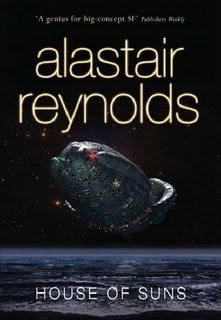 A book that made it on my list, on a recommendation from a source I can’t remember, was Alastair Reynold’s
  A little more problematic was John Varley’s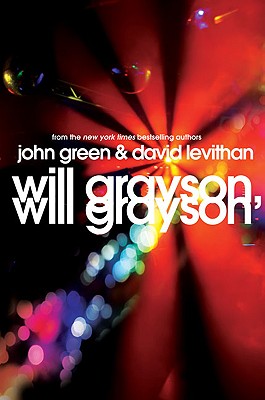
 I need to take a moment to point out how ridiculously well my sister knows me, and how great she is at picking presents for me. This Christmas, she got me Dave Mazzucchelli’s wonderful graphic novel
  Levitt and Dubner’s
 hammer & jack


