
One of my favorite things about winter breaks is the opportunity it gives me to try and reduce the number of titles in my Book of Books™.
Big Novels

One of the greatest pleasures of the break was re-reading Alexander Dumas’ The Count of Monte Cristo. This is one of the books that I feel like I’ve had a long relationship with, from a sanitized Children’s Classics edition to a revelatory unabridged modern translation. For the past couple of months, the book has been my go-to time filler in a Kindle edition on my phone. One of the great pleasures of the book is its labyrinthine structure and cast of characters. It’s like if every time Dumas introduced a new set of characters or subplot tangential to the main storyline, his editor asked him to cut it and he responded by adding another 150 pages of material. There’s every type of story, and I had completely forgotten the humor of the book that goes along with it’s Byronic heaviness. One chapter, “How To Rid A Gardener of His Dormice” reads like a farcical short story.
 Another behemoth of a novel that I powered through, albeit in an audio version, was the latest from David Mitchell, The Thousand Autumns of Jacob De Zoet. Mitchell’s previous book, Cloud Atlas, literally rocked my shit, and I’ve been devouring his writing since I discovered him. Some of the things that I fell in love with in his work is the way that he’s able to connect big, heavy things with emotionally specific characters in artfully plotted stories, as well as his careful use of different modes of writing that often play on genre tropes, giving him a chameleon-like style. I didn’t see as much of that side of his writing in this book; it’s a piece of historical fiction that can be pretty easily categorized, much like his earlier (excellent) bildungsroman Black Swan Green. Which is no reason to dismiss the book. Mitchell chose an interesting location and time, the island trading post of Dejima in the Nagasaki bay at the turn of the 19th century. Like Dumas, Mitchell adorns his story–riveting in itself–with digressions that serve to immerse us in the setting and make us connect with even characters that affect only minor developments in the main plot. And some Mitchell trademarks remain: multiple narrators and stories-within-stories, his subtle shades of magic realism, and even a cameo from a secondary character in Cloud Atlas. The only thing that hampered my enjoyment of the novel was my anticipation of the wonderful “Mitchell effect:” those wonderful moments in his work (particularly in Cloud Atlas and Ghostwritten) where you suddenly realize the way that the story you are reading connects with larger themes established subtly throughout the larger work. There are certainly big themes in this book–particularly themes of individual autonomy, state sovereignty, and globalization–but no individual moment to match those in the other books. Still, it’s a spellbinding, wonderfully crafted, and deeply entertaining book.
Science Fictions
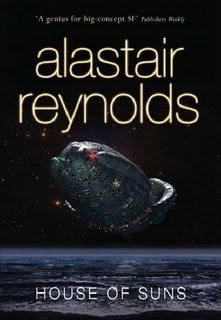 A book that made it on my list, on a recommendation from a source I can’t remember, was Alastair Reynold’s House of Suns. This kind of book is pure pleasure for me. It hits so many of my sci-fi buttons at once: epic world building, diverse multi-focused civilizations, political intrigue, morality tales, deep time. This is a book that it’s impossible for me to critique honestly. The quality of the writing doesn’t particularly distinguish itself, and the plot could maybe have used some punching up, but I really didn’t care. I got everything I came for, and I left satisfied.
 A little more problematic was John Varley’s Rolling Thunder. I picked up this book on a whim, as one of Varley’s other novels, The Golden Globe, is one of my all time favorites. There were some superficial similarities–Varley’s love for the mixture of futuristic tropes with 1950’s and 60’s American pop culture, light social satire–but I thought the execution was just not on the same level. More bothersome for me after reading another of Varley’s books was the recognition of certain troubling elements of his writing that appear to be habits, particularly his writing of (and about) women. His female protagonist, Podkayne, is certainly endearing, but some of the things said in her voice sound like a rehash of “women are from mars”/When Harry Met Sally-esque nonsense that comes off as very unconvincing from that character.
Odds & Ends
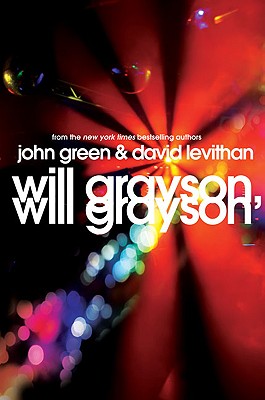 Will Grayson, Will Grayson is a perfectly adequate YA novel with gay male content. I’ve been trying to get a handle on what to say about this book, and I really don’t have anything. The writing’s fine, not great, as is the story and the characters (with the exception of Tiny Cooper “the worlds largest gay person or the worlds gayest large person,” an unforgettable flamboyant gay teen equal parts sage mentor and hysterical drama queen). A couple of interesting thoughts about the book: The structure of this novel is alternating chapters narrated by each of the two Will Graysons, emphasized by different type/capitalization (Note to publisher: all small caps are annoying to read, e.e. cummings be damned!) and presumably written by the two authors. I’ve seen this format used a lot in the past few years, almost enough to create its own genre, like epistolary novels. It makes me wonder what (imagined) collaborations between big names might be like; certainly Levithan is a well known name in both general (Nick and Norah’s Infinite Playlist) and gay (Boy Meets Boy) YA circles. The other realization that I had after finishing this book was the realization of what the familiar, stream-of-consciousness tone mixed with lame observational humor that pervades first-person YA literature reminds me of: bad stand up comedy. I certainly remember being entertained by the same kind of asides that annoy me now when I was a member of the target audience of these books, so it’s hard for me to come down too hard on it. Still, even if young teens do go for that kind of voice, surely they get tired of reading it ALL THE TIME?
 I need to take a moment to point out how ridiculously well my sister knows me, and how great she is at picking presents for me. This Christmas, she got me Dave Mazzucchelli’s wonderful graphic novel Asterios Polyp. Graphic novel? Hell yeah. Drawing style that melds cariacture with concepts from another field–architecture and geometry–to tell a story? Even better. Supremely talented but imperceptive jerk that gives Dr. Gregory House and Jeff Daniels in The Squid and the Whale a run for their money? You’re killing me, this is the perfect book. Except when it isn’t; scenes in the “present” of the novel are incredibly uninteresting and bland compared to the magic of the flashbacks to Asterios Polyp’s marriage, and a structural device where he imagines and speaks to his miscarried twin brother left me rolling my eyes. Still, it’s an interesting, surprisingly touching book that I’d strongly recommend.
 Levitt and Dubner’s SuperFreakonomics had about the same effect on me as their first book, Freakonomics (props to them for extending the pun, although I may eat my words if they keep cranking out more of these things), which is to say, little. It’s compellingly written, and full of interesting, seemingly contrarian opinions. The slickness of the writing makes me trust it a little less, but the subjects of each chapter are a little more focused than those included in the first book, which often read more like an exercise in data manipulation than a good-faith attempt to describe real-world phenomena.


 hammer & jack