
This Reader’s Digest, July 2013

Big reading month for me. Here’s the good, the bad, and the ugly, with some commentary. I get apathetic about rewriting what is easily Googleable, so no plot summaries. Unreservèd recommendations are marked with a star.

*The Little Way of Ruthie Leming Rod Dreher

The Little Way of Ruthie Leming – Rod Dreher

A truly unique project. Dreher’s book rarely strays beyond the borders of the small Louisiana hamlet in which he was raised and his sister lived, but it manages to be at once a small book about the complex relationships between siblings and a large book, a synecdoche of America’s relationship to the rest of the world. Dreher made me stop often to consider the way that the dynamics and attitudes he describes have played out in my own life. It was also consistently frustrating to me, as some of the insights that Dreher captures are so right, and others betray the same lack of flexible thinking and imagination that he sees as missing in his sister and father. Go forth and read this book.

Devices and Desires K.J. Parker

Right on the border between sci-fi and fantasy. If you look at a plot summary and think you might be interested, you’ll probably like it. If it sounds like it’s not for you, you’re probably right.

The War for Late Night Bill Carter

Bill Carter’s 1994 account of the Carson-Leno-Letterman Tonight Show saga, The Late Shift has become one of the canonical pieces of television writing and reportage. I haven’t read it, but I thought I would have more interest in this second book, because I remember the media nuttiness surrounding Conan O’Brien at NBC. Reading the book, I became aware of two things. First, I just care less about everybody involved in this story than I thought. Second, disciplined academic writing has spoiled me for easy narratives, characterizations, and explainations. After yet another TV executive’s negotiating style explained by their hardscrabble Brooklyn roots, I said fuck it and dropped the book.

*We The Animals Justin Torres

We The Animals – Justin Torres

One of the most intriguing debuts I’ve read. I hated this book when I finished it. I thought the ending was so cheap, so out of keeping with the rest of the novel. It was like watching somebody construct something amazing, then seeing them turn on the project and burn it down. Once I calmed down from that initial emotional reaction, I was able to consider that, no, it’s not the same thing as burning it down. The first three-quarters of the book are still great. Torres’ prose (prose poetry?) shows either stylistic precocity or stylistic vapidity. This is one of the few books these days that I wish would have a better constructed plot. The structure of the book is very loose, either a novel, novella, short story cycle, fictional memoir, or vignettes, depending on how you feel about it. I personally think its a fantastically successful short story cycle, and a poor novel. I eagerly await either Torres’ first volume of poetry or his third novel.

You Can Say You Knew Me When K. M. Soehnlein

I was excited to read this book because Soehnlien’s The World of Normal Boys, which I read a couple of years ago, is a true masterwork. While not breaking from the model established by Edmund White’s A Boy’s Own Story, Soehnlein’s specificity of character and setting elevates it above the many realization and coming out stories that are staples of gay lit. You Can Say You Knew Me When, about a self-destructive 30something gay in San Francisco discovering himself and shit, is not nearly as good. It was fine. If you’re like me, and will read any half-decent piece of trash if there are gay people in it, go ahead and pick it up. Otherwise, there’s only about three pieces of real interest. 1. The main character’s encounter with a rough-around-the-edges 19 year-old perfectly captures the appeal of rough trade. 2. The description of pre-90’s tech bubble craziness has come back around and become relevant again in this day of billion dollar aquisitions. 3. The main character’s father is compassionately portrayed, and is interesting and plausible as a person who had a bohemian youth and became more conservative in later life.   

Role Models John Waters

Reading this book is like listening to the filthy gay uncle you never had hold court. So there are bound to be great stories here (my favorite involved a one eyed, alcoholic, lesbian stripper named Zorro) and some sections that put you to sleep.

Gulliver Travels [since renamed Gulliver Takes Manhattan] Justin Luke Zirilli

Absurd book written by a gay club promoter that proves that endless fucking in New York is not, in itself, engaging absent any other point of interest.

*Far From the Tree Andrew Solomon 

Far From The Tree – Andrew Solomon

To me, Andrew Solomon’s project, which you can learn about in compressed form in this TED talk, boils down to this: what does the “normal” parent-child relationship look like when defined as the opposite of its variants? To that end, Solomon looks at situations where children best thrive by developing identity through peer relationships and opposed to familial relationships (deafness, dwarfism, homosexuality); where emotional relationships cannot be reciprocated (autism, multiple disabilities); where meaning of the child to the world shouts down meaning of the child to its parents (prodigies, criminals). The miracle of this book is that Solomon manages to balance on the knife’s edge between detachment and compassion towards his subjects, and has created one of the few recent pieces of writing that I might call wise. His prose has a razor sharpness to his conservatism of meaning and precision of language, and the through-line of his logic is consistent, and strong. He presents factual information straightforwardly, both communicating the best of what we know about these conditions while acknowledging that the science is in its infancy. At the same time, he is respectful of his subjects and their constructed identities, while refraining from adopting their communities’ jargon unless it edifies. This is not an easy read. The prose is dense, and because it is so carefully written it reads slow. And in focusing on this cohort of families, a major secondary theme that runs through the book are the profound bioethical questions that are going to come, with fury and anger and disruption and casualties, to our world.

The Elusive Embrace Daniel Mendelssohn

Could not surmount the twinned barriers of the solipsism of the writer and the indifference to classical studies of this reader. Abandoned.

A Cage of Bones Jeffrey Round

Yet another gay romance about an ennui filled gay man. Sexy location, competently written.

From Paris to the Moon Adam Gopnik

American in Paris memoir. I was expecting a little more. Tone was a little too Erma Bombeck/Sedarisy, his insights about the differences in American and French national culture were interesting, but a little too few and far between.

Wild Cheryl Strayed

Not only has this memoir been a breakout hit in the last two years, but Strayed is a hometown hero here in Portland. I thought the book was pretty good, mostly because Strayed has a distinctive voice, and is good company. After finishing the book, I began to explore some of her Dear Sugar columns, and I can see how this book would be of interest for those who are interested in how she cultivated her unique, and uniquely precious, moral sense. While I am mostly positive about the book, the material in it is half nature writing about the settings Strayed encountered on the Pacific Coast Trail, and half grief memoir about the loss of Strayed’s mother, and I thought both suffered for the attention given to the other. I found myself contradictorily wishing Strayed had given more time to the aftermath of the grief process, and more closely described her process of leveling out, while at the same time wanting her to take a little more time with the wildnerness locales she passed through rather than just talking about her condition on the trail.

Eleanor and Park Rainbow Rowell

Another straight teen romance in the vein of John Green’s Looking for Alaska. My pet theory about books like this is that it is an unintended consequence of the discovery of the gay YA market. Every one of Park’s (male protagonist) character notes—his love for new wave and punk, distance from authoritarian father, picked on at school—seem swiped from an Alex Sanchez or David Levithan book from ten years ago. Straight is the new gay. 

*CivilWarLand in Bad Decline George Saunders

Like one of my other favorite living writers, David Mitchell, Saunders is a profoundly moral writer that never moralizes. Though a couple of stories in this collection did not affect me profoundly, those that did kept me both at complete physiological attention to discover where the plot would go, and with a incessant lump in my throat as Saunders captures just how cruel we can be to each other, and how improbably kind.

Mysterious Skin Scott Heim

A better than average book that made a worse than average movie. Heim, with subtlety and empathy, explores the complicated role that sexual abuse plays in the formation of one gay man’s identity. Very dangerous subject to tackle.

This Reader's Digest, July 2013

Big reading month for me. Here’s the good, the bad, and the ugly, with some commentary. I get apathetic about rewriting what is easily Googleable, so no plot summaries. Unreservèd recommendations are marked with a star.

*The Little Way of Ruthie Leming Rod Dreher

The Little Way of Ruthie Leming – Rod Dreher

A truly unique project. Dreher’s book rarely strays beyond the borders of the small Louisiana hamlet in which he was raised and his sister lived, but it manages to be at once a small book about the complex relationships between siblings and a large book, a synecdoche of America’s relationship to the rest of the world. Dreher made me stop often to consider the way that the dynamics and attitudes he describes have played out in my own life. It was also consistently frustrating to me, as some of the insights that Dreher captures are so right, and others betray the same lack of flexible thinking and imagination that he sees as missing in his sister and father. Go forth and read this book.

Devices and Desires K.J. Parker

Right on the border between sci-fi and fantasy. If you look at a plot summary and think you might be interested, you’ll probably like it. If it sounds like it’s not for you, you’re probably right.

The War for Late Night Bill Carter

Bill Carter’s 1994 account of the Carson-Leno-Letterman Tonight Show saga, The Late Shift has become one of the canonical pieces of television writing and reportage. I haven’t read it, but I thought I would have more interest in this second book, because I remember the media nuttiness surrounding Conan O’Brien at NBC. Reading the book, I became aware of two things. First, I just care less about everybody involved in this story than I thought. Second, disciplined academic writing has spoiled me for easy narratives, characterizations, and explainations. After yet another TV executive’s negotiating style explained by their hardscrabble Brooklyn roots, I said fuck it and dropped the book.

*We The Animals Justin Torres

We The Animals – Justin Torres

One of the most intriguing debuts I’ve read. I hated this book when I finished it. I thought the ending was so cheap, so out of keeping with the rest of the novel. It was like watching somebody construct something amazing, then seeing them turn on the project and burn it down. Once I calmed down from that initial emotional reaction, I was able to consider that, no, it’s not the same thing as burning it down. The first three-quarters of the book are still great. Torres’ prose (prose poetry?) shows either stylistic precocity or stylistic vapidity. This is one of the few books these days that I wish would have a better constructed plot. The structure of the book is very loose, either a novel, novella, short story cycle, fictional memoir, or vignettes, depending on how you feel about it. I personally think its a fantastically successful short story cycle, and a poor novel. I eagerly await either Torres’ first volume of poetry or his third novel.

You Can Say You Knew Me When K. M. Soehnlein

I was excited to read this book because Soehnlien’s The World of Normal Boys, which I read a couple of years ago, is a true masterwork. While not breaking from the model established by Edmund White’s A Boy’s Own Story, Soehnlein’s specificity of character and setting elevates it above the many realization and coming out stories that are staples of gay lit. You Can Say You Knew Me When, about a self-destructive 30something gay in San Francisco discovering himself and shit, is not nearly as good. It was fine. If you’re like me, and will read any half-decent piece of trash if there are gay people in it, go ahead and pick it up. Otherwise, there’s only about three pieces of real interest. 1. The main character’s encounter with a rough-around-the-edges 19 year-old perfectly captures the appeal of rough trade. 2. The description of pre-90’s tech bubble craziness has come back around and become relevant again in this day of billion dollar aquisitions. 3. The main character’s father is compassionately portrayed, and is interesting and plausible as a person who had a bohemian youth and became more conservative in later life.   

Role Models John Waters

Reading this book is like listening to the filthy gay uncle you never had hold court. So there are bound to be great stories here (my favorite involved a one eyed, alcoholic, lesbian stripper named Zorro) and some sections that put you to sleep.

Gulliver Travels [since renamed Gulliver Takes Manhattan] Justin Luke Zirilli

Absurd book written by a gay club promoter that proves that endless fucking in New York is not, in itself, engaging absent any other point of interest.

*Far From the Tree Andrew Solomon 

Far From The Tree – Andrew Solomon

To me, Andrew Solomon’s project, which you can learn about in compressed form in this TED talk, boils down to this: what does the “normal” parent-child relationship look like when defined as the opposite of its variants? To that end, Solomon looks at situations where children best thrive by developing identity through peer relationships and opposed to familial relationships (deafness, dwarfism, homosexuality); where emotional relationships cannot be reciprocated (autism, multiple disabilities); where meaning of the child to the world shouts down meaning of the child to its parents (prodigies, criminals). The miracle of this book is that Solomon manages to balance on the knife’s edge between detachment and compassion towards his subjects, and has created one of the few recent pieces of writing that I might call wise. His prose has a razor sharpness to his conservatism of meaning and precision of language, and the through-line of his logic is consistent, and strong. He presents factual information straightforwardly, both communicating the best of what we know about these conditions while acknowledging that the science is in its infancy. At the same time, he is respectful of his subjects and their constructed identities, while refraining from adopting their communities’ jargon unless it edifies. This is not an easy read. The prose is dense, and because it is so carefully written it reads slow. And in focusing on this cohort of families, a major secondary theme that runs through the book are the profound bioethical questions that are going to come, with fury and anger and disruption and casualties, to our world.

The Elusive Embrace Daniel Mendelssohn

Could not surmount the twinned barriers of the solipsism of the writer and the indifference to classical studies of this reader. Abandoned.

A Cage of Bones Jeffrey Round

Yet another gay romance about an ennui filled gay man. Sexy location, competently written.

From Paris to the Moon Adam Gopnik

American in Paris memoir. I was expecting a little more. Tone was a little too Erma Bombeck/Sedarisy, his insights about the differences in American and French national culture were interesting, but a little too few and far between.

Wild Cheryl Strayed

Not only has this memoir been a breakout hit in the last two years, but Strayed is a hometown hero here in Portland. I thought the book was pretty good, mostly because Strayed has a distinctive voice, and is good company. After finishing the book, I began to explore some of her Dear Sugar columns, and I can see how this book would be of interest for those who are interested in how she cultivated her unique, and uniquely precious, moral sense. While I am mostly positive about the book, the material in it is half nature writing about the settings Strayed encountered on the Pacific Coast Trail, and half grief memoir about the loss of Strayed’s mother, and I thought both suffered for the attention given to the other. I found myself contradictorily wishing Strayed had given more time to the aftermath of the grief process, and more closely described her process of leveling out, while at the same time wanting her to take a little more time with the wildnerness locales she passed through rather than just talking about her condition on the trail.

Eleanor and Park Rainbow Rowell

Another straight teen romance in the vein of John Green’s Looking for Alaska. My pet theory about books like this is that it is an unintended consequence of the discovery of the gay YA market. Every one of Park’s (male protagonist) character notes—his love for new wave and punk, distance from authoritarian father, picked on at school—seem swiped from an Alex Sanchez or David Levithan book from ten years ago. Straight is the new gay. 

*CivilWarLand in Bad Decline George Saunders

Like one of my other favorite living writers, David Mitchell, Saunders is a profoundly moral writer that never moralizes. Though a couple of stories in this collection did not affect me profoundly, those that did kept me both at complete physiological attention to discover where the plot would go, and with a incessant lump in my throat as Saunders captures just how cruel we can be to each other, and how improbably kind.

Mysterious Skin Scott Heim

A better than average book that made a worse than average movie. Heim, with subtlety and empathy, explores the complicated role that sexual abuse plays in the formation of one gay man’s identity. Very dangerous subject to tackle.
Winter Break Reading

One of my favorite things about winter breaks is the opportunity it gives me to try and reduce the number of titles in my Book of Books™.

Big Novels

One of the greatest pleasures of the break was re-reading Alexander Dumas’ The Count of Monte Cristo. This is one of the books that I feel like I’ve had a long relationship with, from a sanitized Children’s Classics edition to a revelatory unabridged modern translation. For the past couple of months, the book has been my go-to time filler in a Kindle edition on my phone. One of the great pleasures of the book is its labyrinthine structure and cast of characters. It’s like if every time Dumas introduced a new set of characters or subplot tangential to the main storyline, his editor asked him to cut it and he responded by adding another 150 pages of material. There’s every type of story, and I had completely forgotten the humor of the book that goes along with it’s Byronic heaviness. One chapter, “How To Rid A Gardener of His Dormice” reads like a farcical short story.

Another behemoth of a novel that I powered through, albeit in an audio version, was the latest from David Mitchell, The Thousand Autumns of Jacob De Zoet. Mitchell’s previous book, Cloud Atlas, literally rocked my shit, and I’ve been devouring his writing since I discovered him. Some of the things that I fell in love with in his work is the way that he’s able to connect big, heavy things with emotionally specific characters in artfully plotted stories, as well as his careful use of different modes of writing that often play on genre tropes, giving him a chameleon-like style. I didn’t see as much of that side of his writing in this book; it’s a piece of historical fiction that can be pretty easily categorized, much like his earlier (excellent) bildungsroman Black Swan Green. Which is no reason to dismiss the book. Mitchell chose an interesting location and time, the island trading post of Dejima in the Nagasaki bay at the turn of the 19th century. Like Dumas, Mitchell adorns his story–riveting in itself–with digressions that serve to immerse us in the setting and make us connect with even characters that affect only minor developments in the main plot. And some Mitchell trademarks remain: multiple narrators and stories-within-stories, his subtle shades of magic realism, and even a cameo from a secondary character in Cloud Atlas. The only thing that hampered my enjoyment of the novel was my anticipation of the wonderful “Mitchell effect:” those wonderful moments in his work (particularly in Cloud Atlas and Ghostwritten) where you suddenly realize the way that the story you are reading connects with larger themes established subtly throughout the larger work. There are certainly big themes in this book–particularly themes of individual autonomy, state sovereignty, and globalization–but no individual moment to match those in the other books. Still, it’s a spellbinding, wonderfully crafted, and deeply entertaining book.

Science Fictions

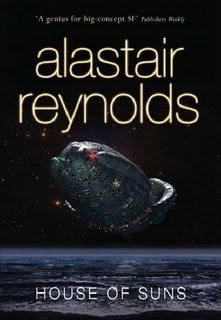
A book that made it on my list, on a recommendation from a source I can’t remember, was Alastair Reynold’s House of Suns. This kind of book is pure pleasure for me. It hits so many of my sci-fi buttons at once: epic world building, diverse multi-focused civilizations, political intrigue, morality tales, deep time. This is a book that it’s impossible for me to critique honestly. The quality of the writing doesn’t particularly distinguish itself, and the plot could maybe have used some punching up, but I really didn’t care. I got everything I came for, and I left satisfied.

A little more problematic was John Varley’s Rolling Thunder. I picked up this book on a whim, as one of Varley’s other novels, The Golden Globe, is one of my all time favorites. There were some superficial similarities–Varley’s love for the mixture of futuristic tropes with 1950’s and 60’s American pop culture, light social satire–but I thought the execution was just not on the same level. More bothersome for me after reading another of Varley’s books was the recognition of certain troubling elements of his writing that appear to be habits, particularly his writing of (and about) women. His female protagonist, Podkayne, is certainly endearing, but some of the things said in her voice sound like a rehash of “women are from mars”/When Harry Met Sally-esque nonsense that comes off as very unconvincing from that character.
Odds & Ends

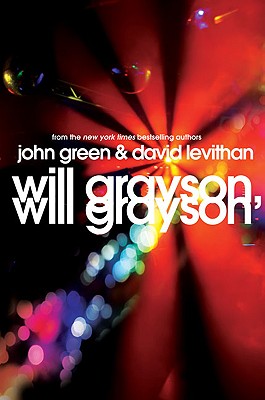
Will Grayson, Will Grayson is a perfectly adequate YA novel with gay male content. I’ve been trying to get a handle on what to say about this book, and I really don’t have anything. The writing’s fine, not great, as is the story and the characters (with the exception of Tiny Cooper “the worlds largest gay person or the worlds gayest large person,” an unforgettable flamboyant gay teen equal parts sage mentor and hysterical drama queen). A couple of interesting thoughts about the book: The structure of this novel is alternating chapters narrated by each of the two Will Graysons, emphasized by different type/capitalization (Note to publisher: all small caps are annoying to read, e.e. cummings be damned!) and presumably written by the two authors. I’ve seen this format used a lot in the past few years, almost enough to create its own genre, like epistolary novels. It makes me wonder what (imagined) collaborations between big names might be like; certainly Levithan is a well known name in both general (Nick and Norah’s Infinite Playlist) and gay (Boy Meets Boy) YA circles. The other realization that I had after finishing this book was the realization of what the familiar, stream-of-consciousness tone mixed with lame observational humor that pervades first-person YA literature reminds me of: bad stand up comedy. I certainly remember being entertained  by the same kind of asides that annoy me now when I was a member of the target audience of these books, so it’s hard for me to come down too hard on it. Still, even if young teens do go for that kind of voice, surely they get tired of reading it ALL THE TIME?

I need to take a moment to point out how ridiculously well my sister knows me, and how great she is at picking presents for me. This Christmas, she got me Dave Mazzucchelli’s wonderful graphic novel Asterios Polyp. Graphic novel? Hell yeah. Drawing style that melds cariacture with concepts from another field–architecture and geometry–to tell a story? Even better. Supremely talented but imperceptive jerk that gives Dr. Gregory House and Jeff Daniels in The Squid and the Whale a run for their money? You’re killing me, this is the perfect book. Except when it isn’t; scenes in the “present” of the novel are incredibly uninteresting and bland compared to the magic of the flashbacks to Asterios Polyp’s marriage, and a structural device where he imagines and speaks to his miscarried twin brother left me rolling my eyes. Still, it’s an interesting, surprisingly touching book that I’d strongly recommend.

Levitt and Dubner’s SuperFreakonomics had about the same effect on me as their first book, Freakonomics (props to them for extending the pun, although I may eat my words if they keep cranking out more of these things), which is to say, little. It’s compellingly written, and full of interesting, seemingly contrarian opinions. The slickness of the writing makes me trust it a little less, but the subjects of each chapter are a little more focused than those included in the first book, which often read more like an exercise in data manipulation than a good-faith attempt to describe real-world phenomena.