

"a little bird told me…"

St. Gregory the Great fresco detail, Church of St. Rupert, Weißpriach, Austria. Photographed at the church by Richard Stracke, shared under Attribution-NonCommercial-ShareAlike license.

Yesterday, I just started reading in earnest the titanic, 5-volume, 3,856-page Oxford History of Western Music by Richard Taruskin. So far, I’m finding it fascinating because I am an arch-dork about music. One tidbit I’m particularly tickled by was this account of the origin of the idiom “a little bird told me:”

[A book of plainchant] could not have existed in St. Gregory’s day, because there would have been no way of putting music into it. […] By the ninth century, however, the legend of Pope Gregory as composer of what has been known ever since as “Gregorian chant” was firmly in place. It was propagated not only in literary accounts like that of John the Deacon but also in an iconographic or pictorial tradition that adapted a motif already established in Roman illuminated manuscripts containing Gregory’s famous Homilies, or sermons, on the biblical books of Job and Ezekiel. According to this tradition, the pope, while dictating his commentary, often paused for a long time. His silences puzzled the scribe, who was separated from Gregory by a screen. Peeping through, the scribe beheld the dove of the Holy Spirit hovering at the head of St. Gregory, who resumed his dictation only when the dove removed its beak from his mouth. (It is from such representations of divine inspiration that we get our expression, “A little bird told me.”)

Taruskin, Richard. Oxford History of Western Music. Oxford University Press.

Some other little tidbits I’ve enjoyed from this first section:

  • The word noon comes from the monastical service held at 3pm called “none,” from the word for nine (the ninth hour since waking at 6am). On why the 3pm service became our name for the 12pm hour? Taruskin: “[it’s] just one of those things.”
  • For the very first time I actually understood what the Holy Roman Empire was.
  • Notated plainchant (which everyone but historians just think of as “Gregorian chant”) was adapted from monastic/ascetic practices, so despite what pop culture and our own filling in the blanks might suggest, all around the church there was instrumental music, ensembles/orchestras, choirs, bands, and music with many harmonies and parts. Plainchant for church use was designed to sound ancient and primitive. If you’ve ever been to a church service with chant and felt a shiver of something primal and magical down your spine, that’s exactly what the church hierarchy hoped might happen… in the 7th century.

Further reading, for the interested: https://robertgreenbergmusic.com/a-most-successful-campaign-of-misinformation-or-listen-to-the-birdie/

"a little bird told me…"

St. Gregory the Great fresco detail, Church of St. Rupert, Weißpriach, Austria. Photographed at the church by Richard Stracke, shared under Attribution-NonCommercial-ShareAlike license.

Yesterday, I just started reading in earnest the titanic, 5-volume, 3,856-page Oxford History of Western Music by Richard Taruskin. So far, I’m finding it fascinating because I am an arch-dork about music. One tidbit I’m particularly tickled by was this account of the origin of the idiom “a little bird told me:”

[A book of plainchant] could not have existed in St. Gregory’s day, because there would have been no way of putting music into it. […] By the ninth century, however, the legend of Pope Gregory as composer of what has been known ever since as “Gregorian chant” was firmly in place. It was propagated not only in literary accounts like that of John the Deacon but also in an iconographic or pictorial tradition that adapted a motif already established in Roman illuminated manuscripts containing Gregory’s famous Homilies, or sermons, on the biblical books of Job and Ezekiel. According to this tradition, the pope, while dictating his commentary, often paused for a long time. His silences puzzled the scribe, who was separated from Gregory by a screen. Peeping through, the scribe beheld the dove of the Holy Spirit hovering at the head of St. Gregory, who resumed his dictation only when the dove removed its beak from his mouth. (It is from such representations of divine inspiration that we get our expression, “A little bird told me.”)

Taruskin, Richard. Oxford History of Western Music. Oxford University Press.

Some other little tidbits I’ve enjoyed from this first section:

  • The word noon comes from the monastical service held at 3pm called “none,” from the word for nine (the ninth hour since waking at 6am). On why the 3pm service became our name for the 12pm hour? Taruskin: “[it’s] just one of those things.”
  • For the very first time I actually understood what the Holy Roman Empire was.
  • Notated plainchant (which everyone but historians just think of as “Gregorian chant”) was adapted from monastic/ascetic practices, so despite what pop culture and our own filling in the blanks might suggest, all around the church there was instrumental music, ensembles/orchestras, choirs, bands, and music with many harmonies and parts. Plainchant for church use was designed to sound ancient and primitive. If you’ve ever been to a church service with chant and felt a shiver of something primal and magical down your spine, that’s exactly what the church hierarchy hoped might happen… in the 7th century.

Further reading, for the interested: https://robertgreenbergmusic.com/a-most-successful-campaign-of-misinformation-or-listen-to-the-birdie/
“a little bird told me…”

St. Gregory the Great fresco detail, Church of St. Rupert, Weißpriach, Austria. Photographed at the church by Richard Stracke, shared under Attribution-NonCommercial-ShareAlike license.

Yesterday, I just started reading in earnest the titanic, 5-volume, 3,856-page Oxford History of Western Music by Richard Taruskin. So far, I’m finding it fascinating because I am an arch-dork about music. One tidbit I’m particularly tickled by was this account of the origin of the idiom “a little bird told me:”

[A book of plainchant] could not have existed in St. Gregory’s day, because there would have been no way of putting music into it. […] By the ninth century, however, the legend of Pope Gregory as composer of what has been known ever since as “Gregorian chant” was firmly in place. It was propagated not only in literary accounts like that of John the Deacon but also in an iconographic or pictorial tradition that adapted a motif already established in Roman illuminated manuscripts containing Gregory’s famous Homilies, or sermons, on the biblical books of Job and Ezekiel. According to this tradition, the pope, while dictating his commentary, often paused for a long time. His silences puzzled the scribe, who was separated from Gregory by a screen. Peeping through, the scribe beheld the dove of the Holy Spirit hovering at the head of St. Gregory, who resumed his dictation only when the dove removed its beak from his mouth. (It is from such representations of divine inspiration that we get our expression, “A little bird told me.”)

Taruskin, Richard. Oxford History of Western Music. Oxford University Press.

Some other little tidbits I’ve enjoyed from this first section:

  • The word noon comes from the monastical service held at 3pm called “none,” from the word for nine (the ninth hour since waking at 6am). On why the 3pm service became our name for the 12pm hour? Taruskin: “[it’s] just one of those things.”
  • For the very first time I actually understood what the Holy Roman Empire was.
  • Notated plainchant (which everyone but historians just think of as “Gregorian chant”) was adapted from monastic/ascetic practices, so despite what pop culture and our own filling in the blanks might suggest, all around the church there was instrumental music, ensembles/orchestras, choirs, bands, and music with many harmonies and parts. Plainchant for church use was designed to sound ancient and primitive. If you’ve ever been to a church service with chant and felt a shiver of something primal and magical down your spine, that’s exactly what the church hierarchy hoped might happen… in the 7th century.

Further reading, for the interested: https://robertgreenbergmusic.com/a-most-successful-campaign-of-misinformation-or-listen-to-the-birdie/

sharon van etten

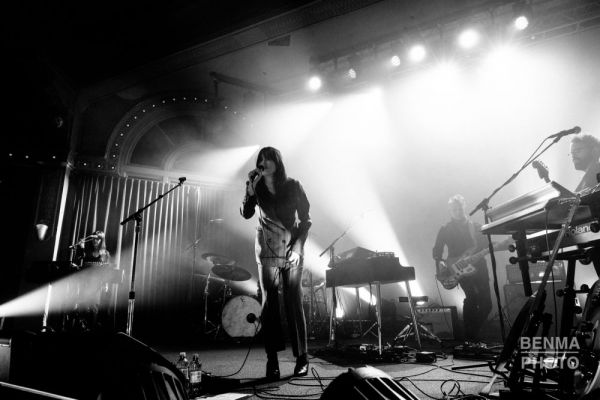
Last night I went to see Sharon Van Etten at the Crystal. Seeing music there is a little dicey because the proportions of the room make me uncomfortable, and as much as I want to enjoy myself, a full 1/3 of my brain is tied up tamping down my claustrophobia.

I went with somebody with an extra ticket, and I wasn’t very familiar with her music beyond some cramming on my drive home from work. There’s something nice about coming fresh to someone in concert. I may have not had the sweet anticipation of her super-fans, the ones who had been waiting five years for new music and were losing their minds, but I think that is balanced by an openness to the new material.

She came out in a gray trouser suit, double breasted and with pinstripes that echoed wartime fashion to me. During the first song, the thin material shook with nerves for just a second. Her voice was swooping, somewhere in the neighborhood of Florence Welch and Stevie Nicks. At first, she hid behind long black bangs, mumbling and moaning into the microphone, stomping chunky black heels and feeling the beat by slapping her legs. Over the course of the set, she loosened up. During “Seventeen,” a track on her new album–so many great songs about that age: “Edge of Seventeen”, “Anthems for a Seventeen Year Old Girl” “Dancing Queen”, “It Was a Very Good Year”–there is this climactic line, I know what you’re gonna be, where all of the sudden she dropped into a new gear of energy and rage and betrayal and power and screamed, and the crowd screamed back because the song speaks to the part of us that is hurt that we all thought we would be different, and we really weren’t, or at least not in the way our seventeen year-old selves thought we would be, those idiots.

(My seventeen year old self would have hated me forever for calling him an idiot, and he’s not wrong, one day one of us will finally kill the other.)

How cool are bands? People that get together to play music. That’s what I was thinking. I was close enough to the stage to see their faces, to see when patches were switched, when folks tuned in breaks, furtive hand signals to the sound guy. It seemed like they were having a great time.

Nono

Friday

I spent the morning working with J Lo to clean out the kitchen at our facility. We got approval to get the kitchen remodeled, and it’s been a nightmare for as long as I’ve worked there, and I didn’t want to feel guilty if there was some horrendous shit in the cabinets and there was some kind of inspection. Later in the morning, we went to Wal-Mart to pick up a furniture donation, and it was nice to get some car time to talk casually and informally.

I shared that I had had a moment this week where I was helping a kid with social skills while at the same time being so aware of how I should take my own advice and connect the dots in my own life. There is a boy named Josiah, around 9 or 10, that I work with. He has a brother that’s older than him by only around a year. These two boys bring a cloud of wild and positive energy wherever they go, bouncing off the walls but with such good spirits that you want to let them enjoy themselves. Josiah’s parents work hard and work a lot. A lot of families in Camas are really into sports and dads take a lot of time to coach their kids and work on early sports skills. I don’t think Josiah or his brother have a lot of that time, and so they rarely join in the more formal sports games on the playground, the boys that self-organize into football or soccer or basketball games.

I was working in the gym on Wednesday, and I saw Josiah hanging around the periphery of the basketball game that was in progress. Josiah wanted to join in, but was really unsure of himself. He kept calling out to some of the kids he knew that were playing, and asking for permission to join and play. These kids would look towards him, but they were mostly focused on the game and just kind of shrugged. I could see that Jacob was reading that look as rejection, and he came over to me very upset and saying that the kids playing were excluding him. I helped him see that these kids were not excluding him, that from their perspective, anybody could join and and come and play just by playing, and no one person in the game could give the permission he was looking for. I told him that the only way to join in was to go after the ball every time, to play when he got possession.

It made me think of the places in my own life where I feel on the periphery, waiting for that invitation to join in, when really the only action to take is to act. I’ve also been thinking of the kids that were already playing. None of them was particularly friendly to Josiah, and it would not have hurt them to find some way to bring him into the game. At the same time, I can’t bring myself to blame any of the kids for not knowing to take ownership of the whole game like that yet. I don’t think I have that kind of compassion yet for the people who are in the same position in relation to myself in my own life, in the things that I want to become a part of.

The rest of the day came and went. I texted around looking for evening plans, and decided to join Jesus Christ for dinner and hanging out with some of his friends. The plan was to go dancing, but by the time they were done pregaming, it was near midnight and just too late for me to start something like that, so I called it an early night and went to sleep.

Saturday

I spent the next day lazing. After waking up, I fucked around for a little bit, then went outside to catch some of the beautiful sun and start working on my lovely summer bronze. In the evening, I headed out with Jesus Christ to a Third Angle concert at the art museum of weird and difficult experimental classical music, and I was grateful to have him along as a a friend that’s also into shit like that. After a nightcap, I dropped him off and once again just headed in to get some sleep.