Quick book thought

Apparently I’m verbose and self-indulgent (disregarding the fact that the internet has near-infinite storage capacity [or that a blog, by definition, is one of the most self-indulgent forms of expression]), so I thought I’d offer a quick take on A Heartbreaking Work of Staggering Genius.

I’m not going to post anything here that you could find elsewhere, but I will say that I was a little underwhelmed. Eggers uses a lot of stream of conciousness writing and textural effects to augment his story. I thought that his use of effects were a little (exuse the irony) self-indulgent. I just didn’t get the feeling that they were essential to the telling of this particular story in the same way as, say, Extremely Loud and Incredibly Close by Jonathan Safran Foer.

Also, stream of conciousness is a technique. It is not an excuse to be lazy with word choice and craft. I recently finished Zen and the Art of Motorcycle Maintenance by Robert Prisig. In some ways, these two books are similar. They are both stream of consciousness and they both involve the interactions between a guardian and his charge, a person not yet a man but not quite a boy.

In Zen, even though the words were unstructured and flowed in a stream, every word, every thought felt essential. Heartbreaking felt flabby and like it could use a better editor.

The Books That Made My Life

I was always inclined to be a bookworm. To a degree that surprises me now, when I look back on it, my mother was a full out, cloth diaper-washing, PBS-contributing, sprouts in ham sandwiches hippy mom. But not a dirty, 1960’s vegan commune hippy. A late 1980’s, tribal print, multicultural entertainment, awkward rap in children’s entertainment hippy.

Reading Rainbow, with Geordi La Forge

As such, and because she decided to take time off to raise me and spent an absurd amount of time on me, we were always likely to hang out in the local public library. The books she checked out from the bookmobile that would visit the migrant worker housing project where she grew up were a lifeline, and she passed on that salvation-through-the-written-word attitude toward me.

Going to the Young Writers Contest,* as well as reading the short story compilation 13 edited by James Howe (extremely short review possibly forthcoming) reawakened my love for children’s literature as a form (not a genre) and caused me to look back that a few books that were extremely influential to me. I’ll arrange them by age range, because it’s simple. Because I believe that any good children’s book can be enjoyed as an adult, I’ll arrange by the earliest age I think a person would best be able to dive into the books and the themes. Continue reading “The Books That Made My Life”

On the Bookshelf

Reviews Pending:

Children’s Books Recap

Mississippi Sissy Kevin Sessums

Zen and the Art of Motorcycle Maintenance Robert Pirsig

Reading Forthcoming:

Theodore Rex Edmund Morris

Caramelo Sandra Cisneros

A Nation Under Our Feet:  Black Political Struggles in the Rural South from Slavery to the Great Migration Steven Hahn

Chief Justice Ed Cray

Coraline Neil Gaiman

The Nine Jeffery Toobin

Tangerine Edward Bloor

Fast Food Nation Eric Schlosser

A Boy's Own Story – Edmund White

Today I was able to spend a little time in the library, and because I have been watching so much television lately, I was able to devour this little book by Edmund White. Continue reading “A Boy's Own Story – Edmund White”

My 1,300 Page Weekend

I always feel bad when I don’t update regularly, like I am letting down the four people that read this blog. Today, I have my reviews of a couple of books that I have read this past weekend and half-week. As the good people at This American Life would say, a book report in three acts:

1.

I am incredibly privileged to attend Reed College. As a prospective student looking at different schools, I tended to pay way too much attention to features of the school that just don’t apply to me. For example, I still brag about Reed’s science programs, even though I really don’t want to complete the science requirement and resent the department for siphoning off music funds.

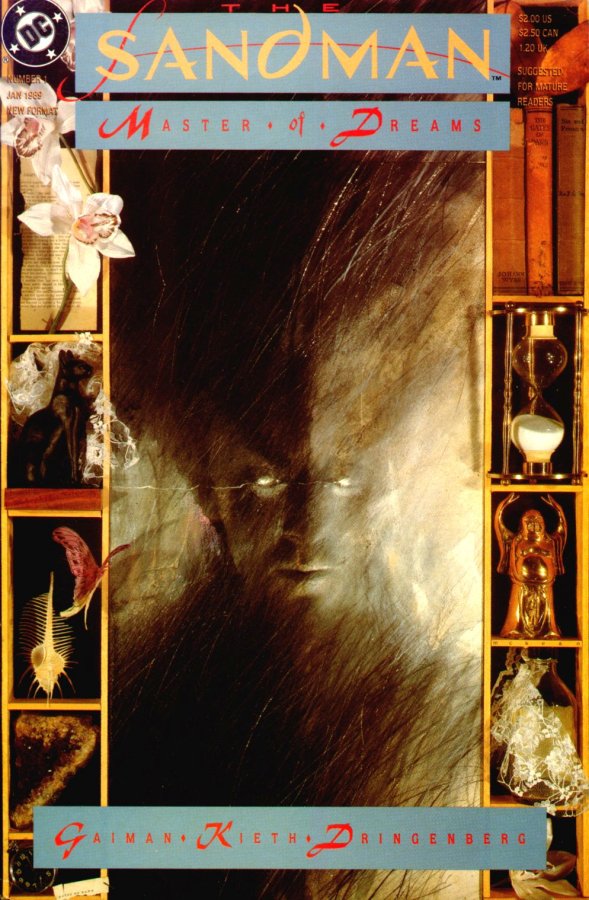
One feature of the school that I am glad now applies to me is the MILL, or comic book library and reading room (yeah, we know). It is an amazing room filled with extensive collections of golden-age franchises and a surprising depth of non-Japanese modern comics. I spent five hours of my Sunday reading the first volume of the complete collection of The Sandman. I don’t really want to go too much into it here, because I plan on giving a full review once I finish the omnibus. However, it does fit into the unintended theme of the post: religious speculative fiction.

sandman_no1_modern_agecomiccover

2.

Every once in a while, I fall in love with the story of the creation of a work more than the merits of the work itself. That is why I was so happy that Ken Follett’s novel The Pillars of the Earth was so entertaining and well written. I really love the idea of a pulp spy novel writer publishing a 600+ page historical novel set in 12th Century England and having it take off. I understand those who might not consider it highbrow literature; it is extremely plot heavy and the occasional winks to the modern reader in conversations among the characters, but I found it thoroughly enjoyable and well worth my time. Follett does an incredible job of dramatizing the scale and glory of cathedrals. I found myself doubting the idea that a cathedral would be completed within the lifetime of any person, but that only underscores the sheer ambition of those that were constructed over centuries.

It also made me a little sad that we really have evolved as a global society beyond such works on that scale. Can you imagine a building project that employs hundreds of workers for centuries being started now? The Notre Dame in Paris took 300 years to complete. The new cathedral in Los Angeles was built in 8.

3.

Anathem by Neal Stephenson is probably the largest-scale work I have ever read. The size of it is intimidating; the final page count is 890. Stephenson not only creates his own universe within the pages of the books, but four parallel universes that touch it. Every page feels like it is the synthesis of hundreds of pages of philosophical and mathematic research read while the book was being written.

Stephenson is a little bit like the Eddie Izzard of the science fiction genre. Like Izzard, he uses the tropes and conventions of his form, but he makes it such an intellectual exercise that it feels like nothing you’ve ever read before, even if its about, you know, aliens. Many times I found myself unable to distinguish between real philosophical ideas and the fiction part of science fiction.

Like everything else, I am a little bit late to the party on this one, but if you feel like you can keep up with the ideas in the book, and you have the time to read an almost 900 page novel, I reccomend it.