Pioneers in the Graveyard

I went for a walk through a historic graveyard. Most of the people seemed to be dead before the 1940’s, although there were some random 00’s scattered amongst the pioneers. The graveyard in my hometown is beautiful, though it has a little bit of a sterile, David Hockney quality, all flat lawns and sunlight and palm trees. The dead find their rest and, like the living, are rarely bothered by the weather. 

The Oregon graveyard is scarred by the weather. Grave markers sink quietly into the uneven ground, while more ostentatious markers are overtaken by moss. 

The most interesting feature of the cemetery were large rococo stelae in the shape of trunks, complete with gnarled bark and forest creatures. It reminded me of the pioneer identity that must have been so important to previous generations of Oregonians–I am the worst kind of outsider, a Californian–, an identity that I don’t really see in the culture here, except in museums and school names. I was struck by its tackiness and its idiosyncrasy: I didn’t imagine that the person who could afford to be buried in the city and have a person-height memorial was the coonskin hat wearing type, and at the same time, it’s hard to imagine anything like it anyplace else.

My mind wandered to the tension between the local and the universal. I’m one of those high culture types. I believe, sincerely, that great culture can come from anywhere and be an asset to the world. Japanese film. Tequila. Gumbo. Whatever. One of the things that eats at me, though, is that it is exactly my type of person that is the most threatening to folk cultures, to local variation, to art forms not yet recognized as such. 

There seems to be a life cycle: a culture forms as a response to change. That culture challenges baseline assumptions of existing cultural forms. Those existing forms have already achieved legitimacy, so culture defenders (again, I think of myself as one of them) form ranks to protect them. The new form hangs on. The new form becomes popular because of its newness. The new form becomes old, but has built up a body of practitioners and ideas about itself. The culture defenders recognize the wealth of culture that has built up, and incorporate it into existing patterns of cultural presentation/prestige. This hybrid form becomes part of the world culture. 

For that life cycle to complete itself requires that I have a shadow twin. Somebody that believes the local/new/yet-unrecognized culture is legitimate in and of itself. That rejects the influence of the wider culture as intrusion. One of the things that most difficult for me to accept is that perhaps the perfect outcome is that we both be in balance, that neither one achieves dominance over the other. Too much high culture, and the idiosyncrasies of the local culture become ironed out, homogenized. Too much of the local culture, and it dies with its last practitioner, or never evolves in complexity in response to the mixture of other cultures. 

Portland is going through a bit of a high culture moment. Its aspirations, in its restaurants, art scene, music culture, is to be a “world class” city. But where does that leave the pioneers? Are they present with us, in mason jars of bourbon drinks, in the fresh local produce and heritage breeds featured in its restaurants, in the genderfuckery and tolerance for experiment in its art scene? Or are they dormant, preserved in the cold earth, waiting to take their place as grandparents of the future city? 

remains of the day jan 7 2012

1.7.2011. A beautiful day in the Northwest. Springwater Corridor Trail, Portland, Oregon.

  • A typically glum and jaded former Seattleite bitches about Portlandia. Full disclaimer, I love June Thomas.
  • re: that autism story I linked to a couple of days ago, the story behind the best NYT correction ever.
  • My congressman (and I use the term loosely), Elton Gallegly of CA-24, is retiring. Great news. Maybe my majority-Latino district can finally get representation that doesn’t hate us. Hopefully SOPA will be the last in a long line of legislative defeats for the spineless, ambitionless backbencher.
  • Still hung up on Nina:

Oregon Represent

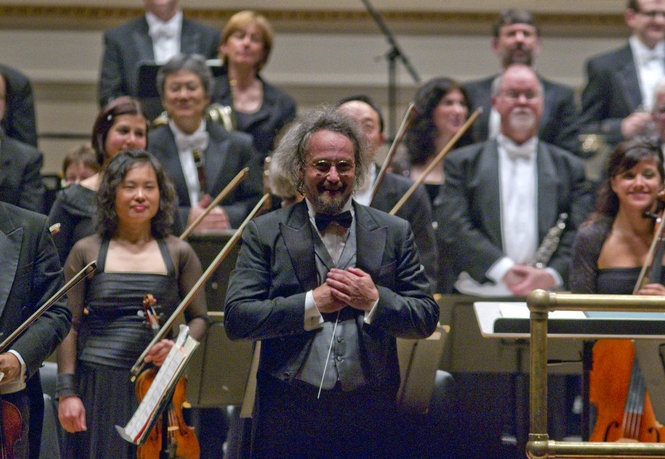
Congratulations to all of the musicians of the Oregon Symphony, who have just finished their very first Carnegie Hall concert. Early word has it that the concert was a great success; Alex Ross tweeted “Triumphant Carnegie debut for the Oregon Symphony — best of Spring for Music so far. Eloquent Sylvan, explosive Vaughan Williams.”

David Stabler of The Oregonian has been covering the tour in exhaustive detail: preview of the concert program, departure of orchestra personnel and instruments, arrival in New York, first rehearsal on the Carnegie stage, pre-concert thoughts from music director Carlos Kalmar, concert post-mortem.

Violist Charles Noble writes about what it’s like to rehearse at Carnegie at his blog, NobleViola.

Audio of the concert will be available through NPR after 9pm PST on Thursday.

The Cleveland Orchestra & the "Local Orchestra"

One of Portland artist Trixie Biltmore's impressions of Portland Opera's production of Hansel and Gretel. http://www.meencomics.com


Greg Sandow in the Wall Street Journal on Enrique Fernandez, the Cleveland Orchestra’s new “critic-in-residence”:

Despite his resounding title, Mr. Fernández is not a critic in the ordinary sense of the word. His blog, which you can visit by going to clevelandorchestramiami.com and clicking on “blog,” is an online magazine that runs feature pieces about the orchestra and its activities in Miami. In addition, Mr. Fernández invites concertgoers to post their own thoughts on the orchestra’s performances: “Online everybody’s a critic…. Comment on the concert you are about to experience. Review if you wish, if you must. Hey, it’s your ticket, rave on, pan on.”Mr. Fernández and the Cleveland Orchestra are clearly trying to come up with an institutional equivalent of the “online communities” that spring up around homemade blogs. This kind of blogging is still relatively new in the world of art, and to date the only institutions that seem to have embraced it wholeheartedly are museums (an especially good example is the Los Angeles County Museum of Art’s “Unframed,” which is at lacma.wordpress.com). Classical-music organizations, by contrast, seem ill at ease with the openness and interactivity of blogging, and even the best of their efforts, such as the St. Louis Symphony’s STL Symphony Blog (stlsymphony.org/blog), tend to be one-way operations that aren’t open to comments or email from readers.

As much as I usually disagree with Sandow, he’s absolutely right in questioning “new media” ventures that don’t engage in a thoughtful way with their audience. An orchestra blog without a personal perspective or engagement with commenters and other bloggers is nothing more than a glorified press release. It’s also true that only the biggest players in the game can afford–as in, “stop losing your audience” afford–to not participate (and it should be noted that the big players can get away with not directly engaging with their audience because there’s a cohort of bloggers who are willing to translate and comment upon press releases).
One of the best organizational efforts that I’ve come across trying to really understand a local audience and reach out a build a new audience is the Portland Opera’s Comic’s Night. From their press release (ok, sometimes this works):

In an effort to reach out to new audiences and new communities, Portland Opera is pleased to announce its first-ever Comic Artist Night @ the Opera on Monday, September 20.  Taking advantage of Portland’s wealth of comic talent, the Opera has invited 20 artists to attend a dress rehearsal and draw whatever inspires them about the production.  They’ll also receive a backstage tour prior to the show and front row seats during the show so that they can see every single operatic expression on stage.  The artists will share the results of the evening with their online communities and Portland Opera will share the artist’s work with our patrons at the theater as well as posting the work online at www.portlandopera.org.

I thought this was a fantastic venture, for a few reasons:

  1. It showed an understanding of the local audience. One of the most consistently frustrating things about regional classical music organizations is that there is often a distance between the organization and their city. Yet at the same time, we’re asked to support the local symphony, or opera house as a civic symbol and representation of our city. This was a real, genuine, smart play to one of Portland’s strengths.
  2. It attracted different press, therefore different readers. I actually read about Comics Night in comics blogs and the local alt-weekly (the same paper that will show classical listings on its music page, but would never promote a classical concert). That’s huge exposure to an audience–young, local, in to music–that classical organizations desperately want.
  3. It provided an entrance point for first-time operagoers. Opera is intimidating and weird. Many of the artists address that in their comics. Somebody whose curiosity is piqued by the comics will not be so discouraged by the newness of the experience.
  4. It solves the problem of promotional materials. On the internet, there’s an abundance of promotional materials that give some idea of what you’re getting yourself into if you want to see a live show. Curious about a standup comic? Check YouTube. What else has this artist done? Check the portfolio on their website. Band you’ve never heard of? You can be sure that any band getting started today has an online media presence before they play their first live show. At any point, these promotional materials can get picked up by other aggregators and go viral. Classical music doesn’t have that. This is partly a practical constraint; it would be impossible to have an opera trailer ready months before a performance, and orchestras have similar conditions. The comics produced by the local Portland artists, however, provide a subjective (in perspective) and objective (they are free to draw whatever they want) hook to draw in an audience. And this is mostly because…
  5. The comics produced were really cool. This is the most important part, and also the hardest to fake.

We now have a large population of people that grew up as the internet matured as a technology. The share of the population that grew up with internet access will only increase. This creates a new kind of media literacy, an intuitive sense that gets really excited by a group of artists invited to share their impressions of an opera preview, a sense that skips right by an astroturf-filled “blog” without even reading it.
More comics inspired by Hansel and Gretel can be seen in Portland Opera’s Facebook album.

The Cleveland Orchestra & the “Local Orchestra”

One of Portland artist Trixie Biltmore's impressions of Portland Opera's production of Hansel and Gretel. http://www.meencomics.com


Greg Sandow in the Wall Street Journal on Enrique Fernandez, the Cleveland Orchestra’s new “critic-in-residence”:

Despite his resounding title, Mr. Fernández is not a critic in the ordinary sense of the word. His blog, which you can visit by going to clevelandorchestramiami.com and clicking on “blog,” is an online magazine that runs feature pieces about the orchestra and its activities in Miami. In addition, Mr. Fernández invites concertgoers to post their own thoughts on the orchestra’s performances: “Online everybody’s a critic…. Comment on the concert you are about to experience. Review if you wish, if you must. Hey, it’s your ticket, rave on, pan on.”Mr. Fernández and the Cleveland Orchestra are clearly trying to come up with an institutional equivalent of the “online communities” that spring up around homemade blogs. This kind of blogging is still relatively new in the world of art, and to date the only institutions that seem to have embraced it wholeheartedly are museums (an especially good example is the Los Angeles County Museum of Art’s “Unframed,” which is at lacma.wordpress.com). Classical-music organizations, by contrast, seem ill at ease with the openness and interactivity of blogging, and even the best of their efforts, such as the St. Louis Symphony’s STL Symphony Blog (stlsymphony.org/blog), tend to be one-way operations that aren’t open to comments or email from readers.

As much as I usually disagree with Sandow, he’s absolutely right in questioning “new media” ventures that don’t engage in a thoughtful way with their audience. An orchestra blog without a personal perspective or engagement with commenters and other bloggers is nothing more than a glorified press release. It’s also true that only the biggest players in the game can afford–as in, “stop losing your audience” afford–to not participate (and it should be noted that the big players can get away with not directly engaging with their audience because there’s a cohort of bloggers who are willing to translate and comment upon press releases).

One of the best organizational efforts that I’ve come across trying to really understand a local audience and reach out a build a new audience is the Portland Opera’s Comic’s Night. From their press release (ok, sometimes this works):

In an effort to reach out to new audiences and new communities, Portland Opera is pleased to announce its first-ever Comic Artist Night @ the Opera on Monday, September 20.  Taking advantage of Portland’s wealth of comic talent, the Opera has invited 20 artists to attend a dress rehearsal and draw whatever inspires them about the production.  They’ll also receive a backstage tour prior to the show and front row seats during the show so that they can see every single operatic expression on stage.  The artists will share the results of the evening with their online communities and Portland Opera will share the artist’s work with our patrons at the theater as well as posting the work online at www.portlandopera.org.

I thought this was a fantastic venture, for a few reasons:

  1. It showed an understanding of the local audience. One of the most consistently frustrating things about regional classical music organizations is that there is often a distance between the organization and their city. Yet at the same time, we’re asked to support the local symphony, or opera house as a civic symbol and representation of our city. This was a real, genuine, smart play to one of Portland’s strengths.
  2. It attracted different press, therefore different readers. I actually read about Comics Night in comics blogs and the local alt-weekly (the same paper that will show classical listings on its music page, but would never promote a classical concert). That’s huge exposure to an audience–young, local, in to music–that classical organizations desperately want.
  3. It provided an entrance point for first-time operagoers. Opera is intimidating and weird. Many of the artists address that in their comics. Somebody whose curiosity is piqued by the comics will not be so discouraged by the newness of the experience.
  4. It solves the problem of promotional materials. On the internet, there’s an abundance of promotional materials that give some idea of what you’re getting yourself into if you want to see a live show. Curious about a standup comic? Check YouTube. What else has this artist done? Check the portfolio on their website. Band you’ve never heard of? You can be sure that any band getting started today has an online media presence before they play their first live show. At any point, these promotional materials can get picked up by other aggregators and go viral. Classical music doesn’t have that. This is partly a practical constraint; it would be impossible to have an opera trailer ready months before a performance, and orchestras have similar conditions. The comics produced by the local Portland artists, however, provide a subjective (in perspective) and objective (they are free to draw whatever they want) hook to draw in an audience. And this is mostly because…
  5. The comics produced were really cool. This is the most important part, and also the hardest to fake.

We now have a large population of people that grew up as the internet matured as a technology. The share of the population that grew up with internet access will only increase. This creates a new kind of media literacy, an intuitive sense that gets really excited by a group of artists invited to share their impressions of an opera preview, a sense that skips right by an astroturf-filled “blog” without even reading it.

More comics inspired by Hansel and Gretel can be seen in Portland Opera’s Facebook album.